Winning and losing together: cooperative games by HABA
Those who play can gain a lot: experience, new skills and of course lots of joy (and friends). Those who play cooperatively, that is together and not against each other, additionally gain a strengthening 'we-feeling', true to the motto: win together, lose together — grow together!
What are cooperative games?
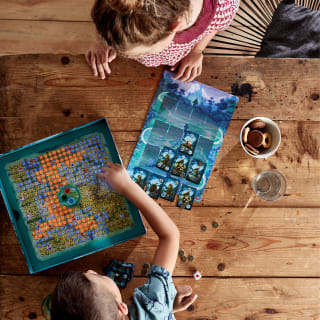
Even the Three Musketeers knew: “One for all, all for one!” Through cooperative games, children become such little musketeers who stand up for their teammates and pursue a common goal. And it is precisely this sense of community that makes cooperative games so special. The players work together, they cooperate, and pursue only one shared plan: to win!
Cooperative games are especially appealing because of their clever game mechanics. Bored at the game table? Not a chance! With time limits or limited resources, players must tackle exciting tasks as a group. They make decisions together that lay the path to victory — or to defeat. And if the initial strategy fails: isn’t it wonderful that you don’t have to devise a new plan on your own? Even kindergarten children learn how good teamwork can lead to success.
What do children learn from cooperative games?
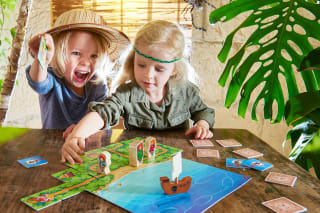
Sometimes you win, sometimes you lose – that's true of cooperative games, just as it is in real life. However, cooperative games are not about a single "winner". Rather, they are about experiencing a sense of community based on cooperation and helpfulness. Children learn to celebrate shared successes and to cope with setbacks without giving up straightaway. Because fun is always the priority, everyone will, win or lose, almost certainly be keen to play another round. In a well-coordinated group the focus then shifts to becoming faster or finding a different way of solving the challenge. New players are always welcome, too, because they bring fresh dynamics to the game and to the team.
While playing, children pick up many social skills almost without realising it and at the same time make important developmental strides. Well-coordinated communication and coordination are just as important as the ability to integrate into the group. Children also learn a great deal about themselves and about their fellow players: what does it take to beat the game together? And which role does each player take on?
Why is cooperative play so important?
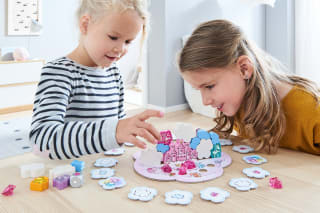
The key to cooperative games is balanced collaboration. Therefore each player should at some point assume an active (= decision-maker) and a passive (= implementer) role. This makes cooperative games ideal for fostering a sense of community and developing a strong team spirit.
The shared challenge in cooperative games primarily affects the way the game is played: players must be able to rely on one another. Those who learn as children to work with others toward a goal continue to develop this ability into adulthood. This can pay off especially in later professional life, when it comes to pulling together with different colleagues across various departments.
Cooperative games are educationally valuable without restricting the fun of playing in any way. Sometimes exciting, sometimes funny — and always great! — they easily win the hearts of young and old alike. The experience of community can thus be carried across generations, because both adults and children enjoy it equally — and all without victory or competitive pressure. Cooperative games provide a healthy dose of sociability and ultimately mean: play together, be strong together!
Exciting, cooperative, HABA! Which cooperative game suits which age?
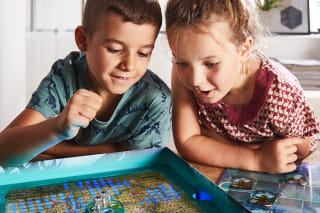
The HABA children's games are as unique as every single child. Perfectly tailored to the respective age, developmental progress and interests, the HABA range of cooperative games has something to suit every taste.
Ages from 2 years
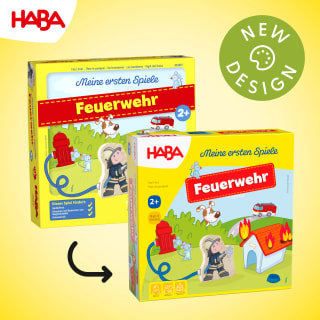
A cooperative memory game (players 2-4)
Here even the smallest can become real rescuers and put their shared memory skills to the test in My First Games – Fire Department. Water at the ready!
Ages 3-6 years
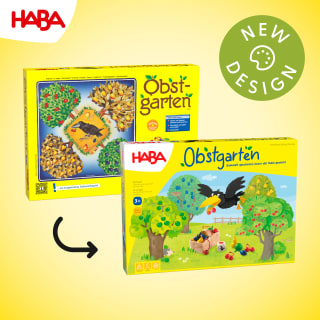
A cooperative color dice game (players 1-8)
This game is a must-have in every child's room: the HABA Orchard. All the better that this classic game is also a cooperative game! Particularly fun for children: they face off against the cheeky raven Theo. Who will snatch the tasty fruits hanging high in the trees first?
Ages 4-8 years

A cooperative tile-laying game (players 1-4)
If you love an adventure, you should definitely visit the island of Karuba. The greatest treasures are hidden deep in the jungle. But watch out for the nasty pirates and toothy tigers! Only by working together can the players escape the dangers and seize the loot.
Ages 4-99 years
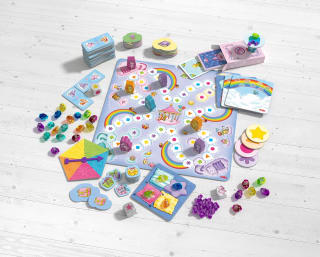
A cooperative stacking game (players 2-4)
Things soar high in Unicorn Glitter Luck – Cloud Stacking. Can the players together manage to accommodate all the animal guests in the cloud castle? All the little stacking artists need for that is a delicate touch and a bit of dice luck.