Cooking with children: Tips for your family cooking sessions
Set rules: Playing and experimenting in the kitchen is fun, but a few basic rules should be followed for a smooth and safe process. These include, for example, washing hands before cooking, careful handling of kitchen knives, electrical appliances and the stove, and tidying up after cooking. The most important rule: Agree with your kids that they must never use sharp knives, peelers or other pointed kitchen tools without your supervision.
Allow enough time: If you normally want to have food on the table in no time, cooking with children will usually test your patience a little. Ideally plan a bit more time to master unfamiliar tasks together, take a closer look at the ingredients, or answer all your kids' questions about cooking or the various foods.
Preparation: Proper preparation is also essential when cooking with children. Once you've agreed on a recipe, lay out the necessary ingredients and cooking utensils and explain to your kids the individual steps you will take together.
Trust and encouragement: When a child handles a knife, many parents' adrenaline automatically rises. But only through practice do children learn to handle a knife properly. Trust your child a little — this promotes dexterity and self-confidence alike. However, make sure you never take your eyes off your child while cooking and, depending on their age, provide assistance when cutting food.
Let imperfections slide: Even if the carrots are a bit unevenly chopped, flour is spread on the countertop, or fingers end up in the salad dressing — so what? When cooking with children, fun and the shared family time should be the focus. Perfectionism is more of a hindrance.
Cleaning up and washing dishes: Cooking with children not only includes preparing the food, but also tidying up after eating. If you have a dishwasher, explain to your children how to best load the plates, glasses and cutlery. When washing by hand, your kids can assist by handing you the plates and such or by helping to dry and put things away with a dish towel.
Little helpers — children can support you in the kitchen with these tasks
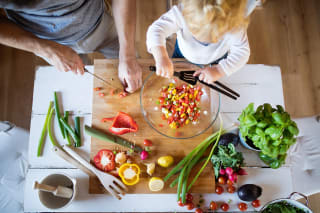
Stirring: Even small children can stir dressings and cold dishes. If you hold the bowl while they stir, handling the spoon becomes even more fun.
Washing fruit and vegetables: Provide a bowl of water for very small children in which fruit and vegetables are washed playfully. Older children can do this independently with a step stool under running water in the kitchen sink.
Chopping: From around three years old, children can practice cutting with a small vegetable knife or children's knife. Slightly older children also enjoy helping with grating vegetables. Pre-cut hard fruits and vegetables like apples and carrots so that later chopping is easier for them. However, always keep an eye on your children!
Assembling and decorating: Whether it's the slice of cheese for a toast Hawaii or the ingredients on a pizza — even the youngest are happy to help you top and decorate dishes and can produce great results with simple instructions. Weighing and counting: six potatoes, three eggs — counting out individual ingredients is already possible for preschoolers. Weighing with the kitchen scale works together if your child fills the ingredient and you read off the amount.
Tasting: In the end, most kids look forward to tasting the cooked dishes. This trains even the youngest palates and lets them taste if more salt or another ingredient is needed. Incidentally, your kids may also try foods they otherwise avoid on their plate — after all, they prepared the dish with their own hands.
Well equipped: This is how little chefs have even more fun cooking
With a own apron and practical kitchen accessories children feel like grown-ups in the kitchen. Special children's cutlery such as children's knives with a large handle and rounded tip are particularly easy to handle for small hands and offer not only more safety when chopping, but also quick successes when using the kitchen knife. On colorful children's dishes even home-cooked meals taste better and the little ones can wash the durable dishes themselves later.
Ideas for tasty recipes for cooking with children
Cooking for children follows somewhat different rules than cooking for adults – probably the favorite foods of your kids from what you as parents prefer. The same applies to cooking with children, which is why we have some tips and ideas for early successes in the kitchen.
Quick dishes: When you cook together with your children, choose simple dishes whose preparation doesn't take too long — this way the steps remain comprehensible for children and they can stay focused. Perfect are pasta dishes, soups, casseroles or colorful salads with a mild dressing. Inspiration and many practical tips as well as delicious recipes are offered by cookbooks and baking books for childrenSeason sparingly:
Most children do not like spicy or heavily seasoned food. Season dishes for little gourmets a bit more sparingly or let your child help with tasting. Some spices can also be toned down — for example by using sweet paprika powder instead of hot paprika or a mild curry powder instead of the hot blend. Take preferences into account:
It's true that many children are more willing to try foods if they've cooked the meal themselves and will sometimes dare to try disliked /magazine/family-life/nutrition-meals/vegetables-for-childrenor similar. Nevertheless, it's of course most fun to cook your favorite dishes. When cooking with children, choose what your little ones feel like — and hide for /magazine/family-life/nutrition-meals/picky-children a little bit of vegetables here and there, for example on pizza, in a pasta bake or in a creamy soup. Gradually /magazine/family-life/nutrition-meals/healthy-eating-habits— without coercion. Baking together — a highlight for children
Colorful muffins, fun-shaped cookies or cakes — children are almost always up for baking together. After all, there's plenty to snack on during preparation. And with cheerful baking molds and utensils, even the smallest can get really creative.

One tip:
Simply mix a cake when your child next asks for chocolate or cookies — often baking effectively distracts from the craving for /magazine/family-life/nutrition-meals/children-and-sweets. ab.
Read the latest articles about everyday family life






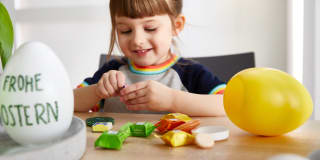



Image credits
Father wearing a red and white cooking apron cooks with his child © bernardbodo - stock.adobe.com
Child cuts bell pepper, leek, and tomatoes at the kitchen table © Halfpoint - stock.adobe.com Mother and child bake cookies © Halfpoint- stock.adobe.com