Child psychology: What is it?
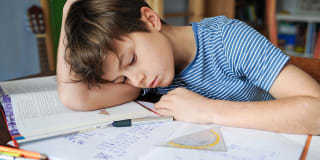
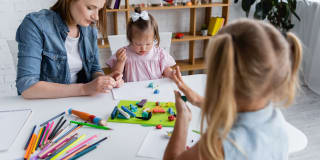
Child psychology is a subfield of developmental psychology. It deals with the psyche of children from birth to puberty, their health, behavior and development. This includes, among other things, the cognitive, emotional, and social development of children, but also their self-perception. Child psychology is not only the recognition and treatment of psychological problems with psychotherapeutic methods, but also the prevention of mental disorders. This includes anxiety, eating, speech development and sleep disorders as well as depression, dyslexia and much more.
Stable psyche of children: Friendships for a happy childhood
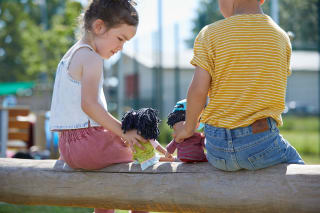
Adults know: Good social contacts make happy, balanced and are good for the psyche. This also applies to children, even if their friendships from an adult perspective often seem erratic and unstable: Today the very best friend may be found in kindergarten, tomorrow in the house next door, the day after tomorrow at the outdoor pool or on the soccer field. Children learn through these changing relationships, to open up to other people.
Trust and boundaries: Through friendships, children develop their social skills. They seek instinctively like-minded peers”Trust, which they develop with same-aged playmates, is just as important for the psyche of children as the boundaries towards the environment. Children also learn that there are other types of relationships and belonging than those with parents and siblings.
How can I encourage children's friendships? If children have few friends, there can be many different reasons: some are very shy, others may be satisfied with only a few friends and do not look for other contacts. If your child generally seems content, you should not force friendships. But if your child longs for friendships, you can support them and arrange playdates with other families and their children.
Child psychology: Particularities in children's behavior
Every child is unique. Some learn quickly, others need a bit more time, some are constantly on the move, others can spend hours crafting or drawing. Almost all parents know and love their children's peculiarities. And yet doubts sometimes arise: Is it normal for my child to behave this way?
The field of behavioral issues in child psychology is very broad and ranges from temporary problems and developmental disorders to persistent mental disorders that require treatment.
The most important rule when dealing with behavioral concerns is: No self-diagnoses! If your child's behavior worries you, consult a doctor to obtain a medical diagnosis if necessary. Experts can also tell you how to handle your child's behavior and psyche and what therapy options are available.
Child psychology: How do I deal with my child's fears?

When children are afraid, it's often difficult for parents to cope. Safety and security are among the most important feelings we want to convey to our children. And not infrequently are children's fears simply irrational and occur quite suddenly. How should one handle it when a child, from one day to the next, suddenly no longer wants to fall asleep alone or refuses to enter a particular shop? It's important not to dismiss the fear as a provocation. Patience is often the best remedy, because many fears pass on their own after a while.
Don't leave me – separation anxiety
Suddenly your child clings to you in the morning at daycare or refuses to spend the afternoon alone with grandma and grandpa. Many parents know such situations. From about the age of three develop some children strong separation anxieties that go far beyond the "stranger anxiety" of infancy. Although these are only phases, they are nonetheless nerve-wracking. Prepare your child for the separation situation beforehand and tell them where you will be during that time. Often the little ones simply want to know where you are.
Leave the light on! When children are afraid of the dark
Fear of the dark is one of the „classic fears“ in child psychology and by no means concerns only children. It often occurs suddenly: from one day to the next, children fear monsters and all sorts of creepy things in the dark bedroom or in the cellar. This is not unusual, because the fear of the dark is basically the fear of all the unknown. Bedtime dramas can be avoided with a few simple measures. On our page „What to do about the Fear of the dark?“ we have a few tips summarized for you.
Grief and Other Big Feelings: Understanding the Psyche of Children
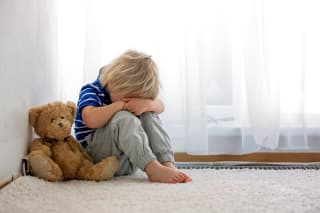
Not everything can be explained in a few sentences. The world of emotions is already complicated for adults; how are children supposed to cope with it, understand their own feelings and those of others, and deal with them? The fact is: children are very sensitive and engage with their emotions and their psyche more than many adults believe. Above all, they sense whether someone is authentic or not. That's why you should be honest whenever it comes to feelings, worries, or fears.
How do children process loss?
Just a few generations ago, death was naturally part of life for children too: grandparents and perhaps great-grandparents lived in the house, so children learned about aging, death, and grief as part of family life. Today, the death of a loved one often hits children unexpectedly. This is also because many parents consciously avoid the topic.
Partly they are caught up in their own grief and cannot support their child as needed. Experts advise giving grieving children enough opportunities to say goodbye — whether at the funeral, in a professionally led grief group for children, or simply by writing a letter to the deceased or visiting the grave together with the parents.How to explain death to your child You can read about it on a separate page.
Image credits
Father lifts a small child over his head © pikselstock - stock.adobe.com
Mother gives the child a kiss © Yakobchuk Olena - stock.adobe.com
Child sticks out their tongue at their mother © Anatoliy Karlyuk - stock.adobe.com Child sits alone in the room with a teddy bear on a white carpet © Tomsickova - stock.adobe.com