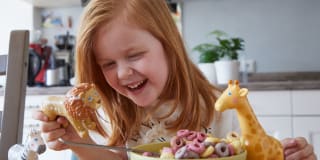
Have parents lost confidence in their parenting abilities?
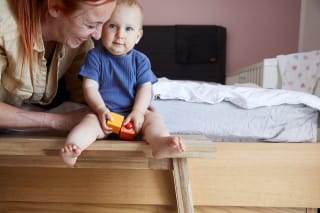
Are parents giving in to the general pressure to prepare their child as best as possible for life? Or is it the steadily growing range of support and educational programs that suggests the necessity of early, comprehensive support?
Childhood is not a training camp for adult life. Of course, children who are passionate about something should be encouraged and motivated by their parents. But despite all fears about the future, childhood should remain what it always has been. Time to play and time to learn and discover at one's own pace.
Courage to trust your gut — and the courage to simply let them be
Should parents feel guilty if they haven't yet enrolled their child in a music class in elementary school? If they would rather play for hours, lost in their own world in their room, than go to gymnastics or vaulting? If they lie on the carpet with their best friend and tell stories, instead of doing something 'sensible'?
Without courses, without performance pressure – the best support for children
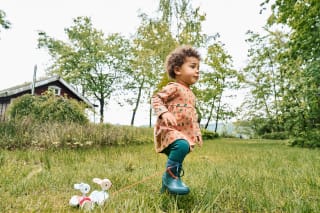
Support is widely discussed. Parents today know that the first years of their child's life play a decisive role in their later development — and that scares them. Fear, because they see themselves as responsible for fostering their child early and comprehensively so that they can fully realize their potential. Many forget, however, that early childhood education, to which such importance is now attached, has always been effectively provided within the family and circle of friends — through time spent together and, above all, through free play.
Purpose-free play:
In an era when even playgroups are assessed by their learning effect for the children, one thing gets completely lost: the importance of free, unorganized play for children — without aim, without guidance, and entirely free of time and boundaries.
Time:
Elementary school children have appointments every afternoon on weekdays: sports, piano, tutoring, playdates. At the weekend, parents organize an entertainment program with outings and events to make the most of the little time they have together. With so much free-time stress, children have no time to be alone with themselves — and to simply do nothing at all.
Boredom:
Shouldn't children always be kept busy so they can use and enjoy their free time? Children who are bored become creative: building forts, making up stories, crafting and painting – thus boredom can sometimes be the best impulse for imagination and initiative.
Let children simply be children!
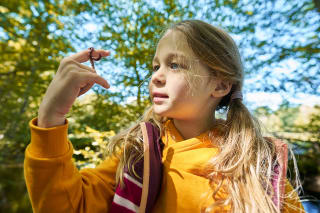
Let children simply be children is a campaign that we at HABA launched. It is a statement against the mania for advanced development and for more freedom for children – and at the same time the essence of what HABA has stood for for many years: We want not only to support children, but also to strengthen parents in their role and take away their self-doubt about whether they are doing everything right.
Parents today are under more pressure than ever to optimally support their child, to raise them "correctly" and, if possible, not lose sight of themselves. We want to tell all parents: loosen up a bit. Less is more. Playing is the most natural form of development for children. And: let your children be a little more like children.
Individualized – with support that matches your child's interests and talents
Loving – without obligation, but with lots of love and attention
Age-appropriate – at your child's own pace
Without pressure to perform – and without comparing to others
Without time pressure – but with lots of patience
With freedom – sometimes to not feel like it
With understanding – for doubts and setbacks
Courageous – with the necessary trust to simply let your child do their thing
With lots of fun – and genuine interest