

Household chores with a positive impact
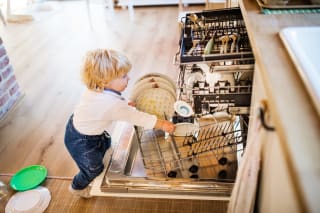
When children take on small tasks around the house, it not only eases the load for parents, it also creates an awareness that these jobs don't just get done on their own and gives children a sense of actively contributing to family life. It works best when a child has certain regular tasks, for example watering the plants, emptying the dishwasher or vacuuming. After a while your child will carry out these tasks routinely and regard them as a normal part of everyday family life. Until then you can approach it playfully: here you'll find ideas for keeping things tidy with children in a playful way.
Which household tasks are suitable at which age?

Toddlers are often very keen to help mum and dad with the household chores. They enjoy pretending to vacuum or handing items over while tidying up. If children are included playfully in household tasks from toddlerhood, they are very likely to view other tasks as fairly normal later on. Always ensure these tasks are age‑appropriate and let go of perfectionism for now.
Under three years can help parents, for example by unloading pans from the dishwasher, carrying spoons to the table or tidying books and toys together.
From about three to six years children can help with cooking, set the table independently or water the plants with a small watering can. At preschool age your child can also try wiping surfaces clean and sweeping.
From six to ten years children should tidy their own bedroom independently. They can take on regular duties such as feeding pets, taking out the rubbish or putting washed laundry away in the wardrobes.
At ten years old many children can already operate the washing machine and dishwasher independently, vacuum or clean the bathroom. Ask your child which tasks they would like to take on so they can choose the chores that suit them best.
… but safely! How do we make our home child‑safe?
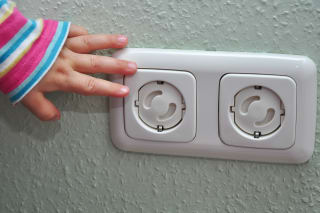
Not long ago you wouldn't have expected your baby to roll onto their tummy by themselves. And now they crawl across the living room at an astonishing speed, always with the socket in their sights. The soil in the plant pot looks like a tempting morsel and the cables along the wall are just as interesting as cupboard doors and shelves.
There is a risk of accidents even before the crawling stage. When babies gradually become mobile, parents must constantly be on their guard. Many seemingly harmless household items pose a high accident risk for babies and toddlers. In addition to cables and sockets, which should definitely be secured, it is above all sharp and wobbly pieces of furniture that can cause injuries. Read more here about what you should consider for a child‑safe home.
How do I make the home safe for my child?
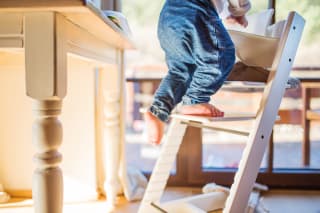
Secure wobbly furniture:
Children pull themselves up on anything when they are learning to walk – shelves, bistro tables or coat stands can topple onto your child.
Door stoppers or finger‑pinch guards for doors:
Small children are fascinated by anything that moves. To prevent them from trapping their fingers while playing with room or cupboard doors, you can fit finger guards.
Corner protectors for sharp edges:
Children learning to walk fall frequently at first – there should be no sharp edge in their path. Fit corner protectors to all the sharp corners of coffee tables, sideboards or storage boxes to prevent injuries.
Safety gate:
Even if you keep a close eye on your baby, there is sometimes not enough time to react in time. Therefore a safety gate is a must for any home with stairs. Nevertheless, you should practise stair climbing with your child so they develop confidence on the stairs.
Secure sockets:
Both used and unused sockets should be fitted with socket covers. It's best to place extension leads out of your child's reach.
Discover more articles about everyday family life



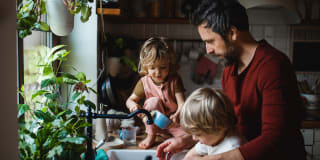




Image credits
Dad vacuums the kitchen with his two children © Halfpoint - stock.adobe.com
Toddler hangs upside down in the laundry basket © Halfpoint - stock.adobe.com
Boy helps his father clean the kitchen unit © Halfpoint - stock.adobe.com
Baby climbs onto a Tripp-Trapp chair © Halfpoint - stock.adobe.com