





5 facts about siblings
Siblings in the majority:
Around half of all children under 18 in Germany grow up with a sibling. Just over a quarter of children have two or more siblings, another quarter grow up without siblings.
Shared genes:
Siblings share on average 50% of their genetic makeup; in identical twins the genes are even 100% identical.
Instinctive differentiation:
Despite the genetic closeness, siblings are not more similar in their preferences and behavior than children who grow up in different households - studies suggest rather the opposite: presumably siblings instinctively strive to differentiate themselves from their siblings.
Natural competitors:
Rivalry between siblings seems instinctive. In the animal kingdom, for example, the young of a litter compete fiercely from the start for the mother's teats. Twins in the womb also appear to be rivals - after all, one of the babies is usually larger and heavier than the other.
Variable relationship:
Sibling relationships usually follow a curve: in the first years of life and through the school years sibling relationships are very close; from puberty and into young adulthood interest declines significantly. In later life, siblings come closer together again.

Best friends or competitors? Rivalry between siblings
Dreamer meets rascal, bookworm meets sports fan: parents are repeatedly surprised that their children, although they largely have identical genetic makeup,can be so differentcan be. According to sibling research, these different personalities are not fixed at birth, but are attempts to distinguish themselves from one another andto occupy a particular place within the family. Of course, life circumstances, the children's gender and the parents' behavior also play a role in thethe personality development of siblings. And yet, with multiple siblings a kind of zigzag pattern can often be observed: if the firstborn is particularly lively and hot-tempered, the second child will probably be much calmer and more relaxed, the third then very impulsive again, etc.
Fight for parental attention
The most common and fiercest fight between siblings is the one over the attention and love of the parents. Whether it is fought consciously, for example when two siblings vie for academic or athletic successes to win as much praise as possible, or whether the rivalry is carried out more unconsciously, as is often the case with small children – Competition among siblings is relatively normal and can, in some circumstances, even be an incentive.
At the same time it shapes them for life: children who have alwaysstood in the shadow of an older brother or sister have often, even in adulthood, to contend with low self-esteem. Crucial for personality development is the parents' behavior: if they manage to treat two or more siblings fairly and according to their respective needs, they take the sibling rivalry effectively the wind out of the sails.
Siblings vs. only child
What are the differences?
Only childrenare overprotected, spoiled know-it-alls who find it difficult to share with others or to integrate into a group – such and similar are the prejudices that one-child families have to listen to again and again. But can the character of only children really be generalized that way? No, say psychologists – if the growing up without siblings influences character, then rather in a positive way.
According to recent studies, only children on average are more sociable, more achievement-oriented and overall happier than children with siblings. This may be mainly due to the undivided attention and love of the parents that accompany only children throughout their childhood. Experts today assume that it is not so much siblings who shape children's social behavior and personality, but contact with other children in general. Whether and how many siblings a child has therefore doesn't seem to be that important. It is still believed thatchildren with siblings often develop a fine sense for other people and are more assertive. But the negative basic image of only children must definitely be revised.
New baby: How do I prepare my child for a sibling?
Almost all childrenwant siblings: The idea of having a little brother or little sister as 'reinforcement' for playing and goofing around is, after all, very tempting. But when a baby really is on the way, children's feelings are usually ambivalent: Thecuriosity about the new siblingmixes with the fear of having to share the parents in the future. The pride of soon being a big brother or big sister alternates with the wish that as little as possible should change in the familiar family life. All these worries are of course justified: That makes it all the more important that the parents carefully prepare their firstborncarefully prepare for the baby, so that the future siblings have the best possible start together.
Finding the right time:When you tell about the new baby depends on the age of your firstborn. Only at primary school age is a child's sense of time developed enough that they can make sense of a statement like "in four months". Toddlers are best informed a few weeks before the birth so that the waiting time for the baby is not too long.
Be honest:Stick to the facts – explain to your child that newborn babies look red and wrinkled, that they cry a lot at first and that you have to take care of them constantly. You can gently prepare your child that they will surely sometimes be fed up with their sibling – but that eventually they can become a great playmate.
Involve your child in the preparations:Let your firstborn take part in decisions about setting up the baby's room and choosing toys. That solidifies their position in the family and at the same time increases the anticipation for the sibling.
More tasks for dad:If possible, dad should now spend more time with the firstborn child – he will become a very important figure in the first months after the baby's birth. Shared reading time, outings or regularly taking the child to daycare are a good preparation.
When sparks fly between siblings
Sibling conflict is completely normal. In many families, loud quarrels and small scuffles are even part of everyday life. While that can wear on parents' nerves, you shouldn't try to prevent everyday conflicts: In fights, siblings learn to represent their interests and assert themselves – just as they learn to deal with defeats and reconcile.
Should parents intervene in conflicts?
As long as no violence comes into play, you should allow theallow sibling conflicts. Point out to your children that they are best to resolve the conflict among themselves - usually the siblings will agree soon. If a dispute has no end at all, you cantry to mediate, for example by proposing a compromise.
Why do siblings argue so often?
On the one hand because of thephysical closeness. Especially in preschool age siblings spend a lot of time together and often share a room. That provides plenty of potential for conflict. The good news: intense fighting is only possible when your childrenhave intense feelings for each other - often siblings argue more fiercely, the closer they are.
What causes these arguments?
On the surface it's often about a toy or about who can do something better. In most cases, however, the fight is often about gaining theparents' attention. That's when shouting and crying gets louder - in the hope that a parent will step in and take sides.
Tips for parents – how to support strong sibling relationships
Never compare siblings with each other – rather praise and encourage each child individually for what they do well.
Fairness instead of equality: Treat your children fairly at all times, but don't try to treat them all equally – that won't work because of age differences.
Spend 'quality time' alone with a child now and then – that strengthens your children's self-esteem and leaves less room for rivalry.
Make siblings into partners:Play games against two siblings or ask the siblings to complete a task together – that strengthens their bond.
Contact with other children:In day care, kindergarten and school this comes naturally – but in the afternoons siblings should also regularly play with other children to see themselves as individuals outside of the family.
Don't force anything:Not all siblings are inseparable. If your children treat each other amicably but otherwise show little interest in each other, you should accept it – maybe they'll get closer as adults.
Discover more articles about everyday family life


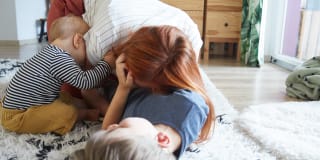





Image credits
Big brother holds his little sister tightly © Photo-Maxx - stock.adobe.com