Which areas does holistic development include?
When a child is born, many of the foundations of their development are already laid. But only through experiences, stimuli and information can a child learn. Holistic development assumes that children gather experiences through movement and play, which consequently lead them to develop in various areas. It is particularly important to learn these skills early in childhood, as deficits are difficult to catch up on in adulthood. Development takes place on different levels:
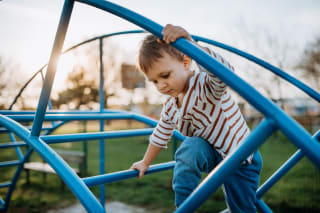
Motor skills: The motor skills of your child are not yet developed at birth. But through movement and trying things out, little ones quickly learn to coordinate their hands and feet. Psychomotor skills such as gestures and facial expressions are also learned by children in the first years of life. Your child is now getting to know their physical abilities and also how to assess them.
Psychological development: Through the successes and achievements your child can record in daily play and through physical activities, the foundation for their psychological development is laid. Your child also learns about their physical limits. What attitude does your child have toward their performance and their environment? Are they self-confident? Are they willing to take risks? Do they have strong perseverance?
Social development: Especially in play with other children, your child develops social skills. They form friendships; learn rules and to adhere to them; they learn to handle conflicts and discover that there are stronger and weaker people and how to deal with them.
Cognitive development: Through movement and the opportunity to get to know many things in their environment, children understand the connection between cause and effect. By actively engaging with their environment, your child develops intelligence and the ability for reflective thinking. Movement and perception trigger synapse formation in the brain, and the more complex these connections are, the more intelligent a person is.
Emotional development: In play, your child not only gets to know their body, but also finds a way to express their feelings. Especially by stepping into different roles, but also when painting or building, a child can process emotions such as anger and joy.
How can I integrate holistic development into everyday life?
The goal is not to accelerate or force a child's development – every child has their own learning and development pace. Accepting this pace is important to avoid overwhelming children and to let them be themselves. But as parents you can support your child in their development. In terms of holistic development, this means: lots of movement for everyone, preferably outdoors! We have put together some tips for you on how you can promote your child's holistic development:
Fun in play comes first. Because only when children really want to do something do they engage with an object or truly get involved in a game. Try to be patient if your child shows no interest. Offer them other activities until you find something they enjoy.
Children are naturally creative and full of ideas. Whether playing independently or with other children: most of the time the little ones come up with something to occupy themselves. But if they do get bored, you can encourage them to play or suggest activities.
If your child is deeply engaged with a game or an object, do not try to interrupt them. Not even if you want to show them how it might be done better. Children learn by trying things out; if they need help, they will come to you.
Motor skills can be developed in small movement games, such as balancing or hopping games, and are a lot of fun for most children. Enable your child to play with other children. This way they can practice interacting with others, form friendships, learn to measure themselves against others, and resolve conflicts.
In Germany there are many kindergartens that place great value on movement. Movement kindergartens or forest kindergartens offer children the freedom for adventure and outdoor activity.
Discover more articles on parenting & psychology









Image credits:
A little boy plays on an outdoor playground © Halfpoint - stock.adobe.com