Why do children have nightmares?
Almost all children have nightmares now and then. That doesn't necessarily mean your child has experienced something bad — sometimes a nightmare is also a way to process too many or too complex stimuli from the day. Reasons can include, for example:
Is there a remedy for nighttime nightmares?
For children, bad dreams are all the more frightening because they can't really distinguish between dream and reality yet. Often the feeling of fear that a nightmare triggered remains until the next day and may trigger new, completely unfounded fears. Over time and with a lot of care from their parents, children learn to cope with their nightmares and to put them into perspective. There is no real cure for nightmares, but fortunately bad dreams don't occur too often. You can prevent them by establishing regular bedtimes and as structured a routine as possible with one or two bedtime rituals. A night light and a tidy sleeping environment help, as does a calmly organized evening: for example, you could read a story together or talk about the day before falling asleep to review experiences and impressions. If your child frequently has bad dreams, has a recurring nightmare, or refuses to go to bed out of fear of bad dreams, you should make an appointment with your pediatrician to find out what might be behind it.
A special kind of nightmare: the night terror
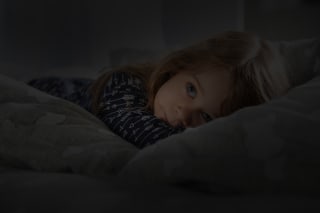
Persistent nighttime screaming: In general, children can usually be quickly calmed after a nightmare with some cuddling and comforting words. Parents are all the more shocked when their child suddenly sits in bed screaming loudly at night and simply will not calm down. The so-called 'night terror' (pavor nocturnus) is actually not a nightmare but a type of temporary sleep disorder that mainly occurs in children between two and six years of age.
Like in a trance: In these cases, the children get "stuck" in the transition between deep sleep and the half-awake phase and are like in a trance — they often have open eyes but do not wake up. Many children also do not want to be touched during a night terror or thrash about when parents try to comfort them. However, after five to ten minutes everything is usually over.
Distressing but harmless: Even though the persistent nighttime screaming attacks are frightening and nerve-wracking — basically the night terror is completely harmless. The majority of children only struggle with this type of parasomnia now and then until it eventually stops on its own.
First aid for bad dreams
Be there and stay: Always respond when your child calls you at night and stay with them until they have calmed down.
Physical contact: Cuddling is the best medicine against nightmares — maybe lie down in bed with them for a while.
Let them tell it: If your child wants to tell the dream or remembers it, listen — if they don't want to tell, that's also okay.
Just a dream: Make it clear to your child that the dream is not real — they might not believe you, but the comforting words are still valuable.
Important comforters: Turn on the night light, give your child their favorite cuddly toy or another familiar comfort object so they can continue to sleep calmly.
Image credits:
little girl covering her face with the duvet ©Raul Mellado - stock.adobe.com