1. Learning strategies for home
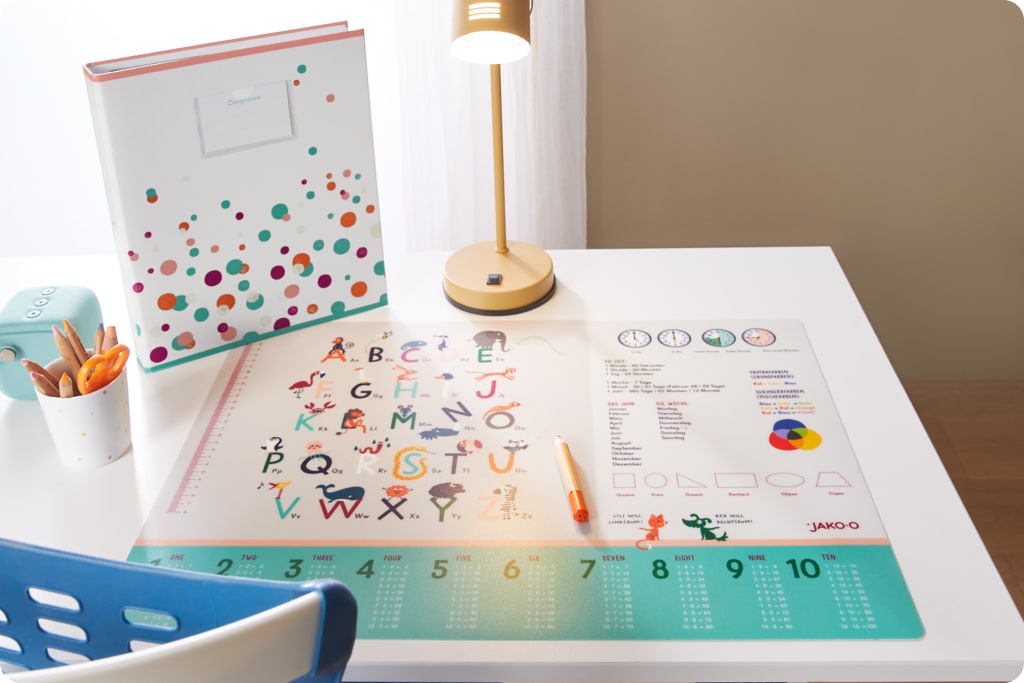
The learning at home is influenced by many factors. Often children have difficulty concentrating because too many distractions are present and they prefer playing in the children's room to studying. In addition, their attention span is initially very short. Children must first learn to concentrate on one thing regularly and for a longer period. Motivation to learn seems to decline over time.
To prevent this, when learning you should above all emphasize one thing: fun! First and foremost, it is important that your children experience feelings of happiness while learning and enjoy gaining new knowledge. Then the chance is much greater that they remain motivated in the long term and learn voluntarily. Create a feel-good atmosphere in which there are no unnecessary distractions and the fun of learning is the priority!
Why is learning so important?
Always make it clear to your children why they are learning. Because primarily they do it for themselves. Set small goals together and link them to special rewards that will motivate your children on their own. For example, explain to them that they are learning to write in order to send dear Grandma a greeting card, which she will be very happy about. Subgoals help keep focus.
In general, it is helpful to link the learning material to everyday situations (e.g. math to calculate the ingredients for a delicious recipe). It is also important that you are a good role model . Familiarize yourselves with your children's learning materials, show interest and acquire sufficient knowledge yourselves. Because parents' ignorance can also be a big challenge when learning at home – and that's exactly what you should avoid!
Try these learning strategies:
Sit down together at the table and let your children explain to you what they are working on. Only help them if they explicitly ask for it. When they slip into the role of the teacher, it fills them with pride and they associate positive feelings with the learning material. That is highly motivating. Your praise increases their sense of achievement and is also motivating.
You can also support your children by trying out different learning methods together. Integrate the one that works best for you into a learning plan, so that you find the perfect balance between study time and normal everyday life with fun. Never put your children under pressure to achieve the best possible results. Then they lose the fun of learning. They then associate learning only with negative feelings.
So that children enjoy learning at home, a quiet, relaxed and tidy learning environment is also important. Because when the little learners are unaffected by external stimuli and an unsettled environment, they will unpack their learning materials on their own and voluntarily to do something for school.
2. Creating pleasant learning spaces at home
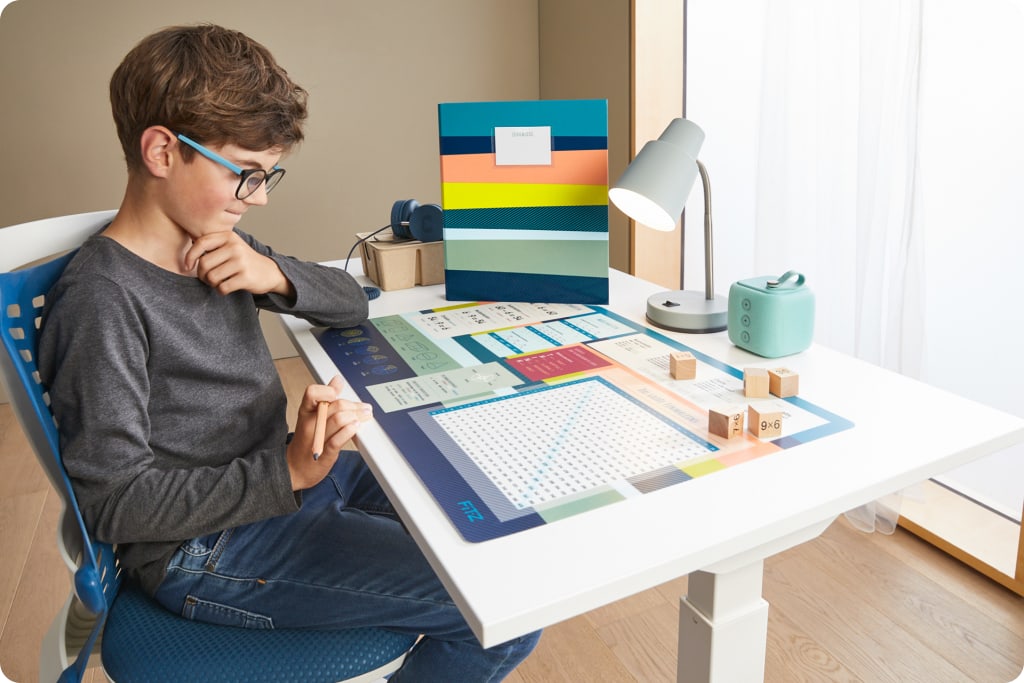
In kindergarten it's about romping, running, playing. The transition to school means readjustment: full concentration, sitting quietly and learning great new things. So that the little ones can also apply what they have learned after school, they need at home a suitable learning place. Only in this way can they really complete homework and co. productively and with concentration.
The issue of back health and the correct sitting and learning posture at the desk play a very important role. Because schoolchildren spend on average about nine to ten hours a day sitting: on the way to school, in the classroom, while eating, doing homework and in front of the computer or TV. This often leads to tension and the so-called 'school headache'.
The right learning environment counteracts that. If you pay attention to the following points, nothing stands in the way of learning success:
Make the learning environment bright, quiet and colorfully appealing. Soft shades like light blue are particularly suitable.
Visually separate learning and play areas. Place shelves as room dividers or distinguish the areas by different wall colors.
Do not seat your children with their backs to the door or facing the window – that only distracts.
Place the desk preferably sideways to the window, so that enough light can enter from outside. Because nothing beats daylight.
Pay attention to your children's personal needs. For right-handed children the light should fall on the work surface from the left, for left-handed children from the right.
When it is dark, use an adjustable desk lamp. Energy-saving lamps are often too weak for this; LEDs with a natural color spectrum are better. A bright, matte work surface relieves the eyes.
Keep TVs and game consoles out of sight, to avoid distractions.
Align the PC screen for digital learning in the children's line of sight. The top edge should be roughly at neck height. A distance of about 50 centimeters between screen and eyes is ideal.
Pay attention to ergonomics. On a suitable children's desk chair, your children should sit upright with both feet on the floor. This posture protects the back.
Adjust the children's desk to the right height. This supports your children's upright sitting posture. Check regularly whether the settings still fit.
3. Materials & accessories for learning at home
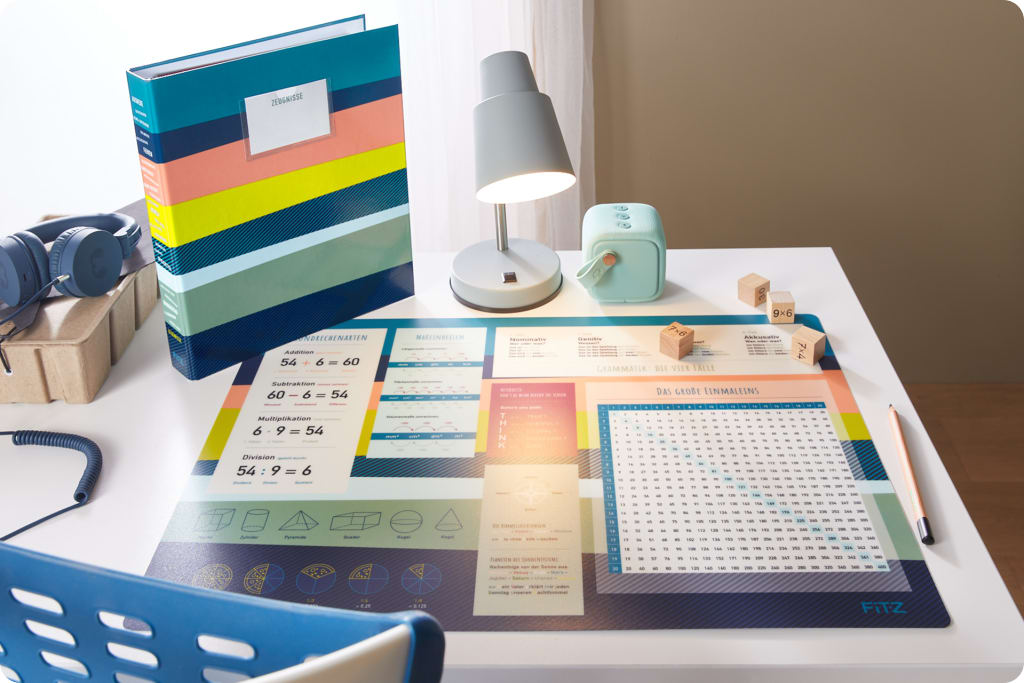
A tidy desk is half the battle for learning success. Tidiness ensures that your children can fully concentrate on their school things. Whether a sturdy vertical file, a practical \"landing pad\" for loose sheets, or a clever folding wastebasket: Clever organizational aids bring order to your learning materials.
If the space in the apartment is not enough for a separate learning space or the siblings share a room, other solutions are needed. Whether dining room, living room or kitchen – all these rooms can be converted into learning places.
So that the children can learn undisturbed, it is important to record study times in a weekly schedule. Fixed times are necessary to make it clear to all family members that no disturbances are allowed during the scheduled study hours are. Full concentration is required.
Before you then start with the learning in the living room, kitchen, and co. starts, it is recommended that you lay out all the materials you need. The same applies here as with a desk: tidiness is half of life. With the right storage boxes and writing utensils, subsequent tidying up is also easier.
In general, you should store all teaching materials in a separate place . This can be, for example, a shelf only for school supplies. So you can use the repurposed learning spot again for everyday things and there is also a certain 'spatial separation' from the learning material. This is important for the balance between school stress and everyday life at home.
4. Finding the right sitting position when learning
An upright sitting posture is extremely important for your children's health: Regularly make sure that your little learners are not hunched over their schoolwork. Because an incorrect sitting posture at the children's desk and an incorrect height setting of table and chair can lead in the long term to postural damage, back pain and muscle tension . To promote healthy sitting, we have described here how the correct sitting position looks:
The sitting posture depends crucially on whether table and seat height are adjusted to the children's body size are.
If everything is set correctly , the sitting position almost comes naturally.
Nevertheless, you should check from time to time whether the settings are still correct, because children grow quickly. Our tip: Check the setting every six months of desk and desk chair and adjust if necessary. As a general rule of thumb, the following is helpful for orientation: The seat height corresponds to knee height and the tabletop is at elbow height when sitting upright.
When the workspace is set correctly, your children should adopt the following body posture: The thighs rest on the seat surface, both feet flat on the floor, the legs form an angle of about 90 degrees or slightly more. The angle between the upper and lower arms should also be at least 90 degrees.
With an inclined tabletop , the elbows are ideally two to three centimeters below the edge of the table. The back rests against the backrest. This supports and protects the lumbar and shoulder area.
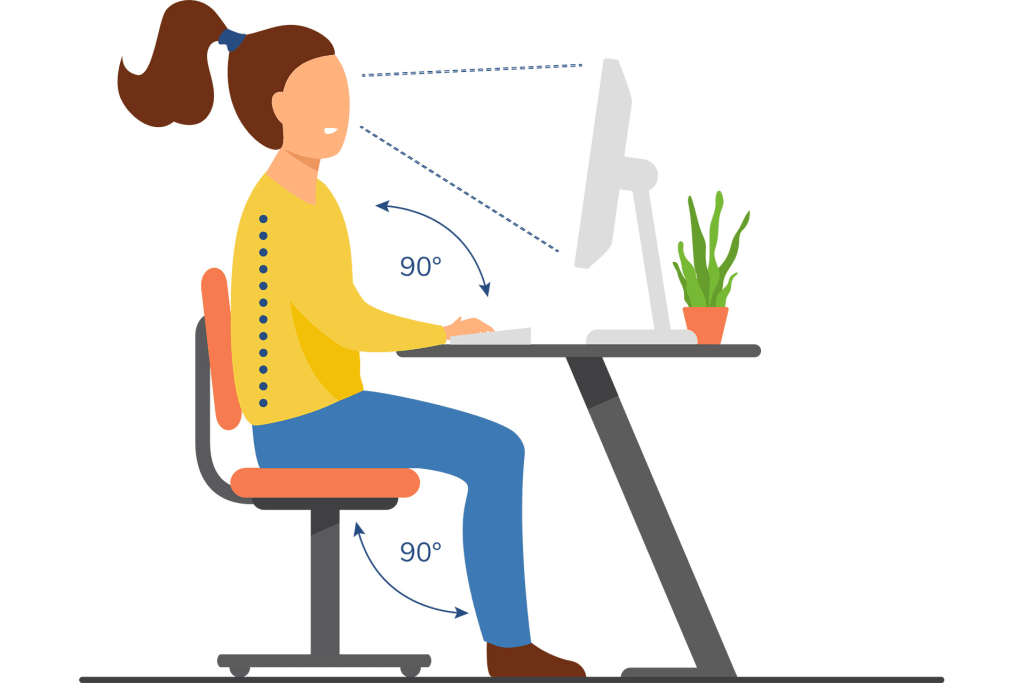
Instruction & memo for correct sitting
5. Concentrating while learning at home
After some time, even the most attentive children can have difficulty concentrating. The body craves movement and every little thing suddenly seems more interesting than the learning material. But what if inner restlessness, lack of concentration and reluctance to learn become the norm?
Often parents immediately suspect an attention or hyperactivity disorder. You should always clarify this with a doctor. Depending on the diagnosis, therapy or medication may then be helpful. In addition to hyperactivity, deficiencies may be the cause of the inattention. You should also discuss this with experts.
In general it is normal if your schoolchildren become inattentive after a while . For some exercises, movement is even a good measure, to still remember a few vocabulary words. However, if your kids are plagued by inner restlessness, it helps to leave the school materials from class for a short time.
Our tip: Take breaks! After just twenty minutes the little kids' heads start smoking and need a little movement break. Simply let the fidget out, stand up, get some fresh air, drink plenty and provide healthy snacks. That makes learning a lot easier!
6. Relaxation while learning at home
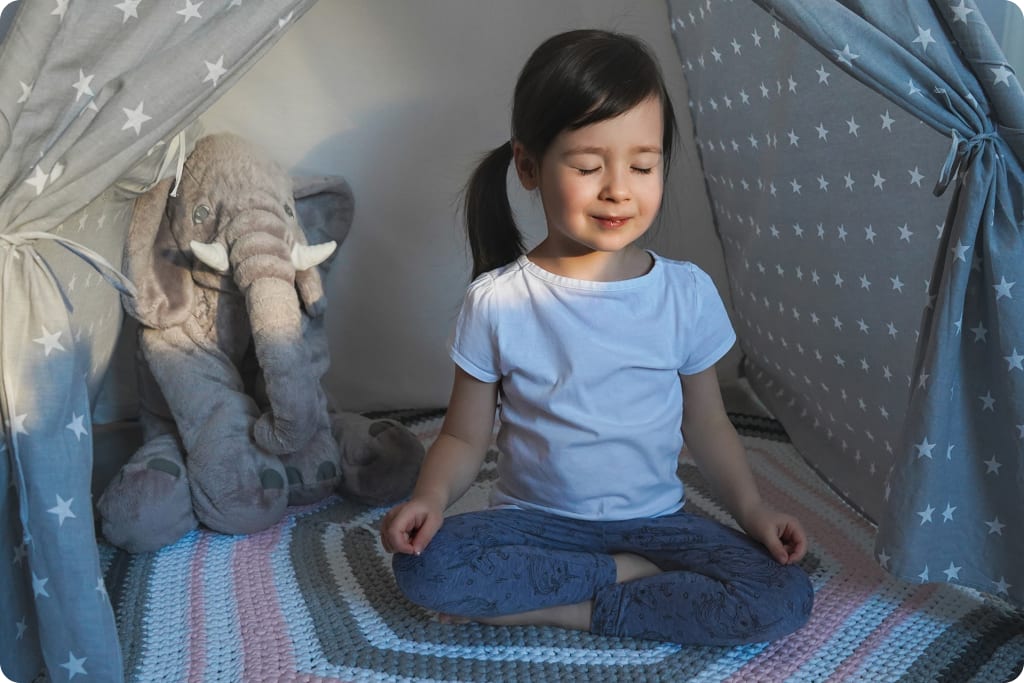
It is also good for your kids to calm down during breaks while learning. For this, this breathing exercise is perfect, which you can do together with your children:
Sit down, lie down or stand up. For children, the cross-legged position is often the most comfortable.
Breathe in deeply through the nose and out through the mouth.
If you have done this two to three times, feel with your hands on your belly how it moves up and down with each breath.
You can let your children discover belly breathing playfully or guide them deliberately. If you choose the latter, have your little learners breathe in and out sometimes slower and sometimes faster.
Count your breaths so that you focus on yourselves and are not distracted by anything else.
7. Order for a better learning experience
An A tidy learning environment promotes learning success. If the desk is tidy and even the smallest compartments are in order, the children will not be so quickly distracted from the task. They also have a good overview of their school supplies. That saves time: They use their study time effectively and can then look forward to great leisure activities.
How do you motivate your children to keep things tidy? Create small incentives and bring some fun into your tidying-up sessions. Since your children only learn through repetition, it's best to include tidying in your routine. At set times you then get to work together. You can sort binders and other materials as well as toys in the children's room by color, sort out old things or start a small tidying competition.
8. Time organization
So that the learned material sticks, repetition and regularity are important. A learning plan can help you plan study times and use them effectively. Take into account the individual learning pace of your children. They also no longer feel overwhelmed by a whole mountain of tasks. They learn to complete everything in stages.
9. Introduce rituals
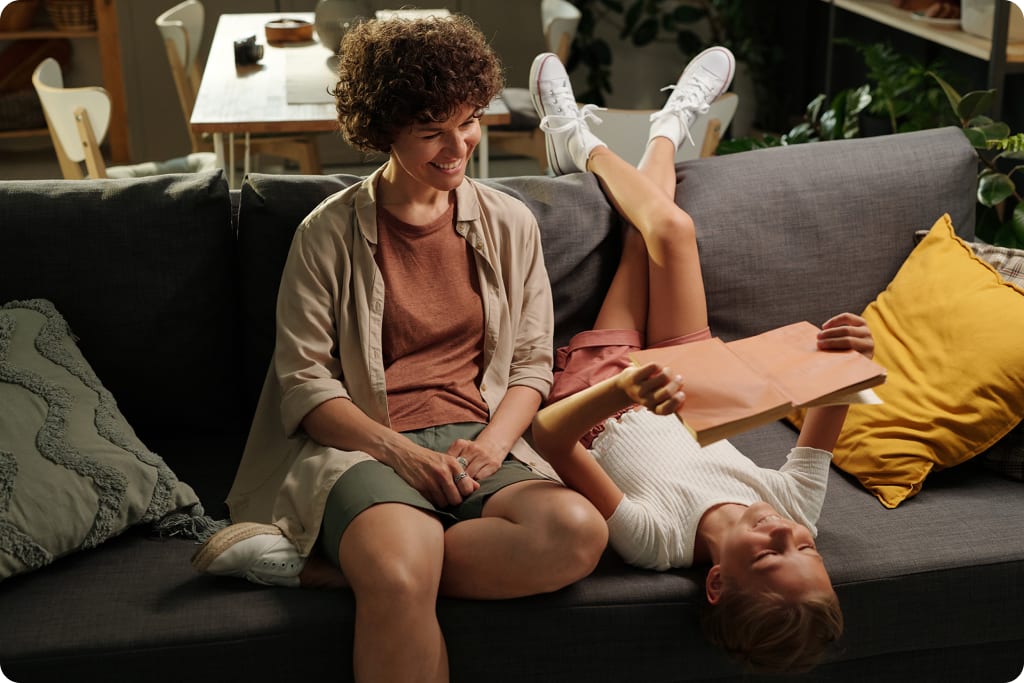
Make joint learning and work times with your children a ritual, by setting fixed times. During these times your children follow self-determined rules of conduct, which enable effective working and learning. They put phones, tablets and the like aside and concentrate exclusively on homework and other to-dos. It motivates your children enormously when you as parents are there. They don't feel alone in their learning situation and see that you can also work with focus.
It is also helpful if you have a fixed daily structure to stick to. In addition to breaks and movement units, also the shared lunch or the tidying of the school bag are small rituals, which promote a good learning rhythm.
10. Success in learning at home
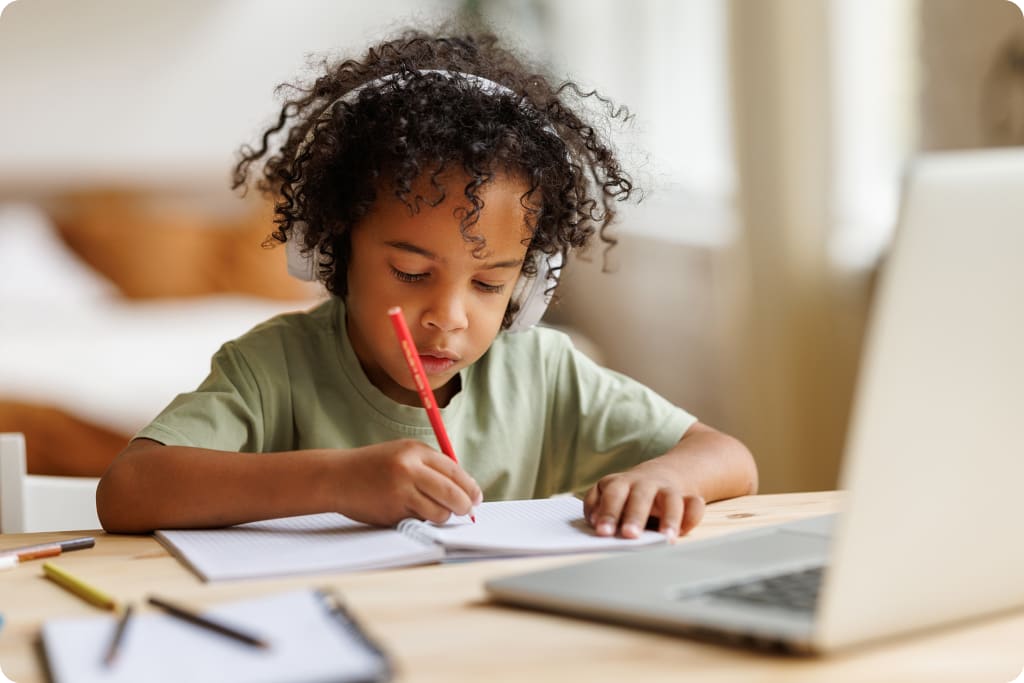
To achieve learning success, children need time to learn how to learn. Not all children are immediately exam-ready or fit for the next learning content after the first study sessions. Therefore always prepare study sessions well. Decide together which tasks your children want to work on and define small subgoals. Not all tasks can be completed in one day.
This only leads to overburdening, which you want to avoid. Every child learns differently. Therefore you should start with easy tasks and then raise the level step by step. Tailor it entirely to your children's learning pace. In addition, not every little learner is suitable for every subject. In one subject or another, they simply need a bit longer. You should accept this with patience and find ways to support your schoolchildren as best as possible. In your study sessions, generally switch subjects after a few minutes. Similar learning content should not be learned directly one after the other, otherwise your children will confuse the details.
Basically: Combine learning with fun - that greatly increases motivation! For example with games that challenge the language, arithmetic and problem-solving skills of the children.
11. Praising children properly
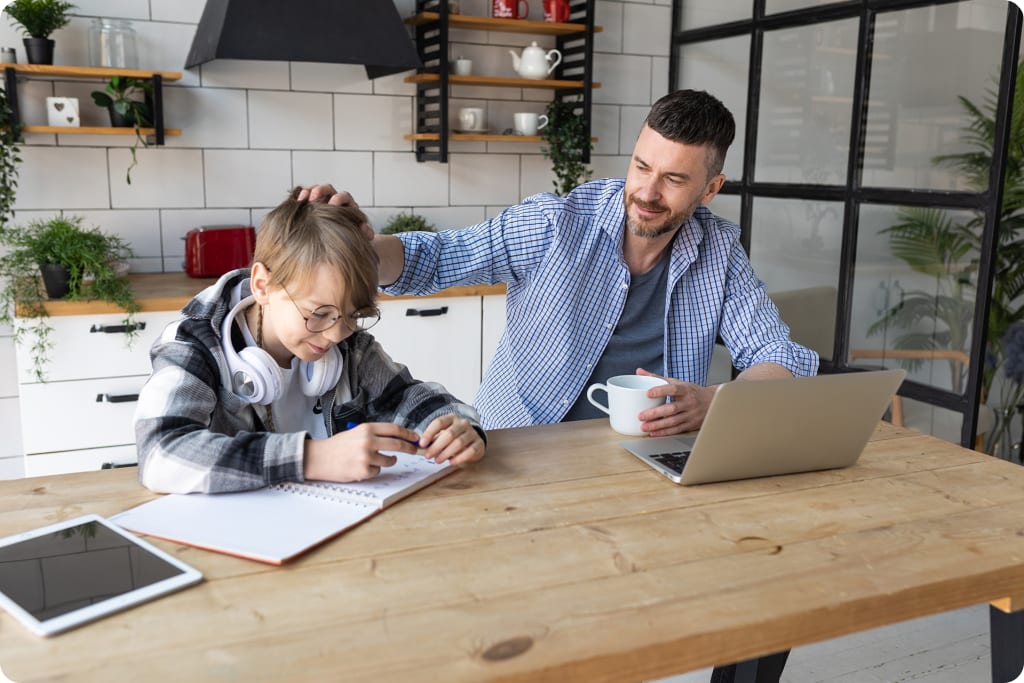
Praise for effort and attempts is important. When children are praised for things they can influence themselves, such as studying on time, perseverance and ambition, it gives them a a big portion of motivation to keep at it and also to tackle difficult learning tasks.
Experiences of success boost learning motivation as does the right kind of praise from you as parents. You should above all the highlight the diligence and commitment of your children and appreciate them. That is much more important than putting grades at the forefront.
So praise your children whenever …
... have made an effort – especially in subjects that are difficult for them.
... they have tried to start studying in time and to prepare for tests and exams.
... they study independently and do their homework.
... they ask for support because one task or another is not so easy for them. They admitted that and are therefore open to new knowledge they did not have before.
... independently reflect on perceived poor grades or seek feedback to improve on their own.
Convey to your children first and foremost that also mistakes are allowed and they are therefore not immediately any less good. From mistakes, poor grades and even occasional disinterest they also learn for life.
Frequently asked questions about learning at home
How can we structure the learning sessions at home?
How can learning at home be connected with learning at school?
How can we make breaks while studying at home active?
Read more articles about childcare & school

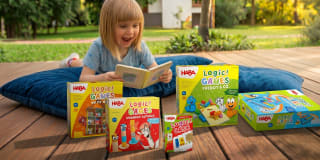
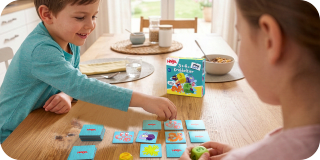





Image credits
Father explains his son's homework © JenkoAtaman - stock.adobe.com
Girl sits in a tipi tent and meditates peacefully © Надин Стокер - stock.adobe.com
Boy and girl with a book on the sofa © pressmaster - stock.adobe.com
Boy sits at the table studying with headphones on © JenkoAtaman - stock.adobe.com
Father praises his son while they work together at the table © ArtSys- stock.adobe.com