When do children start to speak?
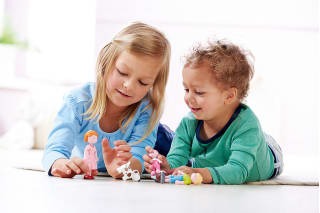
Some children say their first word as early as nine months, others exactly on their first birthday, and others take until their second year. In the course of the third year of life the number of words children actively adopt into their speech grows explosively. Experts currently think that children learn their first 50 words only very slowly. Later they can learn up to 10 new words a day. This phase lasts roughly from 18 months to six years of age
Supporting language development is fun
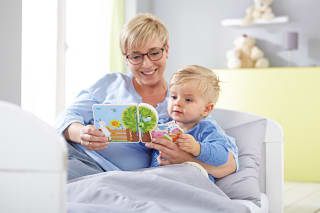
Generally, children love to talk and are very creative with sounds, words, sentences and their voice. Everyday situations can easily be used to support children in the lovely process of language development. Many words, and also grammar and pronunciation are extended and reinforced through active practice: when doing a puzzle or board game, reading or being read to, looking at picture books, experimenting or singing. The possibilities are many
Playful support for communicative development
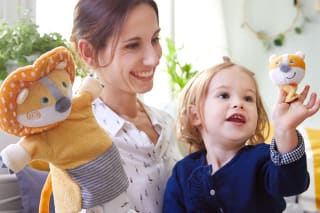
Promoting communicative development with dolls
Role-play is a wonderful way to get children talking. Particularly when playing with dolls children process things they have experienced in their everyday life and often take on the role of a parent. They often imitate conversations or sometimes fall silent. Even then, though, they are telling a story in their heads and thus expand their language skills.
Promoting communicative development through children's games
Children's language development can also be fostered through playing together. The HABA classic Obstgarten not only broadens vocabulary, language comprehension and sentence forms, it has brought children and their families lots of fun for many generations.
Promoting communicative development with children's books
Stories prompt children to speak. That's why reading aloud is so important for language development and also helps strengthen children's personalities and social skills. Regular reading aloud at a set time thus becomes an intense snuggle and feel-good time.
Babies can already play with buggy books, and from the age of one children are old enough for their first board picture books with simple illustrations and short rhymes. Later they enjoy short stories and their first non-fiction books about everyday life, their favourite animals, vehicles or toys.