Sibling love - a strong bond
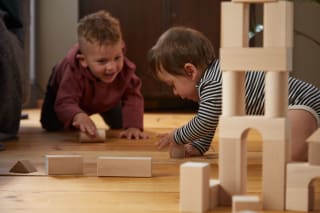
Sibling love is the expression of a deep bond, which lasts from the beginning of childhood until the end of life and binds siblings together.
It is an intimate bond that doesn't form overnight. Rather, sibling love is shaped, taught, and later maintained independently through parental upbringing.
Thus, the love between siblings shaped by values and ideals, which were already conveyed to them in their childhood. You as parents model for your kids how they will communicate and interact with each other in the future.
In this way you lead by good example in terms of consistency and show how relationships should be nurtured and cared for. One of the most important characteristics of sibling relationships is the spatially and emotionally inseparable closeness, which leads to this strong bond. Growing up together results in shared childhood memories and a special degree of intimacy between brothers and sisters that outsiders can hardly understand.
The cohesion among siblings also often manifests in unwritten obligations that are reflected in helpful and supportive behavior are reflected. But like life itself, sibling love also goes through various phases.
It can happen that your children, in adulthood, pursue different opinions, interests and ideals that separate them for the first time. To prevent such phases, a complete breakdown of contact, or even huge rivalries, there are tips to help foster love for one another.
So that no child is left out: Customizable products for loving siblings:
What makes sibling relationships so special?

A sibling relationship is hardly comparable to any other social relationship.
The closeness that develops between siblings from birth makes them close allies who navigate everyday life together. Memories that bind them together remain a lifetime and can never be taken from them.
Children who grow up together, know each other inside and outFor this very reason, the sibling relationship is regarded in psychology as something very special.
Because here two poles lie very close together: love and hate.
Shared upbringing in particular brings small hurdles that can fuel jealousy or sow pure love.
Siblings learn early to assert themselves and stand up for themselves.willingness to compromise is already taught and encouraged at a young age.
Siblings Day (April 10) – what can be done?
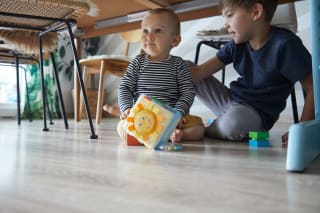
April 10 is a very special day because it belongs only to the siblings of this world. Since 1998, on this day all siblings celebrate and, above all, appreciate each other. Claudia Evart created World Siblings Day to commemorate her two deceased siblings. To this day her tradition continues, which has even become an international holiday.
What can you do on this day? Maybe start with a great family breakfast including heartfelt conversations in which you talk about the meaning of the day and sibling love. You can emphasize how proud you are of your children and what characterizes their love for each other. You then shape the rest of the day as you decide together as a family. It is important that you involve your kids in the planning – after all, it is a day that belongs only to them. By doing so you give them appreciation that, in turn, fills all little brothers and sisters with pride.
From fun activities with the children to small gifts that you make in shared crafting sessions you make for each other, everything is possible on Siblings Day that you can imagine. Set out on walks, hiking trips, climbing sessions in the park or plan a cozy game afternoon with Family game ideas – no matter what you choose, the shared family time should always be the focus.
Our games for great family fun:
How to foster your children's sibling relationship
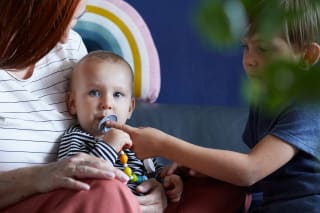
By the time you tell your firstborn that you're expecting a sibling, the sibling bond has already been formed. During pregnancy you can make intensive use of the time until birth to prepare yourselves, but above all your children to prepare for the sibling.
Because firstborns in particular feel the so-called \"dethronement\" the most: The time they had alone with you will later be painfully missed, unless they are given the feeling of being an important part in the new phase of life. So let your kids take part in all the small tasks that concern the baby and are appropriate for their age and abilities.
You as parents are important caregivers who first teach all siblings how to communicate and interact with each other. Treating everyone completely equally is not always possible, however it is possible to establish set basic rules and rituals, which promote sibling love.
To prevent the dethronement trauma, rivalries and the fear of being neglected by mom and dad, you should always rely on the care for one another as a core value.
This way you may give your kids perhaps even small tasks, with which they are allowed to share a tiny part of your responsibility with you. Whether it's putting away baby clothes in the wardrobe, helping with diapering and dressing the baby or the shared reading aloud in the evening – small tasks can make a huge difference in this case.
To foster sibling love, you should always lead by example. The way you behave towards your own siblings and partners will also be reflected in how your children treat each other.
Set clear communication rules and point out to each sibling, regardless of age, when they are in the wrong and have not behaved properly towards their sibling.
In addition to shared rituals such as the bedtime story before going to bed or fun play afternoons, you should also establish so-called exclusive times. This gives each of your kids the opportunity to spend time alone with a parent, which also strengthens the parent-child relationship.
Whether mother-child or father-child – exclusive time with the mother or father is valuable and should never be too short.
To avoid jealousy, the exclusive times should also be alternated. In general, you should never compare your children with each other, because they are individual personalities.
Praise them for their teamwork as well as for their ability to share things with each other and teach them fairness. These are social skills that will also benefit them later in life.
Provide shared successes that they achieve through projects or similar. These will bind your kids even more closely together.
As a rule, it is beneficial for sibling love if you also actively spend time together as a family and are there for one another. Security and the feeling of being needed and loved strengthen your cohesion so that nothing can easily shake it.
Fostering sibling love: tips to download:
Sibling love shapes child development
In child development, your kids grow into their own little personalities that continue to develop later in life and are shaped by various influences. If they grow up with siblings, those siblings are also significantly involved in each other's development – very similar to the influence you have as parents.
How strongly siblings shape child development depends heavily on the age difference. Therefore HABA has listed and explained possible age differences.
Age difference of 1-2 years
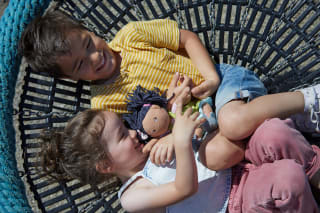
If there is only one to two years between your children, they hardly notice the influence on each other.
Jealousies usually concern rather small things, such as different gifts or toys.
Here it is important to take the problems that may arise seriously – no matter how small they may seem to you – and to explain why one or the other sibling is allowed to play with the toy or similar.
As a rule, with such a small age difference it is noticeable that interests and needs are still very close together, which is why the siblings work exceptionally well as a team.
Of course it again depends on your responsibility as mother and father, because both children should not feel neglected.
Age difference of 3-5 years
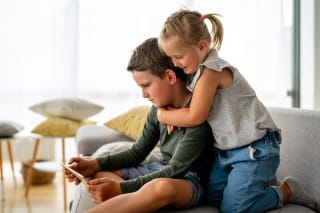
With an age difference of three to five years inclusive, the risk of dethronement trauma is most pronounced.
Firstborns may, depending on the situation, express the desire to be alone again and to give away their brother or sister.
However, that should not happen, which is why you can already reflect during pregnancy on how your firstborns share responsibility are allowed to and how great it is to be a big sibling.
Introduce exclusive times, in which your kids spend time alone with the respective parent. This leads to a balanced atmosphere and curbs jealousy.
It is also important to always clearly state your intentions, so that your children learn to understand why you reacted the way you did in certain situations.
This way your eldest children also learn right away why their little siblings cry, scream, laugh, or test boundaries.
The understanding for the siblings grows and the love for each other flourishes.
Age difference of 6 years and more
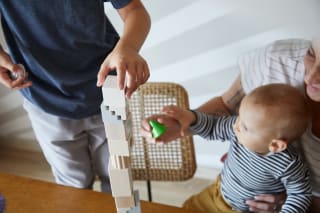
Siblings with an age difference of six years or more are in completely different phases of their lives.
The 'big ones' have just started primary school, while the 'little ones' are still getting to know their abilities. This requires sensitivity.
In addition to exclusive times you should also regularly ask them how they are doing, so that they never get the feeling that they can be easily done without.
That is never actually the case, but children do worry a lot that they will receive less attention from their parents in the future because they are no longer so small.
It should also be clear to the youngest that the older siblings also sometimes need time for themselves.
It helps to establish set shared playtimes or to stick particularly well to family rituals so that the balance between sibling time, family time and personal free time can be maintained.
Should siblings be in the same daycare group?
As a rule, you should trust your instincts and make your decision about whether siblings should be in the same daycare group dependent on that. However, it is important that you first check with the selected daycares whether it is at all possible, to place siblings in one group. Some facilities prefer to separate siblings from one another to prevent possible distancing from other children. Especially with twins, this is often a common practice of daycare centers.
Depending on how much your children need each other, to bring out their own self-confidence and to have a certain sense of security, it is advisable that they share a daycare group. If the younger sibling joins the group only one or two years after the older one anyway, the concern about possible distancing from other children can generally be ruled out.
Joint group membership becomes problematic when the siblings shut themselves off from others for a longer period of time and show no interest in, openly approaching the caregivers and other daycare children. Then consideration should be given to placing the children in different groups. The same applies to siblings who already make it clear on their own that they would like to be placed in different groups.
Siblings don't get along anymore – what now?
Quarrels are part of sibling love just as much as moments of joy. However, if the mood turns so far that large scenes of jealousy and rivalry threaten, you should intervene and mediate the disputes.
HABA offers on the relevant topic pages helpful tips and information for you, to keep sibling arguments from escalating and to prevent sibling rivalries.
Dealing with sibling conflicts

'Why did he get a bigger piece of cake?', 'Why is she allowed to have that and not me?' – those are typical phrases that come with siblings and initially harmless are.
However, disputes can also be a test of nerves be – especially when they threaten to escalate.
How do you best handle it? HABA has on the topic page about sibling disputes compiled important information and listed tips, which you can use as guidance going forward.
Prevent sibling rivalries
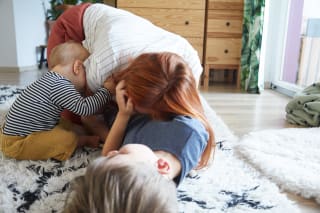
Small disagreements between siblings are completely normal. However, if these become an everyday occurrence and siblings no longer recognize each other as such, but only see the competitor in the other, the alarm bells ring.
There are already warning signs in parenting that should make you take notice and can indicate that a possible rivalry has developed.
On the topic page about sibling rivalries, HABA explains what is behind it and how you can best prevent them.
Frequently asked questions about sibling love
Which games promote sibling bonding?
Restoring sibling love – is that possible?
What is the most important thing for sibling love?
Read more articles on this topic








Image credits
Brother and sister sitting on the sofa © NDABCREATIVITY - stock.adobe.com
Two children argue over a toy © Anastasia Amraeva - stock.adobe.com