
26th week of pregnancy: baby's development, mother's physical changes & birth preparations
In the 26th week of pregnancy you may long for the feel-good bliss of the 4th to 6th month of pregnancy: because after the end of the 1st trimester nausea and dizziness had probably passed and the probably most relaxed phase of your Pregnancy began. In the 7th month, the first the first symptoms that will accompany you until the birth of your child will be: back pain or swollen ankles. Your baby develops rapidly during this time and opens its eyes for the first time in week 26. What else changes in and on your belly become noticeable, you can read about on this page.
Your baby's development in the 26th week of pregnancy
The eyes open: In week 26 your baby opens its eyes for the first time. Even though its vision is still quite weak, it can distinguish between light and dark and make out rough shapes.Through its connection to the nervous system, the fetus immediately processes the sensory impressions it receives. Your child's optic nerve continues to develop after birth, so it will later be able to perceive and process different colors.
Reflexes are being trained: Your baby is preparing in the uterus for life after birth. In recent weeks it has already diligently practiced sucking, grasping, and swallowing reflexes practiced. It continues to refine them now in the 26th week of pregnancy. At birth it even has over 70 reflexes.
Nostrils open:Through the open nostrils, the fetus in week 26 continues to actively inhale and exhale amniotic fluid to master the vital breathing function after birth.
Reactions to stimuli:Your baby reacts more to stimuli in week 26 and you will notice more often how it becomes active when it hears your voice or when you stroke your belly. The tiny hands and feet also show up on your abdominal wall more often now
What can be seen on the ultrasound image?
Your baby measures in the 26th week of pregnancy approximately 34 cm – which is about the size of a zucchini. If growth is progressing rather slowly, the strong weight gain now causes great amazement among parents. In week 26 your child gains about 100 grams. It therefore currently weighs around between 800 and 900 grams on the scales. On the ultrasound your child now appears to you as a "real" newborn, which, depending on its position in the womb, gives you a good view of its face allows. You may even see it sucking its little finger and playing with the umbilical cord. The movement urge of your little one can increasingly be seen from the outside on your belly. The small kicks and punches appear as little bulges on the abdominal wall.
Physical changes – what happens to the mother in week 26?

Your larger belly is no longer hard to miss in the 26th week of pregnancy. Your baby continues to grow and is increasingly displacing the organs from their normal position. For you this is manifested as noticeable growth and weight gain of the baby and uterus through various physical Pregnancy complaints noticeable. Below you'll find an overview:
Weight gain: Around week 26 your body is building up (fat) reserves for the demanding breastfeeding period. Now it may be that you gain noticeably more per month than in the early months of your pregnancy.
Strain on tendons & muscles: The weight of your baby and the growing uterus increasingly strains the surrounding tendons and muscles, which is why some women experience mild pain in the lower abdomen, in the back and even around the tailbone. This is partly due to the shifted center of gravity. Wedge pillows or a rubber ring to sit on can help here. Alsowarmth and muscle relaxation exercises are felt by most women to be extremely soothing.
Weakened immune system: Your The immune system is heavily burdened during your pregnancy. As a result, some expectant mothers catch colds more often. If your cold symptoms are more severe, it's best to consult your doctor to decide which medications you may take.Often it is simply the use of tried-and-true home remedies
such as chamomile tea or chicken soup that is the best approach to combat the bugs.Hot flashes: Your blood volume is significantly increased during pregnancy. In addition, blood flows much faster than before, which is why your body heats up more easily. This is quite normal, but can lead to increased hot flashes or sweating episodes . Here you shouldStay calm
, provide refreshing drinks and dress in layers – then the sweat-inducing outbreaks won't be a problem for you. Practice contractions: 25th week of pregnancy many pregnant women experience practice contractions from time to time. You may have already had the first ones but not recognized them as such. Practice contractions are often painless. At most you feel a slight pulling in the lower abdomen and your belly hardens for a few seconds. However, if stronger pain occurs, you should clarify this with your doctor.
Heavy legs: Especially in the legs and feet fluid often accumulates in the vessels that have been relaxed by pregnancy hormones. After long periods of sitting or standing your feet swell and your shoes feel tighter in the evening than in the morning. In winter you will probably have to move up a shoe size. In summer, open sandals with a comfortable footbed are suitable. These also have the advantage that the growing baby bump does not get in the way when lacing up.
Swollen ankles & fluid retention in the legs: a few helpful tips
From around the 26th week of pregnancy, fluid retention increasingly often occurs. For the expectant mother it is unpleasant, but harmless. After the birth your body will quickly eliminate the deposits on its own. During pregnancy you should not take any diuretics as the removal of fluids can cause circulatory or metabolic problems. “No salt and lots of rice” used to be the advice, but that recommendation is long outdated. We have put together a few tips to relieve your discomfort.
Light exercise: Regular walks or swimming get your circulation moving and help distribute blood and fluid throughout the body. Another benefit of being in the water: the weight of your belly feels less pronounced and it takes pressure off your back.
Activate your feet: Sit on a chair and try to pick up a packet of tissues with your feet. This moves your feet and boosts circulation. A spiky massage ball rolled under the sole of your foot stimulates your circulation further. If the spikes are too uncomfortable, you can try the exercise with a golf or tennis ball instead.
Stay well hydrated: Don’t try to fight the swellings by reducing your fluid intake. Your body needs enough fluid to support you and your baby.
Feet up: Try to keep your feet higher than your hips when watching TV or sleeping. This helps blood return from the legs to the body more easily.
Support stockings: If you stand for long periods or are out and about, support or compression stockings can help the blood circulation in your legs.
26th week of pregnancy: first preparations for labour
The 26th week is the perfect time to take some time to calmly consider the various preparations before your due date. Here you can learn more about important birth preparations you may want to focus on going forward.
Create a birth plan
The end of pregnancy often shows itself in the seventh month through practice contractions. Many parents now take time to think about their preferred birth. This concerns questions about the type of delivery, medical support, pain relief or the care of your baby after birth. You can discuss these decisions with your partner and record them in a birth plan. Of course nothing is set in stone. The plan summarises the most important information for you and the hospital staff. You won't have to make these decisions later during labour or after the exhausting birth. If you express a spontaneous wish, everyone will certainly try to accommodate it.
Essential items for your baby
Many expectant parents use the 26th week of pregnancy to take care of various errands for their baby essentials . In addition to baby clothing and furniture, there are many little things that you should think about before buying. Make a checklist so you don't forget anything and gradually get all the details in order at your own pace.
More articles about expectant mothers
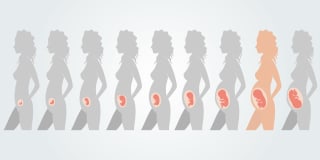
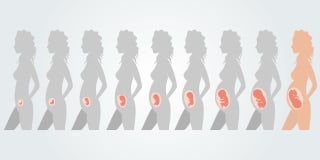
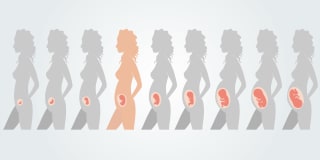
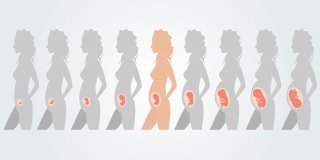
Image credit
Illustration of pregnant women © designer_things - stock.adobe.com
Pregnant woman caressing her belly and holding a calendar in her hand © fotoduets - stock.adobe.com