Calm parents = calm children?
Good time management in the family is not only beneficial to the parents, it also shapes our children's personalities. It has long been known that babies can already perceive the mother's stress level in the womb. Recent research has also shown that constant stress during infancy and toddlerhood affects children into adulthood: the more pressure parents are under in everyday life, the more stress-sensitive your children become.
So just stay calm?
It actually sounds quite simple — until everyday family life with all its big and small hurdles gets in the way. How do you manage to stay calm when the child has a tantrum, the car breaks down, or there are three appointments in a row to handle? All parents are occasionally exhausted or simply at the end of their rope. But those who maintain a certain inner calm in everyday life give their children emotional security, regardless of how stressful things are at the moment.
What does time management mean for the family?
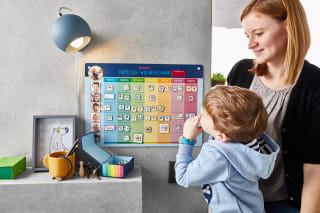
Many imagine optimal time management as a perfectly planned daily routine, like top managers of large companies who have one precisely timed appointment after another. In family life, good time management has a very different meaning. It's less about perfect organization and more about setting priorities. Those who focus on what really matters live together more contentedly. The challenge with this kind of time management is to find a balance between what the individual needs and what the family needs. Parents tend to put their own needs aside for the sake of the family — again and again — until they are exhausted and frustrated. Time management for the family means also making time for yourself and drawing new energy from it.
Everyday stress — all a matter of attitude?
Of course, personal stress levels also depend on life circumstances: how large the family is, how old the children are, whether one or both parents work, and so on. But to a large extent everyday stress also depends on one's own behavior. In this way we quickly get in the way of our own calm.
Wanting everything at once
Anyone who tries to accomplish too many things at once quickly gets bogged down. In the end nothing gets finished properly, frustration grows, and as a result you set new goals again. Clear priority lists, for example in the form of to-do lists and a family calendar, can help break the cycle of stress and frantic activity.
Wanting to do everything perfectly
Overly high standards are a sure stress factor, not only for the person himself but also for those around them. Because if you always want to do everything perfectly, you usually expect the same from your family members, colleagues, or friends. That's exhausting and in the end you're rarely satisfied. Better: focus on what is important right now and postpone the rest.
Trying to do everything on your own
Those who cannot delegate easily fall into stress, especially when there is a family and a job to manage. Often it is perfectionists who prefer to do everything themselves. But trusting other people is not only good for you, it also saves a lot of energy and time. Children in particular benefit when you give them small everyday tasks from the start. This also makes family life more relaxed in the long run.
To-do lists: unbeatable helpers for family time management
A to-do list can help set priorities in everyday life and only take on what you can actually accomplish. For this, design your personal list flexibly: instead of listing everything you want to accomplish in one day, divide the to-dos into
mandatory appointments
urgent tasks
things you've always wanted to get done
Mandatory appointments are entered directly into the calendar so they are fixed. For urgent tasks you can also set a day and a specific time slot. Do all other things as they fit into everyday life. It is important that you continuously update your list so you don't lose sight of anything.
Discover more articles about everyday family life












Image credits
Mother takes care of her daughters and shows the girls how to operate the washing machine © ABCreative - stock.adobe.com