Time spent together keeps the family together
Experts have no doubt that family time is one of the most important factors for a happy, well-functioning family life. Studies support this: overall, families who spent a lot of time together rated their family cohesion more highly, felt more secure within the family and viewed their relationships with both close and more distant relatives more positively. In view of this, it is not surprising that nine out of ten parents particularly wish for more time with their children.
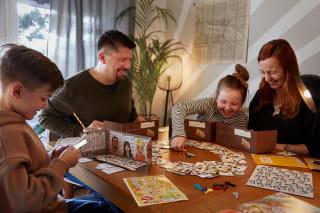
Why do we have less and less time for family?
The seventh family report of the Federal Government’s Expert Commission confirms what many parents experience day to day: particularly between the ages of 27 and 40 people lack time. What causes this?
Later entry into the labour market
Because vocational training has become more demanding and international, many young people enter the job market later. The first steps in a career often coincide with family planning. Young parents increasingly put pressure on themselves to remain as effective as possible at work even with a child, so as not to harm their career prospects.
More women working
Many women return to work at the latest one year after giving birth — partly because they pursue a career themselves, partly for economic reasons. The workload of partners does not change as a result — and according to recent surveys the division of household and childcare tasks also remains unchanged.
Two incomes necessary
In many families a single parent’s income is no longer enough to live on. Those who studied may have to repay student loans or accept a low starting salary. At the same time, expectations have increased — many people want two cars, a home and regular holidays.
Leisure-time stress
Not only work, day-care and school are responsible for the shortage of family time. Many parents increase the pressure by trying to offer their children as much as possible. During the week days are filled with music lessons, sports clubs or extra tuition, and in the evenings there are homework — leaving little time for the family.
How can I create more family time in everyday life?
When it comes to family time, quantity is not the only thing that counts — quality is crucial. Fifteen minutes of breakfast together every morning can be more valuable than two hours sitting together in front of the television. Family time is about listening and responding to one another, or simply about having fun together and discovering new things.
Shared meals:
Try to get the whole family to the table for at least one meal a day. Which meal and how long it lasts is up to you — what matters is that no one reads or types on their phone. Ask each other about the day’s events or plan outings for the weekend.

Set aside a day for the family:
The older children get, the harder it becomes to persuade them to take part in shared activities. Still, you can try to plan a common day each week. It works best when the children can have a say — perhaps a different family member can take turns to plan an activity.

Give children more time:
Those who spend the day in a day-care centre or at school and attend playgroups, support programmes and sports classes in the afternoon have hardly any time to do nothing. But that is important for children to relax and learn. Children must be able to play freely and undisturbed on their own — so parents should create more free time not only for themselves but also for their children.
Discuss flexible working models:
Although the majority of parents with young children want more flexible working hours, many employers still only offer part-time and full-time options. In many jobs flexitime arrangements, working-time accounts or working from home would be perfectly feasible. Perhaps you could propose such an arrangement to your employer — employees who can organise their working hours flexibly are generally even more productive and willing to perform.
Discover more articles about everyday family life








Image credits:
Family takes a photo together while eating © Seventyfour - stock.adobe.com
Family at breakfast © NDABCREATIVITY - stock.adobe.com
Family at a picnic © Jacob Lund - stock.adobe.com