Winter clothing for children: Why dress using the layering principle?
By 'layering principle' we mean putting on several garments on top of each other. They are coordinated so that getting chilled or overheating is avoided. The air layers between the individual layers add extra insulation. One advantage of the layered look: if children get too warm while playing, the top thick jacket can be taken off without them starting to feel cold.
Which layers are part of the layering principle?
The first layer is the base layer (underwear). It lies directly on the skin and should keep it dry and warm. Its job is to move sweat away from the body.
The second layer provides warmth and insulation. Depending on the weather, temperature and activity, sweaters, jackets and vests are used. In addition to wool or cotton, garments made from technical fibers like fleece work well. Depending on how much warmth is needed, there is lightweight microfleece or thick Polartec fleece.
The third layer protects against snow, water and wind. Highly functional pieces are used here that are water-repellent, windproof and breathable. Softshell items are popular because of their elasticity, durability and breathability. Quilted jackets with insulating inner material also keep children warm and dry.
What to wear when it's really cold?
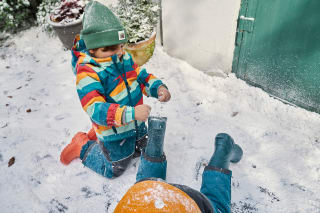
In freezing cold, an additional layer, such as a fleece jacket under the outer jacket, will reliably keep them warm.
Which hat for children?
Especially for children who sweat a lot on their heads, parents should pay attention to breathability. A good fit is important so that the child likes to wear the hat and heat exchange works well.
The perfect gloves for children
Gloves should above all be breathable, i.e., made from performance materials. Children often have "sweaty hands." As a result the gloves become damp on the inside and the children get wet, cold hands.
Mittens or gloves with fingers for children? Gloves with fingers allow for a better grip. Mittens, by contrast, are warmer than gloves with fingers.

The optimal material for children's clothing
Softshell
Is windproof and highly water-repellent,
breathable and stretchy,
smooth and durable on the outside
perfect for the outer shell when layering
Fleece
keeps cozy and warm,
is lightweight and easy to care for
depending on thickness, good as an underlayer or overlayer
Cotton
Is breathable and skin-friendly
renewable raw material
highly absorbent
Merino wool
wicks moisture away and doesn't absorb it
doesn't itch, suitable even for more sensitive children's skin
Natural fiber