Healthy eating behavior – What is it actually?
No fat, no sweets: When people think of healthy eating, they primarily think of all kinds of prohibitions. But what exactly does a healthy diet look like? And what does that have to do with eating behavior?
Healthy diet: A healthy diet involves combining different food groups and complementing them. Sometimes potatoes, sometimes meat, sometimes fish and sometimes salad can be on the menu, often at the same time. Sufficient water and an appropriate balance of fats, fiber, protein and carbohydrates are the basis of a balanced diet.
Healthy eating behavior: Eating behavior itself is only secondarily related to the selection of foods. Because besides what I eat, healthy eating behavior is also about how I eat. Developing an awareness of portion sizes and meal times, listening to the body and knowing when it's enough are the focus here.
How can I convey healthy eating behavior
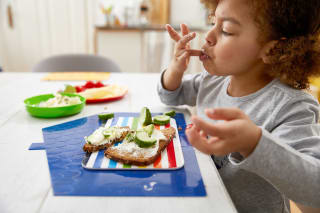
Children get what they need. There is a grain of truth in this saying. Because children have a better sense of their own needs than many adults. Children copy a lot from their parents, so healthy eating behavior needs a role model. Retraining eating behavior later is difficult, so the rule is: it's best to do it right from the start!
Take your time when eating: Those who eat hastily often wolf down their food. Because the feeling of satiety sets in with a delay, it's important to eat calmly and with as little distraction as possible.
Tolerate hunger: Sure, the feeling of hunger is unpleasant for children too. Still, it doesn't hurt to endure this feeling for a certain time. If the dish still needs 20 minutes in the oven, you should not give your child something to eat in advance, even during persistent whining.
Child's age: If you want to teach your child healthy eating behavior, age also always plays an important role. For older schoolchildren you can explain exactly why some foods are more important than others. If you then act as a role model, healthy eating behavior develops by itself in younger children. With younger children you usually cannot expect understanding. If you explain that sweets cause holes in the teeth, and then everything is fine at the next dentist appointment, children quickly notice that something is wrong
Stay relaxed: Maybe you still remember that you didn't like certain vegetables or fish yourself. It is completely normal for children to reject certain foods and usually those are exactly the healthy ones. Later, the aversion to Brussels sprouts, lettuce and spinach usually goes away on its own.
Food is neither a reward nor a punishment: "If you finish your plate, there will be dessert", "If you're good, we'll get ice cream later", "If you eat more chocolate, you'll get cavities" Food should never be used for manipulation, because that detaches it from its origin: the feeling of satiety.
Be a role model: Children learn a lot by imitating parents and other caregivers. So when it comes to nutrition: try to be a role model. Balanced meals, little snacking, and for snacks choose an apple instead of cake. Only then can you credibly convey healthy eating behavior.
Everything in moderation: You don't have to cut out all unhealthy things. A few treats are allowed in any case. Far more important than forbidding sweets and overly fatty foods is explaining to your child that these things are unhealthy and therefore should not be consumed in large amounts and too often.
Full is full: "Three more spoonfuls, then you may get up" - accept it when your child is full. They don't have to finish their plate if they don't want to. This is important so your child doesn't lose the ability to listen to their satiety. Instead explain that next time they shouldn't fill their plate so much and should take two smaller portions so nothing has to be thrown away.
Discover more articles about everyday family life









Image credits
Daughter puts something into her father's mouth © Vasyl - stock.adobe.com