Discovering nature with children – it often begins with a single step out the door. Our children today grow up further away from buzzing meadows and rustling woods, yet they need exactly these encounters to understand how precious animals, plants and our environment are. Those who experience nature with children see how cautious wonder becomes genuine enthusiasm – and how suddenly little questions from young explorers float through the air. A weekend in the forest or a walk with small highlights makes children's eyes light up and lets you all take a deep breath together. Nature does good. For the children. And for you. Find out here how you can discover nature with children with little effort and create an adventure-filled outdoor weekend.
Out of the city and into nature – outings with children outdoors
Especially City children come into contact with nature far too rarely, because the nearest park or forest is often far away – and landscaped recreational areas in the big city rarely have much to do with real nature anyway.
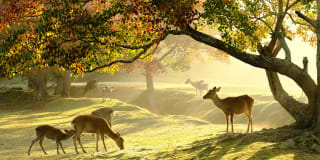
Excursions to the surrounding countryside are therefore a great way from time to time to experience nature up close. Here children can explore, touch and search for everything on their own. Maybe you can watch a few deer grazing? Or listen to a woodpecker tapping? You can identify large and small plants together with your child using a plant book. This way children discover playfully what there is to see in nature.
Outdoor games – discovering nature with your child
When you are out in nature with your child, you should give them enough time to move freely and explore independently. To make the perception of nature even more intense, you can also use small games to stimulate all your child's senses and thus sharpen awareness of the many different life forms in forests, meadows and fields. This helps children learn to perceive nature with open eyes.
Plant memory:
The adults collect various plant parts such as branches from different bushes, flowers and chestnuts. The children look at the collection. Afterwards they can try to find the same plant parts again in the forest.
Clean-up game:
Anyone who has made collecting a passion can try it. Everyone sets off – equipped with rubber gloves, a bag and a stick sharpened at the bottom – in search of all the things that do not belong in the forest. The nice thing about this game is that it doesn't really need a real winner, because if everyone takes part, the forest always wins.
Collecting game:
If you set collecting under a certain theme right at the start of the forest walk, there are surprisingly varied possibilities. Today we might simply collect all the colors: something red, yellow, brown, black… Whoever has the most colors at the end is the winner. That can change tomorrow when something round, smooth, crooked, wet, or scratchy is sought. Some finds are so beautiful that you can later copy them at home or arrange them on a piece of cardboard.
Tree telephone:
Wood resonates – did you know? You tap with your finger or with a stone at one end of a lying tree trunk. The tapping can be heard well at the other end. Sometimes the vibrations can even be felt with the hand.
Pine cone game:
Everyone knows the egg-and-spoon race, but pine cones balanced not on spoons but on forked branches are only found in the forest. If you form two relay teams it becomes especially fun, because most cones fall during the handover. Whoever that happens to has to run the round again.
Touching trees:
The bark of trees differs depending on the species. With their eyes covered, children can feel the texture of the bark and the size of the trunk. Which tree is particularly rough and which has the greatest circumference?
Barefoot park:
With bare feet you can perceive different plants, stones and mosses especially intensely. Lay out a course, e.g. from pine needles, moss, twigs, straw and wet grass. Your child must not see what is in the barefoot path. With eyes covered and bare feet your child now walks step by step through the course and must guess what is under their feet.
Collect forest sounds:
How many different birds can be heard in the forest? Can they also be seen? What sound does the wind make when it moves through the forest and makes the leaves rustle? What does the rain sound like when it falls to the ground in the forest or on the field?
Smell game:
Flowers and herbs are held under everyone's nose to smell. Of course not without first covering the eyes with a cloth or scarf. Whoever sniffs out the most scents correctly is the winner. Of course, to mislead you can occasionally offer a "wrong" thing to smell, e.g. a handful of forest soil or a sausage sandwich from the provisions.
Rolling game:
If you find a sloping meadow on a walk, everyone can roll downhill in a race. Not rolling sideways and veering off course is quite an art.
Ant fun:
Those lucky enough to find an anthill in the forest can have a bit of fun with the little busy creatures. First of all you should just observe and be careful. Ants can bite hard with their strong jaws and secrete a sharp fluid from a gland in the abdomen to defend themselves. For us humans such an ant bite, combined with formic acid, itches considerably. If we look for a violet flower and hold it to the anthill, the little forest policemen immediately attack the supposed intruder and spray the flower with their acid. The flower turns red at the spots hit by drops of acid.
Balancing game:
A long, wide fallen trunk is the only thing you need for this fun. Everyone stands on the trunk at small intervals. The first person now tries to balance along the trunk. The others are obstacles that they can only overcome by clinging to them and hauling themselves past. Everyone helps as best they can, because no one may touch the ground or fall off the trunk. If that happens, the next person is up.
Puddle game:
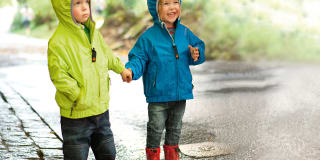
Anyone wearing rubber boots and muddy clothes can wade through all the puddles without worries. Shallow, small puddles make a different sound when you step into them than deep, muddy ones. You can create waves and clouds of mud, build a channel to a neighboring puddle and, if the puddle is not too huge, jump it clear. Just be kind enough to make sure no one is standing too close. After all, a proper jump splashes the water wildly to all sides.
Hour of the moths:
On a night hike you can attract nocturnal moths with a brightly shining flashlight. Simply hang up a white cloth and shine the lamp on it. On a warm night hundreds of moths gather within a short time. Among them are specimens with very large antennae. These are the males, which with their large antennae can smell the females' pheromones over very long distances. You may also spot bats in the beam of light, taking advantage of the "well-laid table" and going on the hunt.
Recipes from forest and meadow – experiencing nature with your child
Sorrel pancakes with mushrooms
You need:
1 handful of sorrel leaves
Butter for sautéing
1 bowl of mushrooms
1 small onion
20 ml vegetable broth
2 tsp flour
100 ml whipping cream
3 eggs
50 ml milk
Here's how: After you have sliced the sorrel leaves into strips, you can sauté them in butter. In a separate pan sauté the mushrooms, sliced, together with the onion and deglaze with the broth. You can season the mushrooms with salt and pepper. Mix half the flour with the cream, add to the mushrooms and bring briefly to a boil. Stir up an omelette batter from eggs, milk and flour and season with salt and pepper. Heat butter in a pan and pour in half the batter. Before the surface sets, sprinkle the sorrel on top and finish cooking.
Blossom lemonade
Linden and elderflowers bloom between June and July. Diluted with mineral water, elderflower or linden blossom syrup makes a delicious lemonade.
Here's how: Soak 100 g fresh linden or elder blossoms in ½ l water overnight. The next day bring to a boil, strain and boil again with 250 g sugar and 3 g citric acid. Pour hot into clean bottles and seal. Store cool and dark.
Buttered bread, freshly topped
Nowhere do buttered breads taste as good as at a picnic in the countryside. Especially with self-collected wild herbs: daisy flowers, small dandelion leaves and flowers or nettle leaves are as tasty as very young, tender beech leaves or wild garlic that smells of garlic.
Beech leaf salad
With freshly sprouted beech and linden leaves you can prepare a tasty salad with vinegar and oil. Beech leaves taste slightly tart. Linden leaves are very mild and slightly nutty. The best time for this is early May. Shortly after sprouting the leaves increasingly store bitter substances – precisely to prevent them from being too tasty.
Wild garlic pesto
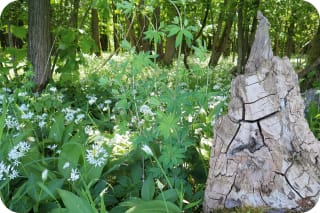
Wild garlic grows in large stands in some deciduous forest areas at the end of March. It is so common there that its leaves can be harvested before flowering without concern to make a tasty wild garlic pesto.
Important:The typical garlicky smell of the leaves is a reliable distinguishing feature from the similar but highly poisonous leaves of autumn crocus and lily of the valley.
Here's how: After thorough washing, the leaves are chopped, filled with sunflower oil and herb salt, grated hazelnuts and Parmesan flakes are added. Tastes very good with pasta or simply on buttered bread.
Sweet woodruff punch
From the end of April sweet woodruff grows in semi-shaded beech woods. The best time to collect is before and during flowering. The harvest should be dried for several hours. During this the leaves form coumarin, which causes the typical sweet woodruff flavor. Two or three stems of sweet woodruff are hung in a liter of apple juice. After one to two hours the flavored juice can be drunk with cold mineral water.
Spring vegetables
The defining taste of this dish is the slightly nutty aroma of coltsfoot leaves. Gather about 1 kg of a leaf mixture from young coltsfoot leaves (the white, cobweb-like felt on the upper surface of the leaf must still be visible), tender nettles and lesser celandine leaves (must be harvested before flowering).
Here's how: The coltsfoot is washed, destemmed and cut into fine strips. The nettles are cooled so they no longer sting, and roughly chopped. Dice the onions, sauté in butter, add some vegetable broth and stir in the vegetable mixture. Mix 1 tbsp flour with 1/8 l cream, add and let thicken briefly. Season the finished vegetables with salt and pepper and sprinkle with roasted sunflower seeds.
Making a campfire: what matters
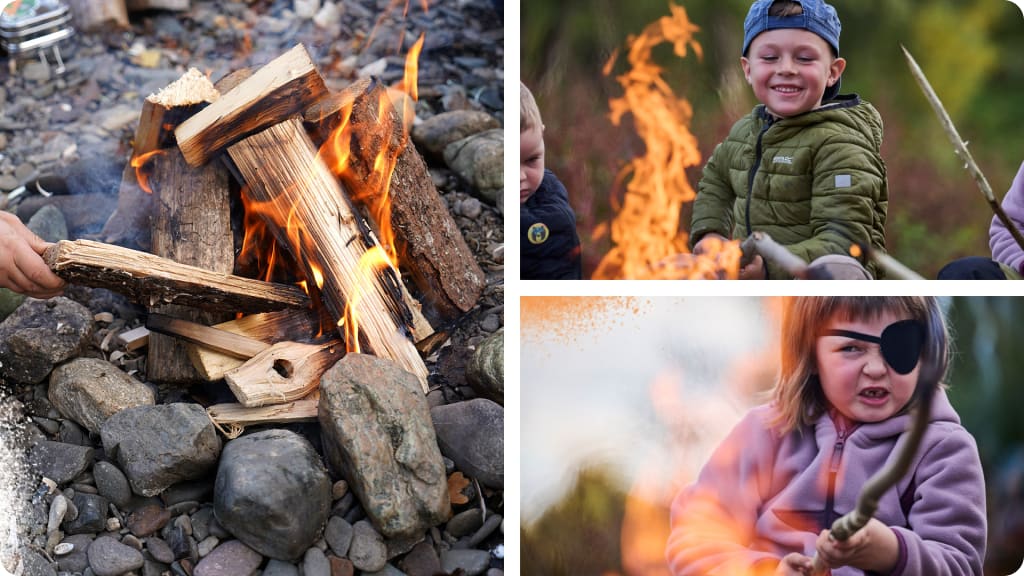
Children love taking responsibility and experiencing real adventures. A campfire is perfect for that. When you as a family learn together to use the ferrocerium rod When sparks are struck, something very special is created from patience, concentration and a touch of courage: warmth, light and that soft crackling that brings everyone closer together.
Before your outdoor adventure begins, it's important to assemble the right outdoor equipment and helpful gadgets. A child-friendly ferrocerium rod, a safe pocket knife or a grill skewer attachment give your little explorers the reassuring feeling: "I can do it!" With the thoughtfully designed Terra Kids outdoor equipment for children, exploring nature with kids becomes not only exciting but also safely supported.
Together you search for dry wood, gather tinder and consider: what else do you need? Where will the sparks fly? Children learn to observe attentively, take responsibility and remain patient. A fire doesn't appear at the push of a button - it grows step by step. That is precisely where its power lies.
And when the first flames finally dance and the bread on a stick over the embers turns golden brown, you all feel it: discovering nature with children means sharing time, building trust and collecting small and big experiences for life outdoors.
Lighting the campfire yourself with the Firesteel - a great experience for young and old.

Tips and ideas for forest outings
A forest outing is much more than a walk – it is an invitation to discover nature with children and to experience it with all the senses. The excitement is what matters: think about what excites your kids. If they want to complete tasks, they can become “nature guardians” at the end of the day – after small tests like recognizing animal tracks or identifying trees. If they are the creative ones, they may choose the route or pick the perfect picnic spot.
This way, experiencing nature with children becomes a shared adventure. A small surprise in the backpack and a cozy picnic among tall trees round off the day – and give you valuable time outdoors.
1. Decide on a hiking route
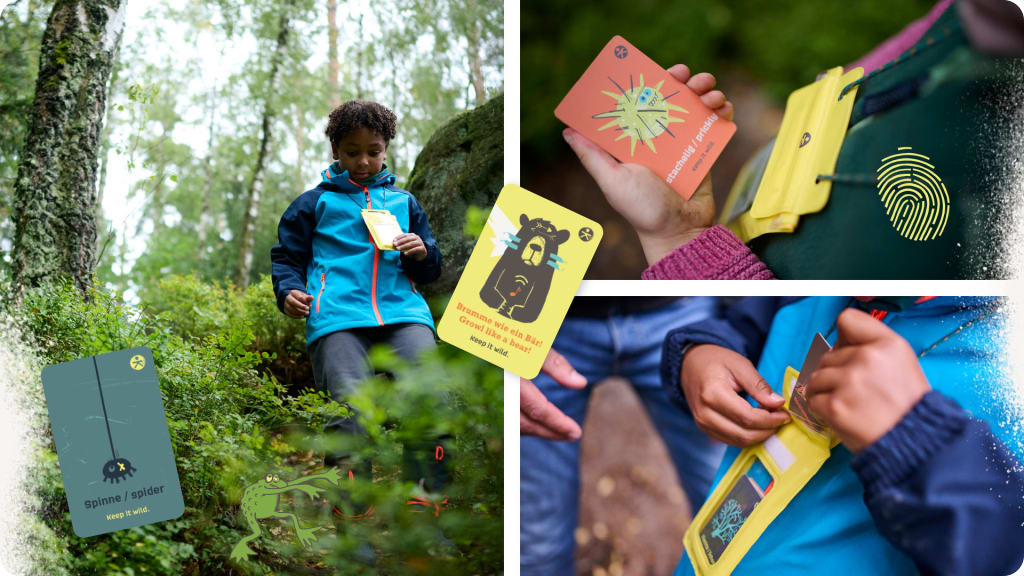
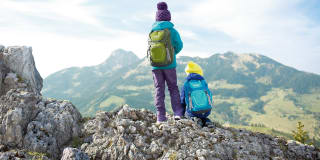
We parents often overestimate our children’s stamina – so plan your route consciously: better shorter and peppered with small highlights and breaks. It gets exciting when you make decisions along the way: the path splits – which one do we take? We hear a rustle – do we stop? A track in the mud – do we follow it?
And if the route is still too short, this bringsTerra Kids outdoor search game 'Seek & Find'fresh energy into it. The child-friendly search motifs train the eye for detail and raise awareness of nature and the environment. That way every step becomes a journey of discovery – because often the path itself is the most beautiful destination.
2. Where can you spend the night in nature?
Nature guardians know how to cope outdoors. Together you set out to find the best spot for your camp. Where is it dry? Where are you sheltered from the wind? And are there enough sturdy trees to hang a hammock?
Playfully, your children learn to look closely and take responsibility. You show them how to secure a hammock safely, how to lie comfortably in it and why it is so practical on adventures. Then they are allowed to get hands-on themselves, check knots and try it out. Between treetops and birdsong not only a sleeping place grows – but also self-confidence.
3. Sharpen your observation skills
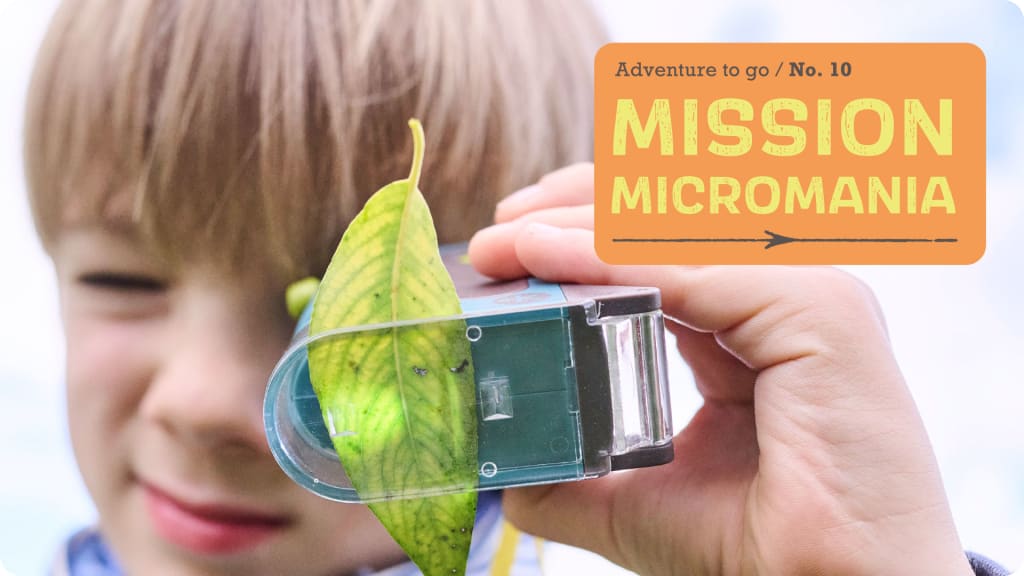
Nature guardians look very closely. Together your children examine leaves, bark, moss or small insects at the roadside. With a magnifying jar, a child's magnifying glass or a gently used insect-collecting box, even tiny details become visible. What does a leaf look like under magnification? What patterns do you discover on wings or tree bark?
That way observing becomes an adventure. Your children learn to be mindful, to notice differences and to treat nature with respect – small discoveries that spark great curiosity.
4. Find and decorate a walking stick
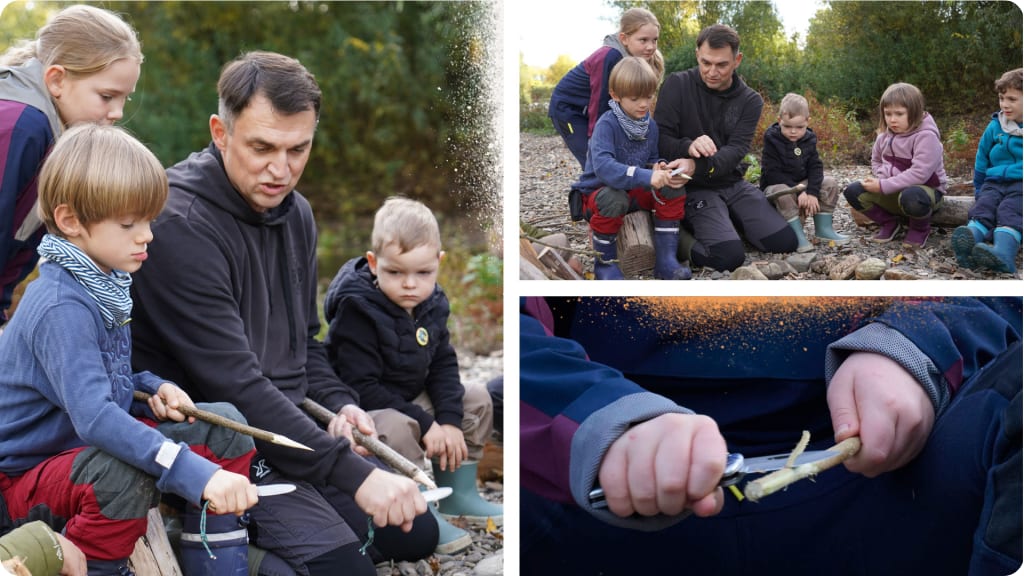
Whittling is a real highlight for many children. Before you begin, give a short, clear instruction on the safe handling of the knife: How do I hold it correctly? Always carve away from the body. And what if someone does get cut? Stay calm, treat the wound and monitor the healing – safety is part of the adventure.
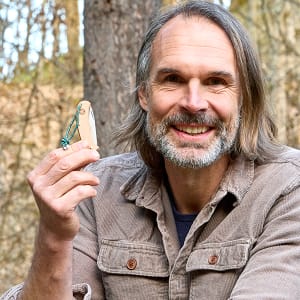
With the Terra Kids children's pocket knife with a rounded tip and practical folding mechanism, small hands are well equipped. The task: carve a pattern or your own initial into a walking stick. In the process, your young adventurers take responsibility, grow beyond themselves – and in the end carry their very own creation home with pride.
Essential for any kind of adventure, whether at the campfire, while whittling or cutting fruit.
5. Align the compass correctly
A compass in hand – and the forest becomes a true world of discovery. With the Terra Kids Compass your children learn playfully how orientation works: Where is north? How do I determine a direction? The easy-to-read compass rose and the integrated sighting device help to aim precisely at the target.
Then the task starts: 'Walk 30 steps north and 20 steps east.' Step by step they follow the course. Thanks to a sturdy metal casing and an attachment for a backpack or belt loop, the compass is a reliable companion for little explorers.
6. Create your own treasure map & go on a treasure hunt
Designing your own treasure map — that's the start of an adventure that already tingles while drawing.With the Terra Kids children's stamp set for treasure hunt
imaginative paths, secret symbols and daring pirate stations come to life on paper, cardboard or fabric. Eight stamp designs, an ink pad and three sparkling treasure coins turn your children into real DIY pirates.
Together you decide: Where will the treasure be hidden? Behind the old tree? In the garden shed? While reading the map and navigating, your little explorers playfully learn their first steps in orientation. Then it's: map in hand, eyes open — and off to the big search!
7. Go on a night hikeWhen dusk slowly bathes the forest in mysterious light, a very special adventure begins: your night hike.With the
Terra Kids LED adventure flashlight with carabiner & reflector stickers
Other cool ideas for a day to discover nature with children:
Plant memory game: The adults collect various plant parts such as twigs from different bushes, flowers, and conkers. The children examine the collection closely. Afterwards they try to find the same plant parts in the forest again – this turns experiencing nature with children into an exciting search task.
Clean-up game: Equipped with rubber gloves, a bag, and a stick, you set out to look for things that don't belong in the forest. This game combines discovering nature with children and taking responsibility at the same time – and in the end the forest always wins.
Collecting game: Give the collecting a theme: colors, shapes, or textures. Today maybe something red, yellow, or scratchy. Tomorrow something round or wet. This way experiencing nature with children becomes varied and creative.
Tree telephone: Wood resonates – did you know? Knock on one end of a tree trunk; at the other end you can hear or feel the vibrations. A quiet, wondrous nature experience with children.
Pine cone game: Balancing cones on forked branches – especially fun as a relay. Movement is part of discovering nature with children.
Touching trees: With blindfolds, children feel the texture of the bark and the girth of the trunk. This turns experiencing nature with children into an intense sensory experience.
Barefoot park: An obstacle course of needles, moss, twigs, and grass lets little feet sense a wide variety of surfaces – it's hard to find a more direct way to discover nature with children.
Collecting forest sounds: How many birds do you hear? What does wind in the leaves or rain on the ground sound like? Experiencing nature with children also means listening closely.
Scent game: With blindfolds, children sniff flowers, herbs, or even forest soil. A fragrant nature experience with children.
Rolling game: A slope-side meadow becomes a rolling track. Rolling downhill – that makes experiencing nature with children wild and joyful.
Ant fun: Observe ants attentively and learn how they defend themselves. This way discovering nature with children also becomes a little research trip.
Balancing game: A wide tree trunk becomes an adventure bridge. Balancing together, holding on, helping – experiencing nature with children strengthens team spirit and trust.
Puddle game: Wading through puddles in rubber boots, making waves, or building channels – this too is discovering nature with children with all the senses.
Hour of the moths: On a night walk, lure moths to a white sheet with a flashlight. Maybe bats will even dart through the beam of light. A magical nature experience with children that shows how alive the night is.
Scavenger hunt – a nature experience for children and a classic at children's birthday parties
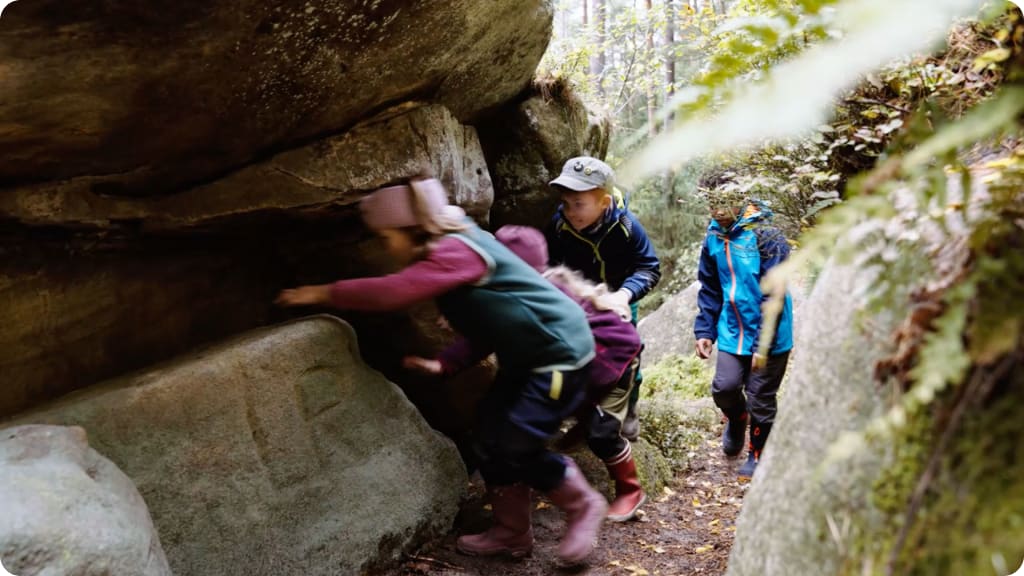
A scavenger hunt is a wonderful invitation to explore nature with children and to have small adventures together. The excitement builds already during preparation: hiding clues, laying arrows, maybe drawing a mysterious treasure map. Whether in the garden, park, or forest – every place becomes a world to discover.
Along the way your children solve riddles, follow tracks made of natural materials, and look out for the next clue. This makes experiencing nature with children vivid and full of team spirit.
At the end a treasure awaits – perhaps a small surprise or something homemade. But the best part is the shared searching, laughing, and excitement along the way.
Preparing dishes with ingredients from the forest and meadow
Blossom lemonade
Between June and July, linden and elderflower bloom. When mixed with mineral water, elderflower or linden blossom syrup makes a delicious lemonade.
How to:Soak 100 g fresh linden or elderflowers in ½ l of water overnight. The next day bring to a boil, strain, and boil again with 250 g sugar and 3 g citric acid. Pour hot into clean bottles and seal. Store in a cool, dark place.
Freshly topped sandwiches
Nowhere do sandwiches taste as good as at a picnic in the countryside. Especially with self-collected wild herbs: daisy flowers, small dandelion leaves and blossoms, or nettle leaves taste as good as very young, tender beech leaves or wild garlic with its garlicky scent.
Beech leaf salad
With freshly sprouted beech and linden leaves you can make a delicious salad with vinegar and oil. Beech leaves taste slightly tart. Linden leaves are very mild and slightly nutty. The best time for this is early May. Shortly after sprouting, the leaves begin to develop more and more bitter compounds – precisely to prevent them from becoming too tasty.
Sweet woodruff punch
From the end of April, sweet woodruff grows in semi-shaded beech forests. The best time to collect it is before and during flowering. The harvest should be dried for several hours. During this process the leaves form coumarin, which causes the characteristic sweet woodruff flavor. Hang two or three stems of sweet woodruff in one liter of apple juice. After one to two hours the flavored juice can be drunk with cold mineral water.
Spring vegetables
The defining flavor of this dish is the slightly nutty aroma of coltsfoot leaves. Gather about 1 kg of mixed leaves from young coltsfoot leaves (the white, cobweb-like fuzz on the upper side of the leaf must still be visible), tender nettles, and lesser celandine leaves (must be harvested before flowering).
How to:Wash the coltsfoot, remove the stems, and cut into fine strips. Cool the nettles so they no longer sting, and roughly chop them. Dice the onions, sauté in butter, add some vegetable stock and stir in the vegetable mixture. Mix 1 tbsp flour with 1/8 l cream, add it and let thicken briefly. Season the finished vegetables with salt and pepper and sprinkle with roasted sunflower seeds.