Advent, St. Nicholas and the Christ Child: Christmas in Germany

Germany is not only considered the birthplace of the Christmas tree; it also has an especially large number of Christmas traditions. This is not surprising, since Germans savor the Christmas season to the fullest: the pre-Christmas period often begins with the first Advent, already in late November, and it officially lasts until Epiphany on January 6, when Christmas trees are traditionally taken down.
Typically German: Advent
Many German Christmas customs are therefore more like Advent customs — from the Advent wreath and children's Advent calendars to the Christmas markets and the classic Christmas tales. The feast of St. Nicholas is also a typically German custom — as are stollen and Christmas cookies: few other countries have as many recipes for traditional Christmas baked goods.
Christmas customs and traditions around the world
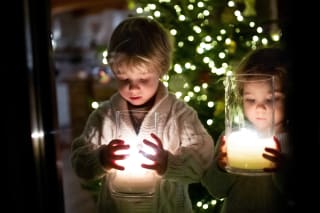
After Easter, Christmas is the most important festival of the Christian church. The fact that Christmas customs vary so much from country to country is also due to the mixing of pagan and Christian rituals in many countries. Thus, evergreen trees and candlelight have long been regarded in many cultures as symbols of life and hope.
Yule festival with trolls: How Christmas is celebrated in Scandinavia
In Scandinavia, Christmas is celebrated very cosily with family – there is a lot of baking and everyone goes to the sauna together on Christmas Eve. Christmas is closely linked to the Yule festival, the day of the winter solstice on December 21. Other Christmas customs are also strongly influenced by pagan beliefs: for example, children in Denmark and Sweden place a bowl of porridge on the windowsill or in front of the door on Christmas Eve. It is a gift to the trolls so that they will protect the house and not annoy its inhabitants. In Iceland, by the way, there are 13 mischievous Yule Lads who make mischief for 13 days starting on December 12 before they bring the presents.
Gifts already on St. Nicholas' Day: Christmas in the Netherlands and Belgium
In our country you get chocolate and maybe a small gift in your shoe for St. Nicholas – in the Netherlands, December 6 is the most important day of the Christmas season. People leave sacks in front of their front doors on the night before St. Nicholas' Day, which are filled with gifts by Sinterklaas and his helper, Black Peter (Zwarte Piet).
Christmas stockings and mistletoe: Christmas in England, Ireland and Scotland
In Great Britain, the present-giving does not take place on Christmas Eve, but on the morning of December 25. Santa Claus does not deliver the gifts personally, as was originally customary in Germany: he slips unseen down the chimneys at night into the houses and fills the large Christmas stockings that children have hung on the fireplace. Instead of stollen, England and Ireland have Christmas pudding, a dense fruit cake that is often baked and stored months in advance. A very well-known English Christmas custom is the mistletoe, which also has great powers in pagan belief: it is hung in door frames during the Christmas season, and if a man and a woman stand under it at the same time, they must kiss.
A sea of lights and a red-nosed reindeer: Christmas in America
The Christmas customs of the USA are largely based on the British traditions brought to the country by immigrants. The start of the Christmas season is the Thanksgiving feast on November 25 – from then at the latest every house is decorated brightly and colorfully. Santa arrives in his reindeer-drawn sleigh, which is pulled, among others, by the red-nosed reindeer Rudolph. In Mexico and South America, on the other hand, the Christmas celebration is clearly Christian: elaborately designed nativity scenes dominate the streetscape and families gather to admire them.
Father Frost gives gifts to children in Eastern Europe
In the Eastern European countries, Catholicism and Orthodoxy predominate. Here, during Advent people do not indulge but fast – the fasting period only ends with the big Christmas meal on Christmas Eve at nightfall. In Russia, Poland and Romania, Santa Claus is called Father Frost. He brings the presents together with his daughter Snowflake. Russian children, however, have to wait a little longer for their presents: because Russian holidays follow the Julian calendar, Christmas there is not celebrated until January 7.
Italy and Spain celebrate Christmas on Epiphany (Three Kings' Day)
In Spain, the gift-giving tradition follows the biblical Christmas story: on January 6, the day when the Three Wise Men brought their gifts to Jesus in Bethlehem, Spanish children also receive their presents. On this day splendid Three Kings parades are held across the country. In Italy, children also get gifts on Epiphany, but not from the Three Kings – they come from the Christmas witch La Befana. Overall, Christmas in Italy is celebrated for a similar length and intensity as in Germany – starting with San Nicola, St. Nicholas' Day, through the feast of Saint Lucia on December 13 and the birth of Jesus on December 25, up to Epiphany.
More articles about leisure & creativity




Image credits
Christmas tree in the background of the image. Parent holds girl upside down © Halfpoint – stock.adobe.com
Grandfather with little granddaughter at Christmas in the house, sitting at the table with sparklers © Halfpoint – stock.adobe.com
Little girl and a boy at home for Christmas holding candles © Halfpoint - stock.adobe.com