Dyeing Easter eggs with children: tips & first ideas
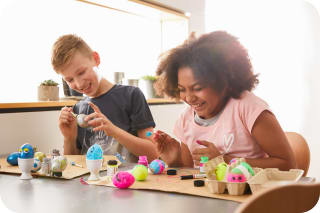
When painting Easter eggs there are no limits for you – the more colorful, the prettier! You can dip real eggs, but also plastic or styrofoam eggs into a dye bath, decorate them wildly or paint freehand with the most colorful designs. Dyeing Easter eggs is not that hard, as you might have first thought. If you follow our little tips, dyeing will be child's play. First you should consider, which motifs, patterns and techniques you want to use. Take into account the abilities, age and interests of your children. It's best to agree on a maximum of two techniques that you try out in one day. This way you make sure you don't overwhelm your little artists. You can also take your time and put all the effort into beautiful Easter eggs go into. Also think about what you want to buy beforehand. Because the dyeing eggs requires good preparation. Besides the dyeing technique, you also determine, which colors you buy or how many you'd rather make yourselves. After all, dyeing Easter eggs also works with natural dyes. For store-bought colors, you should make sure they are non-toxic and therefore suitable for toddlers. Whether powder dyes or dye baths made from food, your decision is crucial for the preparation. Also consider small helpers like skewers or painting tools that make decorating easier. Basically: have fun and enjoy the shared painting sessions while dyeing eggs at Easter!
Preparation for dyeing Easter eggs with children
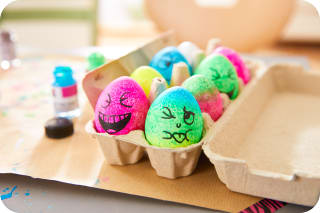
To to make Easter eggs shine in various colors and patterns, there are different techniques. The Preparation for egg dyeing is almost always the same:
If you have decided, which dyeing technique and which patterns you want to apply, you can in the next step choose the Select eggs
White eggs are particularly suitable for vibrant color results, whereas brown eggs are more suitable for blowing out due to their thicker shell are. However, both types of eggs are equally popular for dyeing. Just decide based on feeling and interest.
Prerequisite for colorful Easter creations is for all eggs a thorough cleaning. The method of cleaning varies depending on the dyeing technique.
Decide whether you blow out your eggs or hard-boil them want to. Hard-boiled eggs are particularly suitable for dyeing with small children, because they do not break as quickly as blown-out eggshells.
Whoever wants to hard-boil their country eggs should avoid small holes at the ends. This can help prevent the eggs from bursting, but it can also cause dye to get onto the egg.
Hard-boiled eggs can best be cleaned with one to two tablespoons of vinegar in the cooking water. This also removes the printed best-before date, which otherwise shows through especially with light colors. Additionally, the vinegar slightly roughens the eggshell: this allows the dye to be absorbed better.
If you want to make the dye bath yourself should use a pot with an enamel coating. Unlike stainless steel pots, dye residues have no chance of settling here. Old dishes are always recommended for painting eggs.
Also, you should always have a spoon ready, so that you don't have to take the eggs out of the dye bath with bare fingers.
Once you have all the materials and utensils together, the colorful fun can begin!
Blowing out Easter eggs – this is how it's done
Blowing out eggs is something of an art, which anyone can learn. With a few little tricks and the following instructions nothing will go wrong. So that the eggshell does not break when blowing out, are especially suitable eggs with harder shells. Generally, brown eggs are sturdier than white ones – even though the latter are easier to paint.
You need:
an egg piercer
a large needle
a bowl
lots of breath
Egg tip: So that the blown-out yolk and egg white don't spoil, think in advance about what you want to make with them. Whether as an ingredient for your Easter cake, as scrambled eggs or an omelette – you will certainly think of many recipes! Or take a look at our Easter recipes for children out.
Here's how:
Before blowing out, clean the eggs with water and a little dish soap.
Then take the first egg. Poke small holes at the bottom and top over a bowl. For this, it's best to use an egg piercer.
Now widen the lower hole with a larger needle.
Hold the egg securely over a bowl. Attention: Don't press too hard, otherwise it will be broken before you've really started. Take a deep breath and then blow into the upper, smaller hole until the entire contents have landed in the bowl. Tip: At the beginning the eggs may break more often. Don't give up, because practice makes perfect! After a few tries you'll certainly be real pros.
When the egg is empty, gently rinse it out with water. Then let it dry well.
Repeat all steps with as many eggs as you want to blow out and later paint.
Tip: When you have dyed, painted and turned your eggs into great Easter artworks, you can hang them up. To do this, tie a wooden matchstick to a thread and insert it into one of the two holes. Shake the egg a little so that the wood piece lies crosswise in front of the hole. Now you can hang it with the thread at the desired spot.
Dyeing Easter eggs with natural dyes
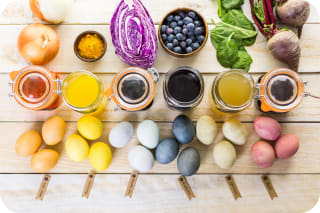
Easter eggs can be dyed in various ways. In addition to classic egg dyes in liquid or powder form as well as finger and water-based paints there is a particularly versatile and easily accessible option: the dyeing with food coloring. This method opens up a world full of bright shades and is also especially child-friendly. For those who value natural ingredients and want to know exactly what they are using to decorate their Easter eggs, natural dyes are a popular alternative.
Making natural dyes for Easter eggs with children
This is how you start, to naturally dye Easter eggs with children:
You only need the foods that give the desired color and an old pot with an enamel coating.
The pot should be large enough that the eggs are two centimeters under water.
From the foods you make a dye bath, in which the eggs float and absorb the dyes.
First, chop the natural materials as finely as possible so that the individual components release enough pigments.
Then boil them in water into a broth in which you let the Easter eggs steep for about 15 minutes.
The cooking and soaking times as well as the amount of water depend on the foods used.
If you do not want to use fresh foods, you can buy natural dyes in powder form at the pharmacy.
For a dye bath, usually 30 g per liter of water are required.
Suitable foods for dyeing Easter eggs
Dyeing Easter eggs with beetroot
Take two small pieces of beetroot that you have chopped up and put them in 3/4 liter of water to cook the broth.
After about 15 minutes of cooking time, remove the beetroot from the broth and add two tablespoons of vinegar.
Now add the hard-boiled eggs for dyeing.
After 15 minutes you will have red Easter eggs.
Dyeing Easter eggs with onion skins or turmeric powder
For the yellow color you need half a kilo of yellow onion skins, which you cook in 3/4 liter of water into a broth.
After 15 minutes, strain out the skins.
Then add two tablespoons of vinegar and put the hard-boiled eggs in the broth.
Wait until the desired color is reached, then carefully remove them with a spoon.
Turmeric also dyes yellow. Instead of the onion skins, simply add 20 g of turmeric to the water and boil with the eggs.
Dyeing Easter eggs with carrots
Put 500 g of chopped carrots with about one liter of water into a pot and let everything boil for about 30 minutes.
Then strain the broth and add the hard-cooked chicken eggs.
Wait until they have taken on an orange color and then carefully remove them with a spoon.
Dyeing Easter eggs with mate tea or parsley
For the color green there are several options: You can place the eggs in cold mate tea or parsley broth for about half an hour.
Different substances produce different shades of green.
Dyeing Easter eggs with coffee
For a natural brown you need 30 to 50 g of coffee, which you boil in a pot with two liters of water for about 30 minutes.
Then place your chicken eggs (preferably the white ones) in the dye bath.
Only take them out again when you have reached the desired color intensity.
Dyeing Easter eggs with red cabbage, elderberry juice or berries
For blue to violet tones there are also various options: red cabbage leaves, elderberry juice, blueberries, lilac berries and mallow herb provide different color nuances.
For this, the respective natural materials are finely chopped and put in a pot with about one liter of water.
Let everything cook into a broth for 15 to 30 minutes before dyeing the eggs.
Dyeing Easter eggs with leaves
Put 30 g of birch leaves into a pot with one liter of water.
Let it simmer for ten minutes, then add the eggs and let them bathe in the dye bath.
Recommended color intensity:
Stir the eggs occasionally in the dye bath with a spoon so that the shell is colored evenly.
Adding vinegar lightens the color.
Potassium carbonate intensifies the color.
With iron salt the color becomes darker. Let the eggs stay a little longer in the cooled dye bath after cooking to strengthen the color intensity.
Dyeing eggs without splashing
Seen it before? After dyeing, not only the Easter eggs, but also all little fingers and half the apartment are colorful? Our Easter tip reveals how you can easily dye Easter eggs with your children and keep everything else clean.
You probably have the clever kitchen gadget for this at home: a whisk. Its wire loops protect the egg like a cushion, and thanks to the handle, egg after egg can be dipped without getting little hands into the color. For an easy egg – without paint splatters!
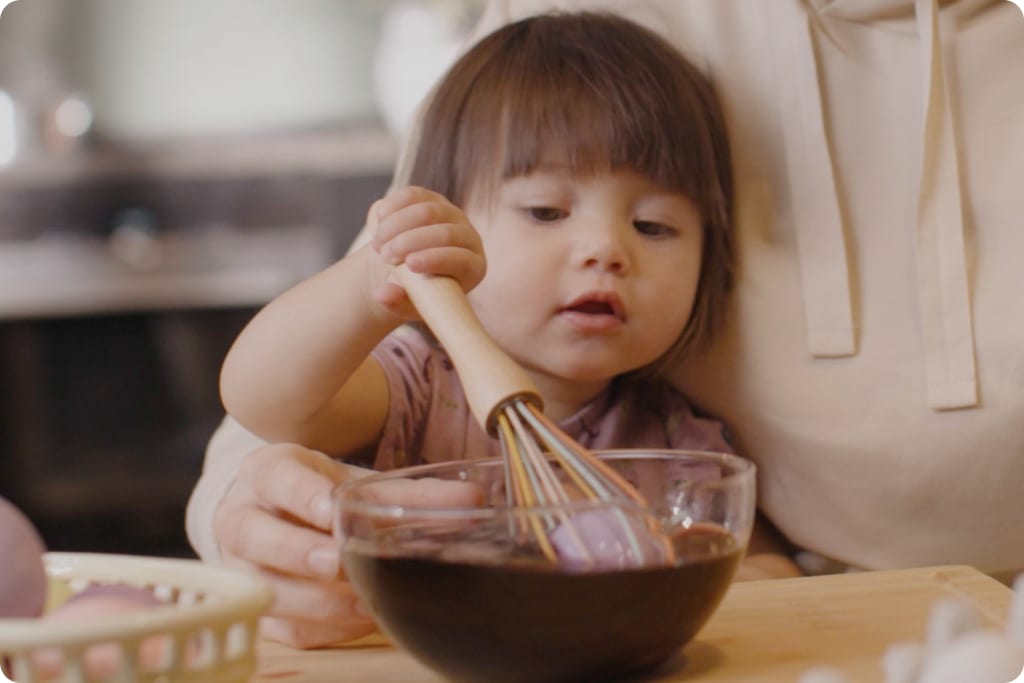
You need:
(hard-boiled) eggs
Food coloring(s)
Container(s) for dye
(Mason jars are particularly suitable because the colors last longer in them.)
Whisk
Paper towels
Here's how:
Put food coloring into the bowl(s).
Carefully push the egg between the whisk's wire loops.
Hold the whisk by the handle and dip the egg into the dye.
Reached the desired color? Let the whisk with the egg dry on a kitchen towel.
When the color is completely dry, remove the egg from the whisk.
Continue with the next egg ...
Tip: If you have several whisks at home, you can also dye several Easter eggs at the same time with this method. With small children it's definitely cleaner!
An art smock, tablecloth and a damp cloth are always helpful just in case. Because a fingertip is too tempting for some little color explorers!
Dyeing Easter eggs: Techniques
Now you probably want to get started right away and design your very own Easter eggs. What are you waiting for? Ready, set, go! Grab your chicken eggs and the colorful fun can begin. Remember: The more colorful, the better! There are no exact rules. So be creative and turn your eggs into real artworks.
Easter eggs with dots and stripes
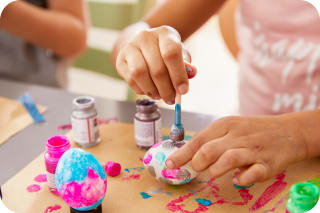
Required materials:
hard-boiled eggs (white ones are best suited)
lemon juice
cotton swabs
containers or old dishes for different colors
spoons
foods for your dye bath
pot with enamel coating
Here's how:
First decide which colors and which eggs you want to use. White eggs are particularly suitable for dyeing and designing with dots and stripes.
Now prepare the dye bath. To do this, boil the natural materials with water for about 15 to 30 minutes. The cooking and soaking times as well as the amount of water needed vary depending on the food. It's best to check the sections above to see how long you need for each color.
Before dipping the hard-boiled eggs into the dye, you can paint ornaments, dots and stripes with lemon juice. How you design them is up to you.
Tip: It's best to paint your motifs with cotton swabs that you dip into the lemon juice and use to carefully trace the outlines. You can also paint letters and words. That works just as well as dots & co.
Let the lemon juice dry well. Only then dip the painted eggs into the dye bath. Where you applied the lemon juice the dye does not adhere, which is why your beautiful patterns now stand out particularly well.
After about 15 minutes, remove the eggs with a spoon. If you want, you can also let them steep longer in the bath. Tip: For optimal shine, drip a little oil onto a paper towel. Use that to rub the eggshells at the end.
Dyeing eggs with a stocking for a leaf & flower pattern
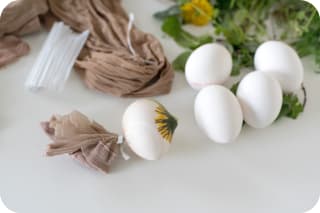
Required materials:
hard-boiled eggs (white ones are best suited)
Stocking (made of nylon or silk)
Leaves and flowers you collected during a walk
Craft scissors
rubber bands
foods for your dye bath
spoons
pot with enamel coating
Here's how:
First consider which colors, eggs, leaves and plants you want to use. Collect the natural materials on your spring walks and let them dry well before you start dyeing the eggs.
Next prepare the dye bath. To do this, boil the selected foods with water for about 15 to 30 minutes. The cooking and soaking times as well as the amount of water needed vary depending on the natural materials used. It's best to check the sections above to see how long you need for each color.
Now cut an old stocking to size by cutting a piece about 10 to 15 cm long from the middle.
Tie one end with a rubber band and place an egg inside. Then tuck a leaf or blossom into the stocking and place it on the egg. Press the stocking firmly so nothing can shift during dyeing. Then tie the other end with a rubber band as well.
Now place your well-packaged egg in the dye bath. It should stay in it for 15 to 30 minutes.
Take the egg out of the broth, let it dry well and then carefully free it from the stocking. This ensures the motif does not smudge.
Repeat all the steps with all the eggs you want to design.
Paint Easter eggs with finger paints or watercolors
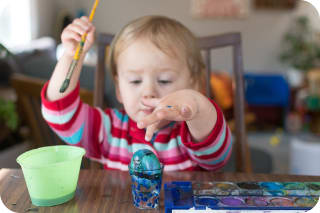
Required materials:
hard-boiled eggs
egg carton
finger paints or watercolors
plates
small bowls for the paints
old newspaper
smocks or old clothes
egg painting tool
Here's how:
Hard-boiled eggs are best for painting with finger paints. They don't break as easily as blown-out eggs.
Prepare your workspace by laying out old newspaper. Put some finger paint into small bowls. That way you always have the colors within reach.
Now you can get started: take the first eggs and start painting to your heart's content. Whether spotted eggs, stripes or cute animal motifs — there's no limit to your creativity. So go wild.
Tip: Use egg painting tools to hold and paint the eggs more easily. This is especially helpful if your children can't hold the eggs well or for long.
Let the dyed Easter eggs dry well afterward. It's best to put them in an egg carton for this.
Your colorful Easter eggs are ready and just waiting to be eaten.
Dye Easter eggs with wax
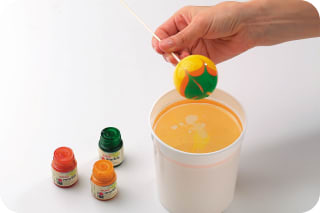
Required materials:
hard-boiled eggs
wax
pins
ingredients for your dye bath
spoons
two enamel-coated pots
Here's how:
First heat the wax - preferably in an old enamel pot.
Then take a pin and dip it into the hot wax. Paint various patterns, ornaments, dots or lines on your hard-boiled eggs. Because the wax hardens immediately on the eggs, you need a steady hand and must work quickly. It's best to help your children with this.
Next prepare the dye bath. To do this, boil the appropriate food items with water in a pot. Cooking and soaking times as well as the required amount of water vary depending on the food. Therefore pay attention to the information compiled in one of the upper sections of this page.
Once you have decorated your eggs with the desired patterns and the dye mixture has been cooked and cooled, you can begin dyeing. Place your Easter eggs in the dye bath and let them absorb the pigments for about 15 to 30 minutes.
Then lift your dyed Easter eggs out of the bath with a spoon, gently dry them with a kitchen towel and remove the wax. To do this, hold your eggs over a flame and turn them gradually, so the wax becomes liquid again and can be wiped off with a kitchen towel.
Done!
Easter eggs with detailed designs
Required materials:
eggs
an egg piercer
a large needle
a bowl
lots of blowing
pens & paints
watercolors
brushes
And off you go:
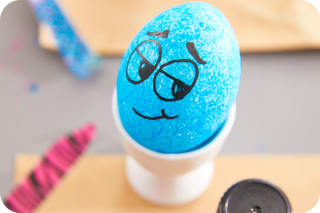
Blown-out eggs are particularly suitable for painting and decorating with felt-tip and other pens. Especially if you want to use them as Easter decorations. Of course you can also use hard-boiled eggs.
If you choose blown-out eggs, you must first poke holes at both ends. Then enlarge the lower hole with a needle.
Now you have to blow hard. Blow until the entire contents of the lower hole have landed in a bowl.
Rinse the empty eggshell well and let it dry.
Now you can paint all kinds of motifs. There are no limits to your creativity here. Let your ideas run free and create completely individual Easter eggs. Whether animal motifs and faces or colorful creatures with lots of shine and glitter — everything is possible!
Tip: For the very little ones, egg painting devices are the perfect aid so they don't have to hold the eggshells all the time and perhaps accidentally break them.
Then let your Easter eggs dry before you thread them and hang them up.
Show off Easter eggs with a homemade Easter egg nest
Whether as decoration or a great gift for your loved ones: In the homemade Easter egg nest, your colorful Easter eggs stand out even more.
Alternatives to dyeing Easter eggs with children
If your children are not so enthusiastic about dyeing Easter eggs, there are great alternatives with which you can still implement the Easter motifs super creatively can.
Whether wooden Easter eggs, other great felt and paper ornaments for Easter branches or perhaps a Easter basket to showcase the dyed eggs - you have the choice which Easter creations you'd like to make!
Of course, your crafting sessions don't have to revolve only around Easter. In this way, in Crafting with children in spring a much broader range of motifs.Because alongside the well-known Easter motifs are alsoplant and animal motifs are particularly popular with little ones
Which Easter decorations can you craft with your young artists? HABA has compiled some craft ideas and simple instructions for you on the relevant page. Have a look:
Frequently asked questions about dyeing Easter eggs with children
Why are Easter eggs dyed in bright colors?
What's the best way to remove egg dye from skin and fabrics?
Can we still eat our Easter eggs if the egg white is discolored?
Do eggs need to be pretreated before dyeing?
Can eggs be colored with felt-tip pens?
Which pens stay on Easter eggs?
How do you dye Easter eggs with shaving foam?
Can we also dye cold eggs for Easter?
What does vinegar do when dyeing Easter eggs?
More Easter inspiration in our magazine
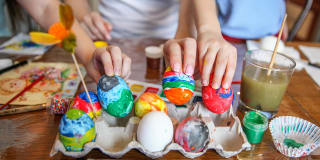

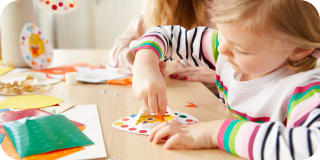

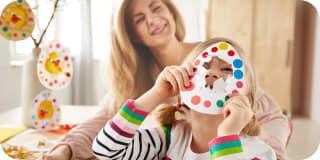


Image credits
Snapshot of a family dyeing Easter eggs at a table © gpointstudio - stock.adobe.com
Natural ingredients for dyeing eggs for Easter © arinahabich - stock.adobe.com
How to dye Easter eggs in onion skins and create beautiful patterns on them © Christine - stock.adobe.com
Toddler paints an egg with watercolor paints for Easter © Julia Beatty - stock.adobe.com