Family games: Fun ideas & tips for smooth game success
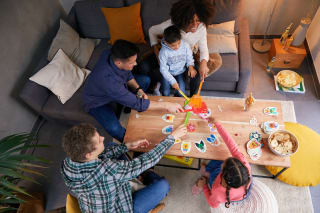
Every family has its own ideas about what a good family game should look like. When choosing the right games for the whole family, individual requirements are decisive. Basically, you should consider three essential criteria: number of players, playtime, game genre, and age limits.
Many games are only designed for a limited number of players. Make sure that your family games are really suitable for the number of all family members . Whether team games, card games or board games where everyone plays individually – you decide which format suits you best.
Playtime is especially important to keep an eye on, when younger children are also playing. As a rule, family games with young players should only last a maximum of 20 to 30 minutes, because toddlers' concentration ability is not yet very developed. The more practiced and older your kids get, the longer the games may last.
The game genre should be chosen according to the tastes of family members. Not everyone likes long-winded dice games, well-known classics or complicated strategy games. However, the range of party and family games is huge, so you are free to try out all kinds of classics.
It's also worth trying out new things regularly and both parents and children to set playful challenges to. Last but not least, hidden abilities and character traits of each family member come to light. In addition to the criteria mentioned so far, the question of age is the most decisive for which games you equip yourselves for joint game afternoons or evenings. To promote the game quality and to introduce little gamers free from any ambition to the world of family games, there are additional selection criteria for each age group to consider. Below you will find out which age requires which demands.
Game ideas by age
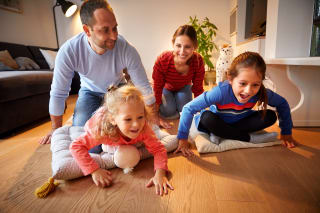
Game ideas for children from 1 year
Toddlers at this age want to experience the play materials with all their senses and explore them. Hands, mouth and eyes come into use, so you should pay attention to chemical-free, well-made games as well as large play pieces. These are usually identifiable by quality seals such as the GS mark or the Ökotest seal.
Game ideas for children from 2 years
From two years old, toddlers are able to understand simple game rules and follow them. With games for this age group, togetherness should be the focus. Games played against each other are too overwhelming. Also, the visual presentation of the games is now of greater importance. Two-year-olds therefore prefer colorful games, which again should be free of any harmful substances and bear a quality seal.
Game ideas for children from 3 years
From the third year of life your kids have a sense of humor. This makes it much easier to cope with the frustration of losing a game. They also learn at this age to deal with unexpected game developments.
The difference between "I", "You", "We" as well as the words "Yes" and "No" now gain more significance, so they occur more frequently. Simple game rules are therefore indispensable.
Game ideas for children from 4 years
At this age, games with clear rules are particularly suitable. Children now want to showcase their mental and motor skills and love to find out who emerges as the winner at the end of the game.
The playful competitiveness is slowly coming to the fore. Therefore you should choose games that strengthen empathy and a sense of community.
Game ideas for children from 5 years
From five years on, besides fun, also the imparting of knowledge is a point you should consider.
The playful focus is still in the foreground, but the little explorers' interest in the world beyond their own front door is more pronounced.
Learning and educational games are particularly popular among children of this age. However, make sure that you strike a good balance between learning and relaxing and do not overwhelm your kids.
DIRECTLY TO THE FAMILY GAME IDEAS (Link)
Why should we play together as a family?
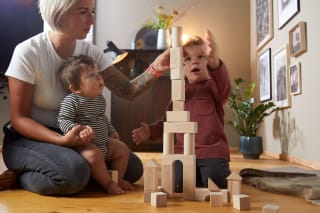
You also get to know each other again from different perspectives. Depending on the course of the game, character traits are revealed, which you may not have known about each other before. In general, board games are a way to establish and strengthen contact with each other. The fun brings generations together and strengthens your bond with each other.
Unconsciously, your children also learn about and apply their own abilities. Thus, especially social skills are promoted. In joint games they learn to deal with defeats, to promote teamwork and to listen to their feelings.
Empathy for family members increases, and the sense for good teamwork is sharpened. In creative party games you can all discover, promote and live out your creativity. In general the skills vary depending on the type of game, which you have chosen. Because each family game brings different skills to the fore.
While dexterity games can showcase motor skills, memory games call for cognitive skills. Thus, number sense, matching colors and shapes, language comprehension or logical thinking can also be promoted.
In addition to the fun of the game, which should clearly be in the foreground, games for the whole family also have other advantages – for young and old. You consciously spend time together, which is reflected clearly in your family cohesion becomes noticeable.
Tips for successful family game experiences
So that your family game afternoons and evenings are perceived as particularly successful by all family members and can therefore take place regularly, you should meet all needs and wishes. That's not always easy, but still possible.
HABA therefore has a few essential tips for a successful playtime compiled that you can use as a guide in the future.
clear, comprehensible & well-thought-out game rules
equal opportunities for all players
a balanced selection of games (e.g. team games with a common goal but also games with a clear winner and loser)
set fixed & regular game times
switch off or remove all distractions
meet challenges & defeats with humor
show understanding for each other
What family games are there?
There are a whole lot of family games just waiting to be played by you. The games can be classified into different types. So you can decide according to need which games are suitable for the whole family and, above all, for your respective game afternoon or evening.
HABA has put together an overview of the most popular classics here that you can use as a guide.
Board games
Board games are games for the whole family. They can be played across generations and are guaranteed to bring lots of joy for young and old. The range of board games couldn't be more colorful and diverse.
No matter which skills you want to test or what knowledge you want to teach your kids playfully, you will surely find something in HABA's range.
Dexterity games
From the age of four, children love to show their fine motor skills. Dexterity games, in which building blocks are stacked, obstacles are overcome or mazes are explored, are just the thing.
HABA offers you a comprehensive range of dexterity games, which will certainly provide enough thrills for all family members.
Learning & educational games
Learning and educational games are particularly suitable for little explorers who are interested in the world beyond their own front door. Especially schoolchildren can deepen what they have already learned and expand it playfully. However, also for toddlers there are plenty of games that let them discover their own abilities.
HABA offers learning and educational games for all age groups – great fun even for the grown-ups.
Memory games
Promote concentration and have lots of fun doing it. Sounds good, right? Memory games are among the most popular types of games for young and old. Remembering motifs, flipping cards that belong together or pure quiz games – memory games keep the mind fit and make you laugh now and then.
In the HABA range you will find suitable memory games for the whole family – boredom, goodbye.
FUN MEMORY GAMES (Link)
Tile & card games
Tile and card games come in numerous variations. They are often playable without preparation. Whether in the classic style with 32 or 56 cards in a deck or card decks specially tailored to the children's age, there's something for everyone.
HABA offers a versatile range of card and tile games that playfully explains the world to your kids.
Strategy & puzzle games
To puzzle against each other and find the solution to the riddle – strategy and puzzle games not only encourage your children's creativity, they also teach them to find solutions to a wide variety of problems to find. That also strengthens any thinking process.
HABA offers various strategy and puzzle games that make the whole family ponder.
Funny game ideas for the whole family – with only a few materials
Family games couldn't be more diverse. So in addition to numerous board games, you also have many games to choose from that require only very few materials are needed.
HABA has six great game ideas for you, which are divided by age groups are. So what are you waiting for? Ready, set, go – dive into the world of games and have lots of fun!
Family games for children from 2 years
The prepositions game
Here's how:
In this game your children learn prepositions in a funny way. The game leader – it's best if that's you parents at first – knocks on the table to give the start signal.
Now you decide what your children do first: "Everyone crawl under the table now" or "Everyone hide under a wool blanket now".
Your children follow this instruction and after a few rounds may even decide for themselves where, for example, you should hide, shelter or lie down.
Memo game
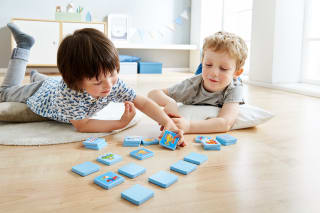
Here's how:
First, cut small squares out of colorful construction paper in the color of your choice. The number of pairs you want to design depends entirely on your own ideas and the age of your children.
Once you have cut the memo cards into shape, you can stick them together in pairs with stickers or photos, paint them with motifs or decorate them with shapes and colors.
Then it's time to play: place all your memo cards face down on the table.
Now you start by turning over a first card. Then another card is turned over. If it is a matching pair, two cards may be turned over again until no matching pair appears.
Then it's the other player's turn. You continue the game in the same way until you have found all the memo pairs.
The player with the most pairs has won.
The memo game is one of the most popular games for young and old. In addition to memory and concentration, your children learn here the to follow basic game rules . In addition to the classic version that you can easily buy, you also have the option to create the game yourself. You can easily craft your own memo game.
In addition to the following instructions, there is another one that you can implement even faster with the help of a template. HABA has made both versions available to you here. Get started right away!
Game cards by age
From about two and a half years, children can recognize and match identical motifs. The younger a child is, the larger the motif cards should be and the fewer cards the game should have. Approximate rules of thumb are:
two to three years: ten to 14 motif pairs (20 to 28 cards in total)
three to four years: 14 to 20 motif pairs (28 to 40 cards in total)
from five years: up to about 25 motif pairs (50 cards in total)
from eight years: up to about 40 motif pairs (80 cards in total)
Family games for children from 4 years
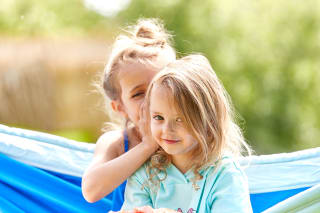
Telephone game
Here's how:
All players sit in a circle or in a row.
The first player thinks of a word or a sentence and whispers it into the neighbor's ear.
Tip: With younger children you should use words they already know. Animal names or simple objects from the home are ideal here. The older your children are, the more likely whole sentences can be whispered.
Each person passes on what they understood to the next person beside them.
When the telephone reaches the last player, they should say out loud what they heard.
Everyone eagerly awaits whether it corresponds to the word or sentence of the first player. That is guaranteed to cause a laugh or two when things come out that were not meant at all.
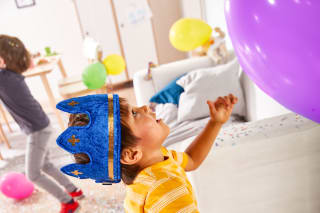
Balloon race
Here's how:
First define a course that you will tackle as a pair run. If you play indoors, you should create enough space accordingly.
Form teams of two family members each, who clamp a balloon between their torsos. Hands remain clasped behind the back.
Tip: If you are already practiced at it, you can increase the difficulty per round by placing the balloon between the noses, hips or thighs of the team members.
The teams now line up at the starting line and go as soon as the starting signal sounds.
The team whose balloon did not fall to the ground during the run and crossed the finish line first has won.
Family games for children from 6 years
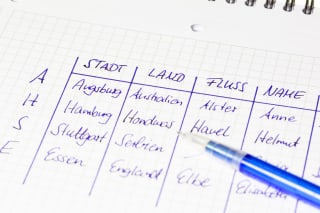
City, Country, River
Here's how:
First, each player takes an A4 sheet on which as many columns are drawn as you want to label. In addition to the classics city and country, you can also write down categories like animal, plant or name. The decision is entirely up to you.
Then you appoint a person who goes through the alphabet in their head and another who says "Stop". This sets which letter you should find words for the previously defined categories.
Whoever first fills all the categories with words beginning with that letter shouts "Stop". That ends the time for everyone else.
Now you go through the categories one by one and award points accordingly. For duplicate entries there is only one point, for unique terms two, and for terms where only one person has a solution three points.
Then add up your points.Tip: You best support your children here if they still have difficulties with it.
The person with the most points wins.
Connect Four

Here's how:
First, draw six columns with seven rows each on a blank sheet of paper.
Each person uses a symbol of their choice.
The first player draws their symbol in one of the lowest boxes. Similar to the purchased "Connect Four", the symbols fall to the very bottom, so you do the same on the sheet.
Now the next person is up and draws their symbol into one of the lowest boxes near the other symbol to prevent the opponent from achieving a row of four identical symbols.
Whoever first achieves a row (horizontal, vertical or diagonal) has won.
Make games for the family yourself
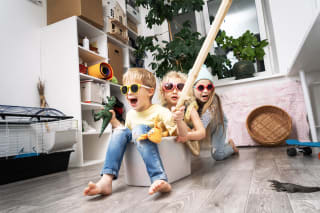
Children love to play. Whether alone or with the whole family, playing is the most natural way to learn various skills and to explore the world with their little fingers. Games don't always have to be bought. They can be made quite simply and often without a huge effort yourself.
Making games yourself is not that difficult. Whether crafting the popular memo game or other games in which you just knead, squish or paint, there are many possibilities.
HABA has therefore a few DIY game ideas collected and made available on the corresponding page for you. Click through and be inspired to create your own games.
Ideas for outdoor games with the family
Family games, of course, don't have to be played only indoors. There are also many different game ideas for outdoors, which you can put into practice very easily.
On the appropriate HABA topic pages you'll find various ideas, which can inspire you to create your own games. Dive into the world of play possibilities and have lots of fun.
Family games in all weathers

Spring, summer, autumn or winter – at any time it's worth taking the children out into the fresh air and letting them romp around wildly there. There are many play options, so there's no room for boredom.
The best part: You parents also really benefit from an afternoon of outdoor play. Besides breathing in the fresh air, you spend quality time with your kids that lets you forget everyday stress. Of course, you are also free to join in as much as you like.
Why your children should play outside more often and which games are particularly suitable, HABA has summarized this on the corresponding topic page.
Fun games for the garden
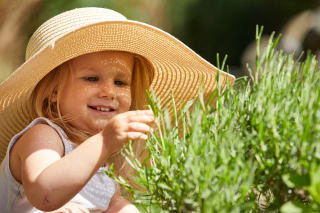
In your own garden, playtime is guaranteed not to be lacking. Besides playhouses or other great active toys, there are also various ways to let off steam playfully without many materials.
The best part: If you can't play in the garden with the whole family right now, you still spend time together. While you do your gardening or take care of other tasks, your kids can at the same time with their play cheer you up.
Which advantages playing in your own garden offers and which game ideas are particularly suitable, HABA has summarized this on the page about garden games for children.
Frequently asked questions about games for the whole family
From what age can we play together as a family?
Which games are particularly recommended for family bonding?
Are games for the whole family also suitable for travel?
More articles about leisure & creativity





Image credits:
Father playing Twister on the floor with his son © peopleimages.com - stock.adobe.com
City, Country, River note © Jeanette Dietl - stock.adobe.com
Three children playing in a box © Aboltin - stock.adobe.com