First ideas & tips for exercising together with children
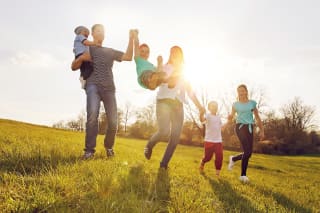
Children love to move and really let off steam. Even during pregnancy and in the early Developmental stages: babies kick about cheerfully away. This natural urge to move should also be continuously lived out and encouraged. Once your kids have learned to walk, they stop at nothing. Especially when they affirmation and praise from you, the parents they receive, they feel encouraged to try new things, to explore their surroundings and to follow their natural movement patterns.
Mobility and dexterity are two components that greatly advance child development and prepare your children for the next steps in life. Sports exercises are essential for improving both health and well-being. It doesn't necessarily depend on the most strenuous and challenging sports. Already Movement games at home, in gardens or parks make it possible for you to promote your kids physically and mentally.
Whether targeted sports exercises like funny jumping jacks, endurance and muscle strength training or carefree play sessions indoors or outdoors – any kind of movement is good for health. Fun should always be at the forefront. Ideas for Sports exercises or play ideas that enable movement must never be overwhelming for children.
Especially for toddlers, only the natural urge to move should be stimulated at first. Toddlers and primary-school children usually set the tone themselves for how they imagine the shared sports sessions. However, always keep in mind that it never leads to a lack of exercise.
As a rule, children should be active and let off steam for at least one hour a day. For infants and toddlers there is no time guideline for extensive movement. They should become aware of their natural movement patterns and let off steam as exuberantly as possible.
Kindergarten children, on the other hand, often need up to three hours or more of movement time per day. The older the children get, the less movement time is required. However, it is important that they then exert themselves more purposefully. Whether in sports clubs or joint workouts with you, the parents – Movement is important for mental and physical fitness.
It is perfectly normal for children to sometimes be less keen on exercise. They just shouldn't become couch potatoes. One approach to keep motivation constant is to plan sports into the family routine. Whether as a regular workout or disguised as everyday games in the form of funny spontaneous ideas – your kids will love spending time together with you, the parents. In primary school age, sports clubs and team sports become increasingly interesting. Important in all sporting decisions: always let your children have a say in how they want to use their free time for sports.
Why is sport so important for children?
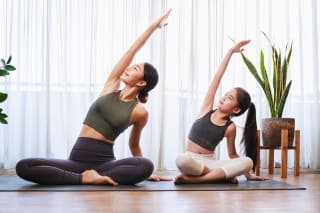
Plenty of exercise is an indispensable part of a healthy life – and that for young and old! Sporting activities keep the musculoskeletal system healthy, strengthen the muscles and the immune system as well as the cardiovascular system.\r\n\r\nThus the heart muscle supplies every cell with oxygen and nutrients by pumping blood through the entire body. Regular exercise therefore strengthens muscles and circulation alike. Athletic children suffer fewer accidents, are less ill and tend not as often to postural weaknesses or damage.
Regular exercise also helps to avoid overweight and similar nutrition-related diseases. Sport also keeps the mind fit: Sufficient exercise improves cerebral blood flow and thus positively affects concentration.
Falling asleep and staying asleep also works better for your kids when they've really worn themselves out. In addition, sporty children develop an understanding of their own strengths and abilities. They also test their limits and learn to know their self-efficacy. This is also reflected in your kids' social behavior. Because increasingly they gain empathy, which enables them to also understanding and respect for others to show.
Below you will learn about additional positive effects of sport for your little athletes.
Strengthen self-awareness & self-confidence
Physically active children are less stressed. Through exercise they reduce stress more quickly, which strengthens their general well-being. Active exertion can be a release for all kinds of emotions and help to deal with them better.
Children learn to accept their bodies and the associated changes, which in turn is reflected in strong self-esteem and self-confidence. Sport and emotions are directly connected. How your children feel is often reflected in their movement patterns and motivations.
Once your children have found a sport that suits them, and are successful in it, they feel validated in their being and self-perception.
Your kids feel what they can do and learn that the price for effort and perseverance good performance and recognition are.
Such positive experiences are important because they strengthen your children's personality – even when things aren't going so well in everyday life, in kindergarten, or at school.
Improving concentration ability
Generally it can be said: physical activity increases mental fitness and quality of life. Because with sufficient exercise, the nerve cells in the brain increasingly connect, so that it is consistently supplied with oxygen.
This increases performance. By regularly practicing sport, children learn to concentrate precisely. In a sprint competition, for example, the entire strength and endurance must be mobilized for exactly the duration of the sprint.
In addition, sporting activities produce endogenous neurotransmitters that promote memory and lift mood. The human brain has a short span of time during which it is able to concentrate on one thing.
Through a movement break during learning, nervousness and concentration difficulties can be reduced, as children can follow their natural urge to move.
Thus a short learning break can help them remember what they need to learn faster and at the same time not lose motivation.
Creating learning motivation
Through sporting activities your children receive the chance to link a variety of developmental learning areas through active engagement. They learn movement patterns and to trust their own body.
These experiences greatly motivate them to take on new things and absorb knowledge. To keep learning motivation constant, it is important to emphasize that the movement is practiced regularly.
Children who exert themselves actively every day improve their concentration, which is reflected in successes and increased motivation.
If physical activity remains an essential part of life for many years, it will also have a lasting positive effect on the mental performance of your little athletes.
Promoting teamwork skills
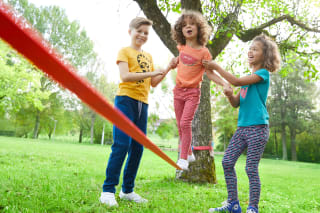
Working together towards goals, treating each other with respect and tolerance, and maintaining motivation within the team – whether team sports or individual sports, the foundations for teamwork skills your kids acquire during every sporting activity.
Particularly assertiveness, willingness to compromise and fairness are special skills that your little athletes get to know and adopt step by step through sports sessions.
Last but not least, they thus experience a strong sense of belonging for the first time. Their understanding of teamwork and strategy grows.
Social skills also help your children to react in later life – professionally as well as privately – in a focused and confident manner to various circumstances and situations.
Doing sports together – how to bring movement into everyday family life
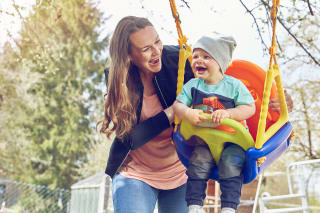
You as parents are role models for your children – this also applies in a sporting sense. Physical activity should be seen as a natural resource and incorporated into everyday family life.
If sport is part of your everyday life, your kids learn to see it as a matter of course and not as something inconvenient know. Whether you walk short distances on foot, combine walks with movement games, or simply romp at home or in the garden and dance as you please – every type of movement is beneficial and healthy.
So that your children really enjoy family sports and you also look forward to the shared training and exercises, there are a great ideas and tips to spark your motivation.
Regularity:
To get the most out of your sport, it is important that you do it regularly. If you naturally incorporate small activity sessions into everyday life, your children will probably hardly be aware that they are really doing sports. A joint walk after lunch or dinner, exuberant dancing to children's music, or ball games in the garden many children simply experience as great and special family time that they really enjoy.
If you want something more elaborate, a good start is to one to two times a week for half an hour to provide for a proper workout session. These are times that you can, for example, firmly enter in the family calendar. Shared time also strengthens the family togetherness.
Create structure and pleasant conditions:
Always make sure that your learning atmosphere and movement spaces do not stifle your children's natural urge to move. Also be understanding of one another and patient if exercises are not performed correctly in the first sports sessions. Tasks and exercises should therefore always be tailored to age, mobility and other existing abilities. Not least, they should of course be fun for all of you.
No admonishments:
Avoid long lectures about how important and healthy sports are for your children. That only gives your kids the feeling that they have to do sports and they will immediately perceive it as an obligation. Roughhousing together with friends or siblings in the garden generally works more effectively that way.
Make it fun:
Think together as a family about which sports, workouts or other activities physically challenge you and that you would like to try out. Fun should always come first in this. If you ensure sufficient movement, the focus is never on achieving top performance. That can become one of your family goals when you are a bit more practiced, but mainly it is about doing something good for mind and body.
Together is the keyword:
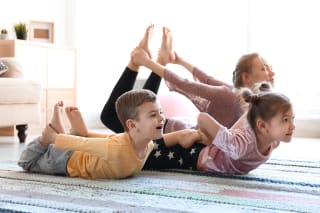
Doing sports together, logging successes and processing defeats – children love it when their parents are part of it. In a group, the first steps are easier and so family sports are a great motivation to keep going.
It also helps your kids if you accompany them to sports classes in clubs and the like. The journey there promotes your exchange with each other and fills your athletes with pride when they can show you on site what they have learned. Maybe they would like to recreate some of it with you at home and incorporate it into your exercise sessions.
Provide incentives to move:
A go-kart, a waveboard or a bicycle motivates most children and adolescents to become physically active – and all by themselves. These vehicles are designed to be used outdoors, where 'zipping around' is even more fun.
Sports equipment is also a great incentive, to get to know their own limits and abilities. The only important thing here is that you do not leave your kids alone. Support them in learning new movement patterns and don't forget to praise them regularly.
Use trial offers:
There are many sports clubs or schools that free trial lessons offer. This way your children can test once or twice whether a certain sport is fun for them.
Find motivation:
Children like to do sports when it is not imposed on them as an obligation. From an early age it helps them if you already encourage them to move in everyday situations. Toddlers, for example, have a lot of fun on playgrounds. Climbing, swinging, sliding, all of that keeps them moving and they hardly seem to get tired. The joy is so great that the physical exertion is initially hardly noticeable. Primary school children are especially encouraged by you as parents – especially when you also follow their interests.
Getting children excited about sports: Motivation for little couch potatoes
Especially toddlers love to discover new things and follow their natural urge to move. Especially when they do it together with you. You parents are role models who like to be imitated. At this point, the probability that your kids will become couch potatoes is still not too high, as they are quickly encouraged to be more active. Primary school children and older kids, on the other hand, seem more likely to be unmotivated and prefer to linger in front of the TV. But how are you supposed to deal with that?
If your mini-athletes have no motivation to move, then suitable games and challenges are the perfect idea for lots of sporting fun. Through targeted and fun sports sessions, children find even quicker access to more movement and thus strengthen not only their muscles, but also body and mind.\r\n\r\nSmall challenges and competitions like 'who gets to the next lamppost first' also spur your kids to move more unconsciously. Whether movement games like tag and jump rope or rather small bike tours – you'll definitely find the right thing for your reluctant movers.\r
On the relevant page, HABA has compiled further great ideas and tips summarized for you. On your marks, ready, go: Get motivated together for more sporting fun!
Great exercises to do at home
Sports with children: girl does exercises Practice makes perfect: This proverb also applies to exercises you do together as a family. It doesn't have to be an intense workout; you can just turn up the music and dance wildly.The main thing is that you avoid lack of exercise.
On the topic page about home exercises, HABA has also collected great exercises to try out for you. Boredom is guaranteed not to set in!
Active games for young & old
Active games are particularly good for getting children used to new movement patterns in a playful way and thus keeping body and mind fit. Whether homemade active games or exercises that you tackle with suitable toys – here both young and old benefit.
Which games can you try? On the page about active games, HABA has compiled numerous ideas and instructions for great play sessions for you. Browse the page and get started right away!
Which sports are suitable for children?
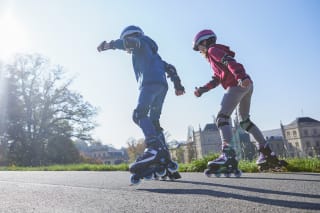
Whether team sports like football and handball, dance classes or martial arts – each of these sports contributes to the physical development of your children. Muscles are trained and fundamental skills like coordination and balance are practiced. Especially entry-level sports like athletics or gymnastics can already be practiced at a young age. Very important when choosing the right sport for your children, however, is that it matches their interests and that they also want to try them out. So decide together which sports to choose and which sports club appeals to you. It is good if your children get to know and try out as many sports as possible, because that way they recognize their sporting inclinations. Trial sessions are especially recommended here if you don't want to commit right away.
The older your kids get, the more you can consider specialization. The same applies here: Include your sporty kids and let them choose which sports classes they want to attend. To give you an initial overview of possible sports, HABA has summarized the most popular ones for you.
Team sports
Team sports like football, handball or basketball promote abilities such as endurance, speed and coordination even at an early age.
Whether girls or boys – children grow together as a team in these sports. That strengthens both the self-confidence as well as the sense of belonging. Not least, this is reflected in an extraordinary motivation for sports. Lack of exercise is unheard of here.
In addition, your children become familiar with rules. They develop social skills by gaining an understanding for themselves and others gain.
Age recommendations for team sports vary widely. Already at three years old preschool children can start soccer exercises. Handball, on the other hand, is only recommended from eight years old. Some sports clubs, however, already offer courses for toddlers.
Martial arts
Martial arts like judo, karate and boxing especially train your children's body awareness. Coordination, balance and concentration are also promoted.
Your kids learn quick movement sequences and depending on the sport they can achieve different levels through tests. This awakens the perseverance as well as the ambition of your little athletes. The motivation to achieve one's own goals increases. This also transfers to everyday life.
While karate already at three years old is allowed to be practiced, judo is only recommended from five and boxing from six years old. The offered sports lessons usually last between 45 and 60 minutes.
Here your kids can let their emotions run free and really let off steam. It also fills them with pride when they stick with it and notice their first successes and even earn the odd badge.
Dance
Dancing is not just for girls. Boys also like to dance. Whether ballet, hip-hop or jazz dance – dance is diverse. In doing so, your kids get to know their body awareness better and learn to use it purposefully.
It's not only great fun for them to move to their favorite music, it hardly feels like they are exercising. Not least, dance classes also strengthen the sense of belonging.
Social skills, but also a high degree of self-discipline characterize this sport. Dancing also has no age limit. You can practice dancing together already in toddler age.
This sets the stage for dance classes already at home. From primary school age you can then enroll your children in classes, and who knows, maybe you'll soon proudly attend their first performance.
Gymnastics
In gymnastics classes children have important movement experiences.Already in early years of life you have the opportunity to practice parent-child gymnastics in various sports clubs.
Here you not only accompany your kids, you also get a little exercise yourself. Gymnastics classes should generally be chosen in an age-appropriate manner and designed. For example, if fun and play are combined with gymnastics exercises, that is particularly interesting for your kids.
Gymnastics is one of the so-called entry-level sports and lays the foundation for many motor skills, that your little athletes can use throughout their lives.
The whole body is trained and the sense of balance is improved. In addition, your kids learn to communicate and cooperate better with others. The older your little athletes are, the more they want to go to challenging gymnastics courses – and do it all by themselves.
Athletics
Thanks to the many disciplines that exist in athletics, everyone can find something and discover their own strengths.
Through basic movement forms such as running, jumping and throwing and the different movement possibilities, the entire body of children is engaged and trained. Speed and coordination are improved and posture problems are prevented.
Already at the age of four, your kids can start this entry-level sport and learn to better understand their own bodies. Especially in the initial period, competition is less in focus.
That can change as your children get older. Ambition and a high degree of discipline as well as perseverance keep your little athletes motivated. Maybe you will also learn one or two exercises from your children.
Swimming
Swimming means lots of fun for children. They love splashing in the water and experiencing the associated body awareness.
The water that gently touches the skin and the fun of play awaken your children's interest especially in the first years of life. In this context, the swimming and splashing with kids also very valuable for arm and back muscles.
Because it is more strenuous than it first feels. Already in infancy you can accustom your children to the water. This makes it easier for them later to learn the to swim.
Whether you prefer to register your beginner swimmers with a club or teach them to swim yourself is entirely up to you. What you still need to consider can be found on the appropriate topic page from HABA.
Tennis
Tennis is particularly suitable for children from the age of five. Through this sport they improve their coordination, mobility and endurance. First successes also spark interest in being active. This increases self-esteem as well as self-confidence. Nevertheless, it is a rather more expensive hobby. In addition to the lessons, you will also face costs for high-quality equipment.
Tennis belongs to the racket sports that can be played both singles and doubles.
Either way, your children gain a high level of team skills, as they learn to interact respectfully with partners – whether competitors or teammates.
If kids at the age of five only learn the basic techniques of the sport, it really starts at seven years old. Tennis can also be done as a family sport.
Cycling
Cycling is a lot of fun and also saves your wallet. Apart from a bicycle and a helmet, you do not need anything else besides your interest in exploring the surroundings by riding.
You can start the first riding attempts already in toddler age. Your children will love it – especially if they have already been introduced to balance bikes and the like in previous years.
It fills your little explorers with pride when they race off for the first time without support.
Once they have mastered cycling securely, nothing stands in the way of a joint family outing by bike is nothing in the way.
Every excursion destination – even if it's just the next supermarket – is now reachable by bike. For your children, definitely a huge highlight in their early years.
Let's go: More movement for indoors & outdoors
Whether indoors or outdoors – sport is possible everywhere. Climbing, roughhousing, or fun tag and throwing games, your little sports champs can truly let off steam with active games and pursue their urge to move. As parents, you'll certainly benefit too.
Which options are available to you, HABA has in the following overview of sporty ideas for young and old summarized. Be inspired for shared exercise sessions and get active!
Movement for toddlers
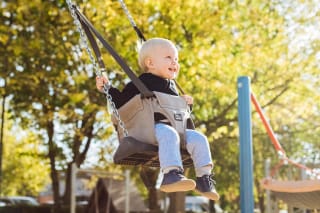
Balance, coordination and play fun – toddlers can test their own limits with the right play ideas and develop basic motor skills. This has a very positive effect on their development. Which movement games can you play with your toddlers? There are many ideas. HABA has the most popular game ideas listed for you on the corresponding topic page and has also summarized some tips for more movement in everyday life.
Garden games
Sports with children: Siblings play garden games The sun is shining outside and you want to play boisterous games? The home garden is the perfect play paradise – for young & old. Whether with toys and playhouses or creative play ideas without materials – here you'll really get moving.
Which garden games are particularly popular with young athletes and what to pay attention to with them: HABA explains it to you on the page about fun garden games. There's guaranteed to be something for the whole family!
Indoor romping
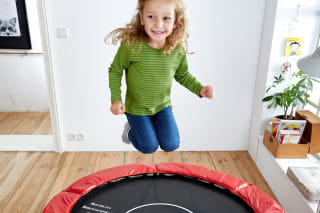
Jumping jacks, pillow fights or somersaults – even indoors your kids can really let off steam and burn off excess energy. That way your little sporty ones not only get to know their bodies better, they also learn to perceive and judge boundaries.
Why games that get your kids moving are so important for child development are and which ideas you can put into practice right away, you can find out on HABA's dedicated topic page. Ready, set, go – find your favorite games!
Active toys
So that your kids can really let off steam, you need, in addition to creative ideas and lots of joy, also the right equipment and toys. Hula hoops, chalk for fun hopscotch games or maybe an obstacle course with cones – there are many types of active toys.
HABA offers you a wide selection of different toys that will encourage you to move more. Browse through the range and get creative – great and sporty play ideas are guaranteed to bring fun to the whole family.
Frequently asked questions about sports with children
Which beginner sports are suitable for doing sports with children?
Can sports be incorporated with children during outings?
How can I encourage my baby's movement?
To the latest articles from this topic area

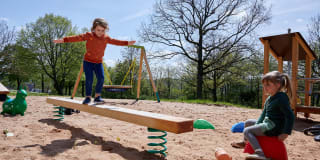
Image credits:
Mother exercises with baby © Dusko - stock.adobe.com
Mother and daughter do exercises on an exercise mat © Chayantorn - stock.adobe.com
Mother does yoga with her children © New Africa - stock.adobe.com)