Concentration difficulties or concentration disorder?

Everyone sometimes finds it hard to concentrate; children are no different from adults and it is not always a weak concentration not always a concentration disorder. The latter, for example, exists when your child has problems concentrating in different situations over an extended period. A concentration weakness, however, is present when your child has problems with attention during a particular activity or only on certain occasions problems with attention has.
To find out where your child's weaknesses lie, you should wait and observe: For example, can they sit still while eating and playing and occupy themselves with their toy for a reasonable amount of time and not fidget restlessly in their chair, then you should not worry about a concentration disorder. Here different causes, such as tasks that are too difficult or a noisy environment, may be the trigger.
The signs of a concentration weakness vary from child to child and are not always immediately attributable. For this reason, you should consult a doctor to determine if and to what extent these really result from a concentration disorder.
Possible symptoms include, for example:
Forgetfulness
Motivation problems
Confusion
Lack of stamina
What are the causes of concentration disorders?
Distraction:
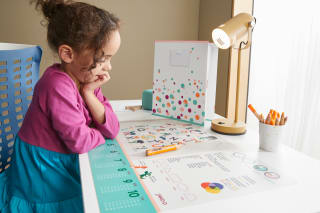
If too many stimuli bombard the brain at once, it quickly becomes overwhelmed. Especially children have to learn to concentrate on something specific and block out other stimuli. A running TV or siblings playing in the background can quickly become too much during homework. But an ever-changing workspace also confuses your child's brain.
Feelings:
Between sports classes, friends and school, time to relax is often far too short. But these times are important so your child can reset. Not only the body relaxes during this time, but also the mind and emotions. Feelings and thoughts that occupy your child and are not processed make it harder for them to concentrate.
Physical causes:
Your child's body is fully set on growth. Hormones can sometimes get out of balance. This can also affect concentration. In addition, your child needs physical activity to balance sitting still. They need to romp about properly sometimes in between so they can concentrate later. Additionally, your child's muscle strength has an influence on concentration. If your child has to exert too much effort to sit upright, there isn't much left to concentrate.
What helps my child with concentration disorders?
Study place and time
Children need regular routines, to orient themselves. That gives them security and calm. For this reason, make sure your child always learns in the same place and, if possible, at the same time. You can try together when the best study time for the child is. Some can concentrate best immediately after school; others first need a break and distraction.
Support
Especially younger children often have trouble gaining a overview of many details to get and then quickly get lost in them. Give your child a helping hand and make a plan together of what needs to be done when.
Practice concentration
There are books or learning programs for the computer with which your child can train their concentration skills and can learn playfully to focus on one thing.
Breaks
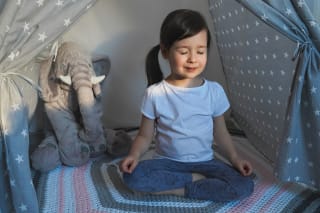
Rest between work phases is important so your child can concentrate again afterwards. It is particularly helpful if your child goes outside for fresh air and takes deep breaths in between. The oxygen literally brings fresh wind into the brain and helps concentration.
Discover more articles on parenting & psychology










Image credits
Boy sitting at a table with his head resting on his arm, on school notebooks © photophonie - stock.adobe.com)
Girl sitting in bed screaming and holding her hands to her head © nuzza11 - stock.adobe.com
Little girl sitting in lotus position © Надин Стокер - stock.adobe.com