What is the difference between language education and language support?
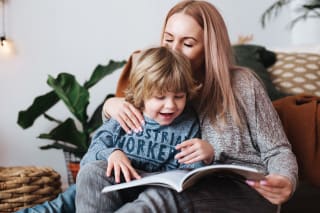
When it comes to language developmentit is important to distinguish between the terms "language education" and "language support".(Everyday-integrated) language educationbasically describes the process by which children in everyday life are continuously, and in accordance with their stage of development, linguistically educatedare. Whether at home with their parents, in kindergarten or at school – conscious and unconscious influencescontribute to children's language development.
Language support, on the other hand, means the targeted support of the language development of individual children, for example when they show language deficits and need additional support. The aim is to to foster children's individual development.
Is specific language support even useful?

Support mania? Our society is increasingly falling into an optimization craze that does not spare children either. Anything that can be promoted is promoted, from baby swimming to PEKiP groups to foreign language courses and logic training for toddlers. Every healthy child learns to speak more or less by itself, simply through interaction with their parents. So does it even make sense to additionally promote language acquisition?
Language support in daycare and school: Targeted language support is part of the concept of many schools and daycares. If it turns out that a child has language deficits, for example in pronunciation or in language comprehension, there is the possibility of regular language support by specially trained speech therapists. The earlier this training begins, the greater the chance that speech disorders fully resolve.
Fostering enjoyment of language: The aim of language support in everyday life should not be that children learn to speak particularly early or particularly well. Rather, it is about conveying an enjoyment of language through playful activities, to stimulate linguistic imagination and to motivate children to a creative and varied use of language.
Songs and rhymes for language development
Through language, children learn, to understand their world. This learning process becomes all the more intense the more varied the language is. Of course, everyday communication can already be very diverse. Many parents quickly notice that their child already listens with fascination as an infant, when they sing simple children's songs or recite little rhymes.
Why is singing important for language development?
Singing goes beyond verbal communication, because melodies also convey emotions and personality. Many children already sing in early childhood freely invented melodies without actual lyrics as an individual form of expression. When parents sing with their children, they not only create a special emotional level, but also promote language development: Children can remember song lyrics surprisingly well andunderstand linguistic connections particularly quickly, when they are supported by a melody.

Some of the best-known children's songs for language development
Bake, bake a cake (with clapping)
All my ducklings (with hand motions for the ducks)
Toot-toot-toot the train (all familiar names are used as 'passengers')
Rhymes for language development – best from the very beginning
'This is the thumb, it shakes the plums ...'
Some well-known finger games with rhymes
Himpelchen and Pimpelchen (the thumbs become two dwarfs)
This is the thumb (counting rhyme with all fingers)
There you have a coin, go to the market
These and other finger games for babies are a sure way to gain your child's attention. The connection between language and gesture is neurologically determined – the language center is located in the brain directly next to the center for hand motor control. Babies explore their environment with their hands long before they can speak. Finger games with rhymes connect the intuitive sense of touch with the linguistic input and are therefore particularly supportive of language development for children.
How to promote your toddler's language skills at home
Promoting communicative development with dolls
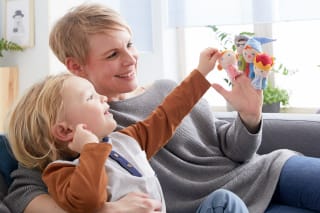
A wonderful way to start a conversation is role play. Especially in the playing with dolls children process experiences from their everyday life and often take on the role of a parent. They often reenact conversations or sometimes remain completely silent. But even then they tell a story in their head and thus expand their language skills.
Promoting communicative development with children's games
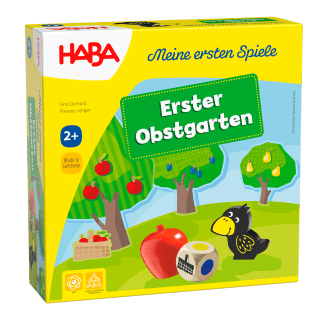
The language development of children can also be promoted through playing together. The HABA classic Orchard expands vocabulary, language comprehension and sentence structureand has brought fun to children and their families for many generations.
Promoting communicative development with stories
Stories encourage children to speak. That is why reading aloud is so important for language development and incidentally strengthens children's personalities and social skills.Regular reading aloud at a set timethus becomes an intense cuddle and feel-good time.
Even babies can play with stroller booksfrom one year on children are old enough for first board picture books with simple illustrations and short rhymes. Later they enjoy little stories and first non-fiction booksabout their everyday life, their favorite animals, vehicles or toys.
Further tips on children's language development
In everyday life with children there are other fine points to consider to optimally accompany their language development:
Speaking: Create a stimulating, communicative environment and include your child in communication from birth.
Listening: Patient, interested listening is a form of language support, as it stimulates and supports your child.
Picture books: Look at picture books with your child, instead of just reading to them. While looking you get into conversation and your child tries harder to grasp the relationship between text and image.
Accept mistakes: Do not immediately correct incorrect pronunciation or grammar, but encourage your child to speak freely and confidently.
No pressure: Pressure of expectations takes away children's joy of speaking – this also includes requests to repeat a word or pronounce it correctly.
No baby talk: Parents easily fall into simplified baby talk - but full, correct sentences promote language acquisition much more.
Corrective feedback: By repeating their child's utterances (correctly), parents give important linguistic input (e.g.: Child: 'Ado.', Parent: 'Yes, that's a car.').
Eye contact when speaking: Eye contact signals interest and conveys emotions, and it also helps children see the mouth movements of the speaker to correctly understand what is said.
Discover more articles on parenting & psychology

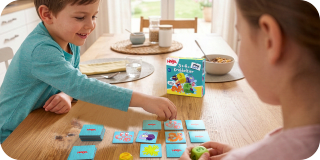


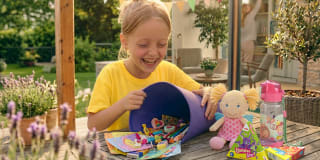




Image credits
Mother and little son sit together and read a book at home © Elena Kratovich - stock.adobe.com
Little boy in a speech therapy session © kasto - stock.adobe.com
Children's hands rest on parents' hands and play finger games © dtatiana - stock.adobe.com