Scolding – How to do it right
Is scolding harmful to children? Of course it is not okay to shout at your children; after all we as parents are role models and want our children to learn how to behave properly in conflict situations. However, swallowing your frustration just to always stay perfectly calm is also not a good alternative. On the one hand, children are very sensitive to their parents' 'false calmness'. On the other hand, anger builds up over time and gnaws at us, possibly eventually being released in an outburst of rage.
Scolding properly: Parents don't have to get loud when scolding. A firm, calm voice expresses the seriousness of the situation very well. And even if it sounds paradoxical: objectivity is the top priority when scolding. Your reprimand should always relate only to the current situation. When and how often your child has made mistakes is irrelevant at that moment; evaluating the mistakes also does not belong to scolding. Criticize your child's behavior, but never their personality or abilities.
Be authentic: Calm, reserved personalities will find it hard to show toughness. Conversely, temperamental parents often have to grit their teeth to always remain calm and composed. As with all areas of parenting, scolding should also be authentic so that your child can understand the situation.
Keep calm – how parents learn to scold less
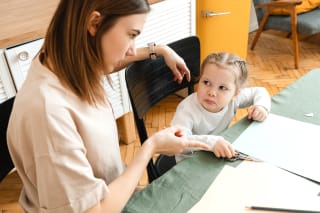
Accept your own limits:No one is infinitely resilient. If parents are stressed or overtired, they may sometimes scold more than usual. It's important that this doesn't become the norm. Be approachable for your child and tell them that you are currently annoyed or tired.
Reconsider your own expectations:If parents find themselves scolding frequently, they can use it as an opportunity to reconsider their expectations of their child. Maybe the child is not yet old enough to keep their room and belongings tidy on their own. Maybe they are loudly roughhousing in the apartment because they'd rather be outside on the playground? All parents should occasionally scrutinize their own behavior to find out whether they are doing justice to their children.
More attention:Mom wants to read quietly on the sofa, the child romps wildly around or secretly helps themselves to the candy drawer – many situations in which parents lose their temper are basically attempts to attract attention. A fixed daily shared ritual, for example reading a book or a short walk during which your child has your full attention, gives the day structure and can reduce stressful situations.
Allow conflicts:Disputes between siblings and friends are normal, and parents don't have to intervene immediately when it gets loud. On the contrary – if parents scold because children are working through a conflict, it can hinder the development of their social skills.
The ABCs of scolding
Yelling is a sign of weakness:And it frightens children. Parents who speak calmly and firmly appear much more confident – this makes a child more likely to absorb what is being said to them.
Personal criticism is taboo:"Are you too stupid/too small/too lazy for that?" are absolute no-nos – you should criticize your child's behavior, not their personality.
Scold about current behavior:Don't scold your child for an act that happened a long time ago and don't bring old misdeeds into a current conflict.
Don't question love:Your child must be able to feel sure of your affection – despite scolding. Statements like "... then I won't love you anymore" are emotional blackmail and frighten children.
Scold briefly:A tirade of scolding may help you vent – but your child will likely tune out after a short time. Prefer to scold briefly and matter-of-factly.
Scold and move on:The scolding should end the conflict. Don't hold it against your child; instead return to everyday life.
Scold authentically:Your child knows you and will quickly notice whether you are authentic or not. Showing emotions is allowed – this helps your child better understand your reprimand.
Discover more articles on parenting & psychology










Image credits
Father has fun with his little daughter in the bathroom © Halfpoint - stock.adobe.com
Woman scolds girl at the table © etonastenka - stock.adobe.com