














Let children play!

When we remember our own childhood, what do we most like to look back on? Weekly piano lessons or rather sunny afternoons with friends at the lake, or whispering and giggling in the self-built fort in the living room?
Parents want the best for their child – but many, in the omnipresent pressure to promote and optimize, forget to give their child the free space they so urgently need.Being allowed to be a child, as long as they have the opportunity: free, uninterrupted play with peers is not a 'useless' pastime, it is the foundation for healthy development of your child.
Playing makes you smart: Playing is for children a natural form of learning. They let their imagination run free and, through play, practice abstract thinking. Logical connections are discovered and concentration is improved.
Playing promotes social skills: Children must communicate, argue and find compromises during play. Interacting with others promotes their social skills and empathy.
Playing is healthy: Children run, jump, climb and romp while playing. This free movement is an essential part of their development, makes children fit and strengthens their body awareness.
Playing is fun: Children can in play flourish freely and learn and discover without expectations or performance pressure.
And last but not least: Playing keeps children occupied for hours – that gives you free time for yourself and all the other everyday activities.
Support without overwhelming

When you compare a childhood 20 or 30 years ago with childhood today, you can feel how much expectations have shifted. The typical sentence of our childhood "Out you go, but be back for dinner!" is hardly heard anymore. Instead we drive our children after school to violin lessons, handball practice, children's debate class or tutoring.
There are countless opportunities for support, and the pressure to perform is growing equally for parents and children: While parents desperately try to do everything right and prepare their child optimally for the future, children are under pressure from an early age to perform and to measure themselves against the achievements of others. But: How are children supposed to develop their personality if they go from one appointment to the next in everyday life?
The best opportunities for support are those you neither have to pay for nor enroll your child in. Be there for your child and support them in everyday family life.
How can I support my child's development?
The defiance phase between two and three years old is notorious — and almost every parent sometimes feels that the defiance phase actually stretches from about six months up to primary school age. What is the best way to deal with sudden tantrums or stubborn children?
With attention and genuine interest:Time spent together playing, cuddling, and talking is the foundation for healthy development.
By focusing on their preferences:If your child is enthusiastic about the drums, violin lessons make little sense. Find out what your child truly enjoys and support those preferences — even if you had actually imagined something completely different.
By letting go:Trust your child a little — it is the mix of small successes and failures that helps your child develop a healthy self-confidence.
With consistency:Many parents fear that scolding or punishments will make their child unhappy. Firm rules and corresponding consequences, however, also give a child security — as long as they are applied fairly and understandably.
Pink and baby blue — How does gender-neutral parenting work?

A look in the baby section of department stores says it all: ponies and princesses on one side, cars and pirates on the other — this pattern is even found on baby rompers. Many parents have problems with this kind of imprinting. Shouldn't children be able to develop their own preferences without being sorted into 'gender boxes' from the start?
Our article provides answers to this question:Typical boy, typical girl: Does gender-neutral parenting work?This is exactly where gender-neutral parenting comes in. Children should be able to develop their personality freely without having to meet society's expectations of their gender. Parents who practice this parenting style often give their children gender-neutral names and provide both boys' and girls' toys from the start, frequently making pants, skirts, and dresses equally available.
Self-determined gender roles for children?
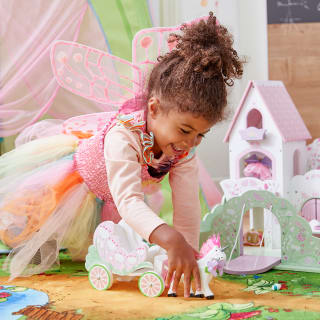
Basically that is exactly what we want for our children — that they grow up without clichés and prejudices and can live out their preferences. Critics, however, argue that a strictly gender-neutral upbringing can also cause a lack of orientation in children. It is not known exactly which factors play a role in sexual identity. What is certain, however, is that upbringing is not solely responsible for how children find their gender role.
Opposite the major plus of gender-neutral parenting — namely the freedom for personal development — is a major risk: children who do not commit to their role as boy or girl risk becoming outsiders in kindergarten and school. External influences and expectations grow stronger during this time, so many children gradually conform to their gender role anyway.
What to do about problems in daycare and school?

At the latest with the start of day care, child-rearing is no longer solely the parents' responsibility. Caregivers, teachers, and of course other children shape your child's everyday life. It doesn't always run smoothly. Maybe your child comes to you with their problems, maybe you learn of difficulties through gentle probing or in conversations with teachers and caregivers. Most often the most sensible approach is to stay calm, if necessary seek a neutral opinion, and find a solution together.
Learning difficulties:
Many parents are alarmed when their child learns more slowly than other children. The performance mindset is out of place in daycare and fundamentally also in primary school. Even with persistent learning difficulties at school, it is important that you convey security to your child and do not give the impression that they are 'not good enough'.
If there really is a developmental delay, professional caregivers or educators will address it with you in good time and, if necessary, suggest support measures such as speech therapy or occupational therapy.
Difficulties with social contact:
Not only shy children sometimes have difficulties in daycare or school. For little rascals, too, it can sometimes be difficult to make contact with other, less outgoing children and communicate with them. Nothing can be forced; don't worry too much if your child doesn't have as many friends as other children.
With time, it may find one or two other children it gets along particularly well with. You can support these friendships to strengthen your child's self-confidence and open them up to new friendships.
Difficulty with the educational approach:
Most daycares and schools follow a specific educational approach that is explained in detail in their respective statutes. Most parents familiarize themselves with the concept when they enroll their child in an institution. In practice, however, it sometimes runs differently than expected. Not all children get along with every parenting style and an educational concept is not always supported and implemented uniformly by all caregivers.
Basically your gut feeling should decide: does your child feel comfortable? Do you feel that your child is well cared for there? Only if you can clearly answer either of these questions with 'no' should you consider a change — because that usually means additional stress for your child.
Everyday tips for a happy childhood

Spend time together:
Up to a certain age, the nicest thing for all children is to spend time with mom and dad. It doesn't have to be big outings:Playing, reading, or just cuddling on the couch provides security and a sense of safety.
Sometimes having no plans:
Sometimes less is more. Children are occupied in daycare and school all week and constantly experience new things there. So a day with no plans, with plenty of time to play, is pure happiness. Of course parents want to offer their children something — but a nonstop schedule of leisure activitieseven the liveliest children will not enjoy.
Be patient:
Your child still has the chance to learn through play and to develop freely. Give them this opportunity and allow them to develop at their own pace – this is not only more relaxing for your child but also for you.
Listen:
It sounds so simple, but in the hectic everyday life and with increasing external pressure, one sometimes forgets what really matters: listening to your child and taking them seriously, to support them in their needs.
To the latest articles from this topic area
Image credits
ZTwo children paint with their hands, feet and a brush on paper © Denys - stock.adobe.com
Grandson stands between grandparents at the grill © Halfpoint - stock.adobe.com
Grandfather stands in front of 2 girls © NDABCREATIVITY - stock.adobe.com
Grandfather has his arms around a girl and a man © NDABCREATIVITY - stock.adobe.com