Crawling, playing, chatting - What happens in a parent-and-baby group?
In most parent-and-baby groups, groups of five to ten babies and their parents meet once a week to allow the babies to make contact with other children and, if applicable, motor skills and sensory development in a playful way. How much emphasis is placed on play and early support varies widely and usually depends on whether the group is guided or unguided.
Guided parent-and-baby groups are, for example, accompanied by educators, midwives or experienced mothers. They provide the framework, for example with suggestions for games or songs, and are also on hand to offer advice and practical help when parents have questions. Often these parent-and-baby groups provide play materials such as scarves, noisemaking toys, soft fabric balls, teething toys or other items and use them together for various games.
Unguided parent-and-baby groups usually form on parents' initiative. Three or more children and their parents meet in private homes, sometimes in leisure facilities or church rooms. Here the focus is more on spending time together and the children's free play. Not all private parent-and-baby groups meet regularly, and the number of babies often varies more.
How and where do I find the right parent-and-baby group?

To find the right parent-and-baby group for you and your baby, you should first look at the offerings in your area. Parent-and-baby and playgroups as well as baby classes are offered by:
Hospitals
Birth centres
Midwives
Welfare organizations
Youth centres
Churches
Sports clubs
Many parents also meet in privately organized groups. Ask around early and consider which offering best fits your expectations and your child's needs. In addition to traditional parent-and-baby groups, there are a number of other play and developmental offerings for babies (and parents), including:
PEKiP
Baby swimming
Baby massage
Baby music class
Breastfeeding groups
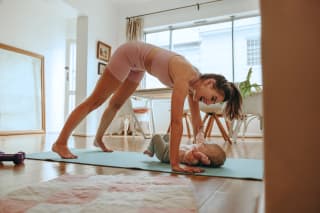
Sports activities with baby, e.g. yoga
Everything is optional
For the parent-and-baby group, what applies to most activities with a baby also applies: it is a good option, but not an obligation. Your baby will not be harmed or neglected in its development if it does not attend a parent-and-baby group. Maybe the times when groups meet simply don't fit into your schedule. Maybe your child is still very reserved and overwhelmed by the other babies and adults in the group. Or — and that's understandable too — in everyday life, where everything revolves around the baby, you might not feel like exchanging with adults who are also focused on babies and parenthood. Many parents don't meet in formally organized groups but prefer to meet privately in twos or threes. The effect — namely the first social contacts for your baby and the exchange with other parents — is exactly the same.
Checklist:
Which parent-and-baby group is right for me and my child?
Registration: For an open parent-and-baby group, no registration is necessary and the weekly sessions are not binding. Other groups have a limited number of participants and require registration
Attendance: PEKiP courses, baby music classes or baby swimming require regular attendance; unguided groups are usually flexible regarding weekly participation
Costs:For some groups (in particular guided groups and courses) there is a participation fee; others are free of charge
Content/Program: Open groups, parent meet-ups and private playgroups are usually more of an informal get-together where children can explore their surroundings and the people around them. In guided parent-and-baby groups and play courses, like PEKiP, early stimulation plays a larger role
Your own wishes & needs:What is good for my baby? What do I expect from the parent-and-baby group?
Discover more articles on parenting & psychology







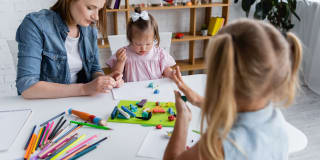
Image credits
Mother and baby looking at each other © Полина Власова - stock.adobe.com
Father and baby laughing together © Prostock-studio - stock.adobe.com
Mother and two children playing © Krakenimages.com - stock.adobe.com