Preparing for daycare: How to prepare your child for the transition
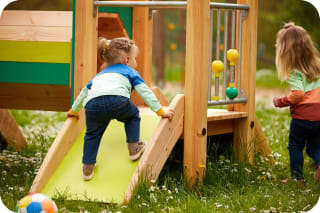
Even before the first official trial session at daycare takes place, you can prepare your children for the exciting change. Some kids find it difficult to imagine being separated from their mothers and fathers for an extended period.
To counteract the separation anxiety in advance, a positive attitude from you, the parents, is especially important. Avoid phrasing that evokes negative feelings, such as 'don't be afraid'. Instead, convey the enjoyable aspects to your children, like the prospect of many great toys, new friends, or the adventurous daycare playground.
Also the adjusting your daily family routine is a good preparation for settling into daycare. If your children tend to go to bed later and sleep longer in the morning, switching to an early start can become a challenge. Instead of great anticipation, there may be a bad mood. It's best to start a few weeks before the daycare settling-in by practicing getting up early — that way not all changes happen at once.
If you also follow these tips, your child will be well prepared for daycare:
Visit the daycare:
Most daycare centers already offer a trial day. Here children can already take a look at the play areas, meet the educators and a few of the other kindergarten children. Then nothing is completely new and unfamiliar on the first day. You might even spot a few familiar faces like friends or neighbors — that immediately creates excitement.
Practice separation:
Children who have not previously gone through a nursery settling-in are often separated from their parents for a longer period for the first time in kindergarten. To help your little ones slowly get used to this new situation and unfamiliar environment, let them occasionally spend time alone with relatives or friends. This way a completely new caregiver is not added from one moment to the next — and your children get a feel for a short-term separation.
Spark curiosity:
Read books to your children, that are about kindergarten or show them the children playing on the daycare playground when out for a walk. Also let your kids play with friends, who already attend kindergarten or tell them yourselves about fun activities like crafts, singing or romping — in no time your curious little ones will hardly be able to wait to toddle into kindergarten themselves.
Get supplies:
A few new indoor shoes, a water bottle and lunch box with a fun motif and their own small backpack increase the anticipation for the kindergarten visit. Our tip: Attach a small hook in your home just for the kindergarten backpack — that way your children have a set place for their things, just like mom and dad.
Is settling into daycare similar to settling into the nursery?
Kita, Kiga, kindergarten and nursery — there is a settling-in process everywhere and parents can quickly lose track. 'Kita' is short for 'Kindertagesstätte' (daycare center). A distinction is made between facilities that only offer morning care and those that provide full-day care. The term 'kindergarten' or 'Kita' is usually used synonymously. Children from about 3 years old are admitted here, in contrast to the nursery (Krippe), where only babies and toddlers are cared for.
The settling-in process in the nursery therefore proceeds somewhat differently. HABA also offers suitable tips on this topic on the topic page.
This is what your child needs for the daycare settling-in
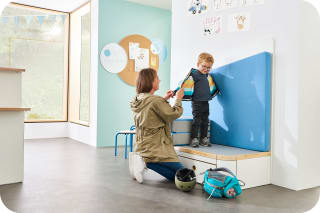
The Daycare supplies to obtain brings a big dose of anticipation. So don't wait until the settling-in period has already begun before you start looking for a backpack, mud pants and co. Even if you may not need everything right on the first day, you can focus on your child in a relaxed way and won't be distracted by shopping.
It's important that after the daycare settling-in you regularly check whether everything is still there and that your children haven't outgrown their clothes. Depending on the size of the kindergarten, the caregivers may not have an overview of the exact equipment of the many children — so you parents should think along actively.
So you don't forget anything, HABA has put together a practical checklist for you. You're sure to already have one or two items at home and can start your preparations right away.
Basic supplies:
Backpack or bag
Slippers
Rubber boots
Hat, scarf & gloves
Sun hat & sunscreen
Spare clothes: pants, tops, socks, underwear
Cloth bag for dirty laundry
Name labels
Gym bag
Sportswear (optional)
Additional supplies for full-day care:
Bedding
Sleepwear
Toothbrush & toothpaste
Diapers, diaper cream & wet wipes (optional)
For comfort:
Emergency-pacifier
Favorite toy
Comfort pillow
How the settling-in process at daycare works
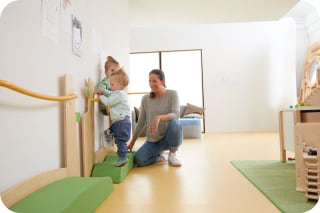
Have you decided on the right kindergarten and a daycare place found, the official phase of settling-in will begin soon. What it looks like in detail is of course dependent on your daycare center.Berlin settling-in model or also on the subsequent Munich model. In the process, a parent or another caregiver is involved in the adjustment to the new situation, so that a gentle transition to separation is possible – for parents and child.
The settling-in period is divided into several phases. At the beginning, on different days you spend one to two hours each together with your little ones in the kindergarten. Usually only the mother or the father will participate in these sessions, not both parents. During this time, it's best to take a passive role and let your little explorers roam free. Initial attempts to make contact occur between the childcare professional in the daycare and your kids. Now and then the children's gaze wanders to the parents; shy children also like to stay on mom's or dad's lap.
A few days after the initial familiarization, a first separation attempt takes place. You say goodbye to your children, but remain in the facility – however out of sight and earshot. Sometimes your little ones cry briefly, but ideally they can be distracted by the educators or other kindergarten children. If not, you'll be called back in right away and you'll try again on another day.
Once your kids have mastered this phase, you begin to spend the time apart outside the facility . However, you remain nearby so you can return at short notice. A female educator or a male educator now takes over the responsibilities of the primary caregiver and takes care of your little treasures. Depending on how the children react, you adjust the length of the separation.
Soon your children will have adapted to the new situation. Towards the end of the settling-in period they spend several hours at a time in the daycare without you. In the meantime, you can pursue other activities as long as you remain reachable. If everything goes smoothly, nothing stands in the way of a regular routine in kindergarten!
The need for attachment, care and security as well as trusting relationships between the educators, your children and you, the parents, is always the focus during the settling-in period and afterward. As soon as your kids feel comfortable in kindergarten and the staff there are recognized as caregivers, the settling-in period is complete.
The Berlin model

You've probably come across the term "Berlin settling-in model" once or twice in your search for a daycare place. Usually you find out before registering at the kindergarten whether the facility follows the Berlin model or not.
If you'd like to learn more, HABA is the right place for you. We have compiled further information about the Berlin model for you so that you are well prepared for the settling-in period.
Settling in calmly: Tips for a smooth daycare start
The transition to kindergarten means for many families a major adjustment. This is especially the case if your little ones have not previously been in another form of childcare, such as a nursery or with a childminder. In addition to the preparations you can make together with your children, HABA has even more tips and tricks ready for you parents. Find out here how to master this challenge with ease.

Allow buffer time
Every child reacts differently to a new situation. Plan at least four weeks for the settling-in period; if you like, even a few days more than your facility recommends. That takes the pressure off if something doesn't go as planned and there are perhaps more tears than expected.
Stay calm
Children sense their parents' mood. If you are anxious and worried, it affects their behavior. If your children notice that you really don't want to let them go to daycare or only reluctantly do so, they will react accordingly with skepticism or even refusal. But if you radiate confidence, that will transfer to your child.
Introduce goodbye rituals
Think up a small ritual for saying goodbye at daycare: a firm hug, a kiss, a wave at the door, or even a gentle push from your child. That gives the little ones security and signals: Now I can go and play calmly and later Mom or Dad will come back and pick me up.
Stagger changes
The adjustment caused by starting daycare usually affects your whole family. If possible, try not to schedule returning to work or the school enrollment of older siblings to fall at the same time. That confuses your child further and makes the settling-in process more difficult.
Be consistent
The settling-in phase is often associated with separation anxiety. If you promise your children to pick them up at an agreed time or after a specific ritual, you should keep that promise. Only in this way do the new kindergarten children learn that they can rely on you parents and play much more relaxed in your absence.
Have confidence
Have confidence in yourselves and your children, and also in the professionals at the daycare center. The latter are true experts in what they do and have years of experience. They have already met countless children and know how to build bonds, support their development and comfort them if needed. Even if it's sometimes hard to believe: your children will soon feel right at home in daycare and they will always be cared for professionally and lovingly.
Problems with settling in: What to do if it doesn't work out
Despite good preparation, it sometimes happens that settling into daycare causes problems. Many parents' worst fears come true: the child refuses to leave the house or cries in kindergarten and cannot be comforted.
Many parents are therefore stressed and worried or even desperate. The good news: you are not alone with these difficulties and in most cases the problems resolve on their own. Keep close contact with the caregivers and try together to get to the bottom of the problem.
Some children simply need significantly more time to settle in. This may be because they are shy or their development is not as advanced as that of other children. The most important thing: give your kids the time they need. If things don't go well for several days in a row, a short break is recommended. Often the following week looks completely different and your children will not be able to wait to go to daycare.
In kindergarten, many new impressions hit the little ones. If your child is sensitive to such situations or even highly sensitive, they can quickly become overwhelmed and stressed. To meet the children's needs, the caregivers at kindergarten choose slow, calm games instead of wild rough-and-tumble play during the settling-in period. It is also helpful if the new environment is somewhat limited and not the whole kindergarten is used during the settling-in phase. Sit back and relax, because the professionals in daycare have the necessary experience to address each child individually and thus promote the settling-in process.
When problems occur during the settling-in period, one thing is especially important: be patient with yourselves and your children. Discuss your concerns openly with the caregivers in a detailed conversation – you know your child best.
When should a daycare settling-in be discontinued?
This question cannot be answered in general terms. The circumstances are as varied as the children themselves and the situation must be considered individually. Again, you should speak with all those involved before you decide to completely stop the daycare settling-in. Also talk with your children and don't leave them out. In many cases, a solution to the difficulties can be to pause the settling-in period and start again a few weeks or months later. During this time children mature and approach things differently afterwards. If the problems are very serious and a trauma is imminent, consider whether it might make sense to switch to an alternative form of childcare. Perhaps another type of facility, such as a Montessori kindergarten or a Waldorf kindergarten a better option. Completely different concepts, such as care by a childminder or a Au pair can be the solution for you and your children.
Top tips for settling into kindergarten at a glance
Even before the first day at daycare, you and your little ones can prepare for the exciting time with these tricks:
Explore the kindergarten and its surroundings in a trial visit.
Spark your children's curiosity of your children by telling stories about kindergarten.
Practice short separations through visits to friends and relatives.
Get the right daycare supplies in advance for your children and thereby boost their anticipation. With these ideas, nothing stands in the way of a smooth start to everyday kindergarten life:
Find out about the settling-in model of your daycare so you know exactly how the coming weeks will play out.
Allow enough time for the settling-in process, so that you and your children don't put yourselves under pressure.
Schedule the settling-in period so that not too many changes happen at once. This helps avoid overwhelming your family.
Stay calm and project a positive attitude and confidence, because your own mood also affects your children.
Be reliable and stick to agreements, this way your kids learn they can rely on you and that you will definitely pick them up.
Introduce loving goodbye rituals, with which the time at kindergarten begins and ends.
Have confidence – in yourselves, your children and the caregivers. Your child is in the best possible care at kindergarten.
Frequently asked questions about settling in at daycare
1. How long does a daycare settling-in period last?
2. What if my child becomes ill during the daycare settling-in period?
3. When is my child ready for the kindergarten settling-in period?
Discover more articles about childcare & school











Image credits
Father holding child © Westend61 - stock.adobe.com