Swaddling – how it's done
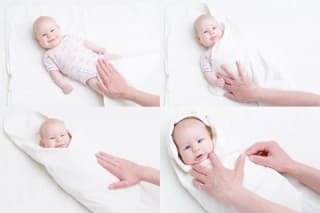
A square blanket is best for swaddling. With rectangular blankets, a part must be folded over, which may make the blanket too thick. Spread the blanket out, fold one corner inward and lay the baby on it with their head and shoulders on it.
Fold the lower corner of the blanket over the baby so that it covers the legs and torso; if necessary, fold the tip of the corner again. Caution – the baby's mouth and chin must always remain free.
First pull one side of the blanket snugly over the baby's body and, if necessary, secure it by tucking it lightly under the body. Then pull the other side over and wrap the baby with it.
Swaddled babies usually fall asleep faster and wake up less often. However, make sure that your baby does not stay in the same position for too long and that the sleeping area is not too warm.
Swaddling – possible, but not always necessary
Swaddling is a method to help very restless children or colicky babies fall asleep and stay asleep. Many midwives recommend swaddling for the first months and when circumstances call for it.
Pediatricians tend to be critical of swaddling. They see the risk of spinal and hip problems and a flattening of the back of the head, because the baby is not in the fetal position as in the womb, but lies flat with its head and back. They also fear the risk of overheating from the tightly wrapped blanket.
Whether you swaddle your baby, you decide yourselves – Children who do not cry or fuss beyond the 'normal' amount, however, do not necessarily have to be swaddled. And for babies with an existing hip misalignment who need to be wrapped widely, swaddling is not recommended. In addition, some babies simply do not like swaddling and protest loudly.
The baby wrap – a good alternative to swaddling
Babies who don't like being swaddled may settle in a baby wrap close to the parent's body. The babies are just as 'wrapped' as in a swaddle, but in a slightly rounder posture and with the comforting body warmth of mom or dad. In addition, parents have their baby clearly in view and notice immediately if it feels uncomfortable.
Checklist – correct swaddling
Square blanket or a cloth
Thin cotton blankets or special swaddle cloths are optimal
A romper or pajamas are enough – the blanket provides warmth
The legs should not be straightened to prevent hip damage
Ensure that the swaddle blanket is wrapped snugly
Leave the mouth and chin completely free
Swaddle only briefly for rest periods – not a long-term solution
Leave the arms free when swaddling if the urge to move increases
Do not swaddle after 2-3 months
Not suitable for babies with hip dysplasia
Discover more articles about everyday family life











Image credits
Newborn baby sleeping in a basket mohawk hairstyle © irena_geo - stock.adobe.com
how to swaddle a baby © pegbes - stock.adobe.com