Pregnancy complaints and helpful tips
Tiredness, exhaustion
Especially during the first three months of pregnancy, most women would prefer to sleep constantly. Everything feels a bit harder; even routine tasks or exercise become strenuous.
Cause:
The reason for the exhaustion is the hormonal change. In addition to the pregnancy hormone hCG, the calming progesterone is produced in greater amounts. The placenta grows and blood volume increases. This work additionally tires the body.
What helps?
Sufficient rest, relaxation and plenty of fluids. Treat yourselves to frequent breaks and go for walks in the fresh air to get your circulation going.
Nausea, loss of appetite
Nausea and vomiting are among the most common pregnancy complaints in the first three months. The severity ranges from mild discomfort to frequent vomiting over several days.
Cause:
The trigger for nausea is probably the rise in hCG in the blood. The pregnancy hormone also causes women to become more sensitive to smells and tastes.
What helps?
Nausea cannot be avoided. Fortunately, it usually passes soon. Many women find a small sweet snack immediately upon waking in the morning helpful, for example a biscuit. In cases of very severe, persistent nausea, your doctor can prescribe medication for you.
Constipation
Constipation can occur repeatedly during the course of pregnancy. The bloated, painful abdomen is unpleasant and can cause temporary loss of appetite.
Cause:
The rise in hCG and progesterone levels slows down the intestines. At the same time the body needs a lot of fluid for the additional blood production. This can lead to a lack of fluids, which may cause constipation.
What helps?
Drink plenty of fluids, ideally a large glass of lukewarm water immediately after getting up and at least two liters of water, tea or diluted juices during the day. High-fiber foods and light exercise additionally stimulate digestion. You should only take laxatives after consulting your doctor.
Heartburn
When the nausea of the first months subsides, many pregnant women experience increased heartburn. Especially in the evening hours or after eating fatty or spicy foods, you feel the acidic burning in the lower throat area.
Cause:
The lower esophageal sphincter, which normally prevents stomach acid from rising into the esophagus, relaxes due to pregnancy hormones. In addition, the stomach is increasingly put under pressure by the growing uterus, causing stomach acid to rise more easily.
What helps?
Proven home remedies for heartburn are almonds or white bread, slowly chewed. A sip of milk can also help. For heartburn in the evening and at night, an extra pillow to elevate your head higher than your body in bed can help. In general, you should rather eat small portions more frequently, chew them well, and avoid hard-to-digest foods.
Back pain/sciatica
The larger the baby in your belly becomes, the more you feel the extra weight in your back. Prolonged standing or lying can become very uncomfortable and lead to painful tension in the lower back area.
Causes:
The center of gravity shifts forward due to the baby bump, forcing the woman to adopt an exaggerated lumbar curve. This strains the spine. At the same time, the growing uterus presses on the sciatic nerve, which can cause pain.
What helps?
Regular swimming, yoga and light exercises train the back muscles and help to relieve tension. Flat shoes and, if necessary, a 'baby belt' relieve the spine and support an upright posture. If home remedies such as a hot water bottle, cherry pit pillow and light massages do not bring relief, you can try acupuncture. Many midwives offer this as an additional service.
Varicose veins, aching legs and spider veins
Aching legs and varicose veins occur especially in the last months of pregnancy. Fortunately, they usually disappear on their own after childbirth.
Causes:
The tissues loosen with the hormonal change and the body pumps up to 35% more blood through the veins. This promotes the temporary development of varicose veins.
What helps?
Regular exercise and occasionally elevating the legs. Compression stockings (please order them in your individual size) also relieve leg pain and help prevent varicose veins.
Hemorrhoids
Hemorrhoids arise for the same reason as varicose veins, namely because the vessels widen during pregnancy and blood volume is higher. Like varicose veins, hemorrhoids are usually temporary. They are still bothersome.
What helps?
Try to avoid constipation by drinking plenty, getting enough exercise and taking a tablespoon of crushed flaxseed daily. During bowel movements you should not strain. Sitz baths with oak bark or calendula help relieve pain.
Image credits
Pregnant woman grasps her shoulder and back © NDABCREATIVITY – stock.adobe.com
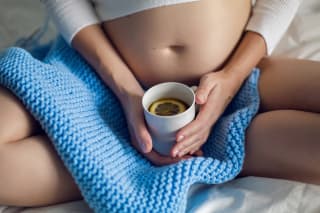
Pregnant woman holds a teacup in her hand © saulich84 – stock.adobe.com