What is folic acid?
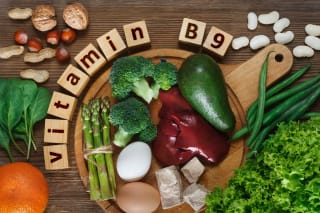
Folic acid and folate: Folic acid belongs to the group of water-soluble B vitamins. The term "folic acid" applies only to the artificially produced vitamin B9. The natural B vitamin, which occurs for example in leafy vegetables, yeasts and legumes, is referred to as folate.
Especially in green leaves: The name 'folate' (and the derivative 'folic acid') comes from the Latin folium meaning "leaf". In fact, green plant leaves and green vegetables such as spinach, kale, parsley and broccoli are particularly rich in folate. But also Liver, eggs and yeast contain high concentrations of the vital B vitamin.
Heat- and light-sensitive: As with almost all vitamins, vitamin B also breaks down relatively quickly when exposed to light and oxygen. In addition, folate is water-soluble, so that when <LINK>cooking of vegetables a large part of the vitamin is leached out with the cooking water. In folic acid supplements, however, the vitamin is stabilized and remains stable for a long time.
Not a vitamin produced by the body: The human body cannot produce vitamin B on its own. That is why it is so important to to obtain enough folate through the diet. This is not so easy, because folate is very unstable and is lost through long storage periods or cooking processes.
Essential for metabolism: Folate or folic acid play an important role in the body's metabolic functions. The vitamin is indispensable for cell growth and cell division and thus also for the body's blood production.
Why is folic acid important for the development of my baby?
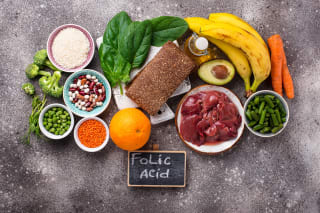
With pregnancy, the expectant mother's need for folic acid increases enormously. Adults normally need about 0.2–0.3 milligrams of folic acid per day, for pregnant women, a daily dose of 0.6–0.7 milligrams is recommended during the first three months of pregnancy. On the one hand, this is because the mother's body has to increase its blood volume considerably during this time to supply the baby. On the other hand, during the first three months of pregnancy the foundations for all vital organs, the skeleton and the baby's nervous system develop. Adequate folic acid supply is important so that the various cell division processes can take place.
Serious malformations as a result of folic acid deficiency
A folic acid deficiency during pregnancy can have devastating consequences for your baby. In most cases it is the development of the neural tube that is affected. The neural tube is the precursor to the central nervous system. During pregnancy it gives rise to the spinal cord and the spine. If cell maturation or division is impaired due to a folic acid deficiency, neural tube defects such as spina bifida ('open back') or anencephaly ('open brain') can develop. Preterm birth and congenital heart defects have also been linked to folic acid deficiency during pregnancy.
Folic acid in pregnancy:
The most important questions
Can I meet my folic acid needs through diet alone?
Even if you pay close attention to your diet, it is not recommended to meet the folic acid requirement in pregnancy through food alone. On the one hand, the folate concentration in most foods is relatively low. On the other hand, folate is unstable and breaks down as soon as it is exposed to light, air or water. Folic acid supplements are therefore a sensible addition in the first trimester to a balanced, vitamin-rich diet.
Do folic acid supplements have side effects?
Normally there are no side effects when taking folic acid. However, it must be said that the various products available on the market have different compositions. Some manufacturers offer combined folic acid products with iodine and iron. Possible side effects such as digestive complaints or mood changes are therefore more likely due to the composition than to the folic acid itself.
Can the body store folic acid?
The body can store 1.2–1.4 milligrams of folic acid. That is enough for adults for a maximum of four months, and about half that for pregnant women.
Can I take too much folic acid?
An overdose of folic acid is possible but unlikely. For that to happen, at least 5.0 milligrams of folic acid would have to be taken daily over several weeks. Consequences of an overdose can include skin irritations, nausea and digestive complaints, sleep disturbances or depression.
Which foods contain particularly high amounts of folate?
Yeasts and wheat germ or wheat bran contain particularly high concentrations of folate. Legumes such as lentils and animal products such as calf liver and eggs also contain a lot of folate. Fresh green vegetables such as spinach, broccoli, asparagus, parsley and cress as well as kale are good sources of folic acid when eaten raw or cooked in a way that preserves vitamins.
More articles about expectant mothers



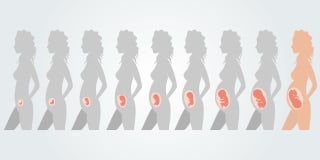
Image credits
Young pregnant woman taking a capsule © gpointstudio - stock.adobe.com
Foods that are rich in vitamin B9 © airborne77 - stock.adobe.com
Foods that are rich in folic acid © Yulia Furman - stock.adobe.com