Image credits
Pregnant woman cuts raw vegetables in the kitchen © lordn - stock.adobe.com
Woman thinking about her problems while drinking coffee on the sofa at home © Antonioguillem - stock.adobe.com
Vegetables that contain iron (Fe) © Yaruniv-Studio - stock.adobe.com
More articles about expectant mothers



Why is adequate iron intake during pregnancy so important?
Iron is essential for blood formation: During pregnancy, a woman's blood volume increases by around 35 %. The body works at full capacity to produce the additional blood that supplies the uterus and the baby. For this it needs about twice as much iron as usual.
Recommendation of the DGE: The German Nutrition Society (DGE) recommends that pregnant women consume about 30 mg of iron daily. Although the body can store a certain amount of iron, the special demands of pregnancy quickly deplete the iron stores and they must be effectively replenished to prevent anemia.
Risk groups for iron deficiency: Many pregnant women temporarily suffer from a mild iron deficiency, however some groups are particularly at risk. These include women expecting multiples or whose pregnancies occur in quick succession, as well as women who follow a vegan or vegetarian diet and very slim women.
How does iron deficiency manifest during pregnancy?

Experienced midwives as well as doctors often recognize at first glance that a pregnant woman is suffering from iron deficiency. Among the typical external symptoms and signs include:
pale complexion
brittle hair and nails
dry lips
cracked corners of the mouth
fatigue and exhaustion
shortness of breath
difficulty concentrating
headaches
For a pregnant woman herself it is not so easy to tell whether tiredness, susceptibility and brittle hair normal accompanying symptoms of pregnancy are or whether they are due to an iron deficiency. In general, the doctor checks iron values at least during the three major ultrasound examinations. When checking blood values, above all the hemoglobin level (also called the Hb value) of the expectant mother is examined. Hemoglobin is the red blood pigment that binds oxygen in red blood cells and transports it via the bloodstream to all body cells and across the placenta to the unborn baby. If the Hb value is too low, this may indicate an iron deficiency. The hemoglobin level is measured in grams per deciliter (g/dl). Normal values are 11 g/dl in the first trimester.
How does iron deficiency during pregnancy affect the baby?
A temporary iron deficiency is not unusual during pregnancy and usually has no consequences for the baby. However, a persistent deficiency can lead to a anemia occur. This means that fewer red blood cells are present in the blood and therefore less oxygen can be transported by the blood. The mother's heart is enormously burdened because it has to pump even more blood through the body to ensure adequate oxygen supply. In the case of severe iron deficiency there is therefore a risk that the placenta may not grow properly and the baby will not be sufficiently supplied with nutrients and oxygen.
Nutrition tips for pregnancy: foods that contain a lot of iron
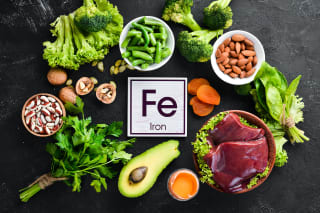
With a healthy and iron-rich diet expectant mothers can prevent iron deficiency in pregnancy and effectively counter it. In principle, especially meat and other animal products contain large amounts of iron. However, a lot of red meat is a burden on the stomach, heart and blood vessels. Therefore, pregnant women should ensure that they meet their iron needs also from grains and vegetables. Below is an overview of iron-rich foods:
Liver, especially duck liver and pork liver
red meat (beef, fallow deer, wild boar)
Vegetables, especially broccoli and green leafy vegetables, beetroot, Brussels sprouts, carrots, fennel, chanterelle mushrooms
Legumes, especially chickpeas
Grains, e.g., wheat bran, quinoa or amaranth
Nuts and seeds, in particular pumpkin seeds, sesame, pistachios and flaxseed
egg yolk
There are also some foods that facilitate iron absorption, such as freshly pressed juices or smoothies with vitamin C. This way, pregnant women can, for example, combine their healthy meal directly with an orange juice that helps to absorb and utilize iron better. On the other hand, drinks such as coffee, milk or black tea can inhibit the absorption of iron.
Taking iron supplements: What to consider
In the case of a more severe iron deficiency during pregnancy, doctors and midwives recommend taking iron supplements. However, pregnant women should only in close consultation with a physician, to avoid an iron overdose. Too much iron can cause, as a side effect for example, constipation. If mothers notice the typical signs of iron deficiency during pregnancy and are unsure, a consultative conversation with a doctor helps. This can jointly discuss whether the deficiency should first be treated with certain foods or whether iron supplements are an option. [/Infobox across full width]