Sugar and sweets: At what age and how much may our child snack?
Sweets make children happy and improve the mood. Even though parents would like to see their kids laughing all the time, the sugar they contain in the colorful sweets should be treated with caution.Children up to the age of four – if possible – should not eat any sweets.Sugar as a "mood booster" is not only hidden in sweet snacks – it is also found in many supposedly healthy snacks for children, in juices and other foods.
Parents with only one child in the household usually still find it easy to influence their child's sweets consumption. By the time the second child comes along, however, little eyes are already on the treats of the older siblings and also want a cookie or a lollipop. Basically, about 10% of the daily caloric needs may be covered by sweets. For a four-year-old child, for example, that would be 140 calories — as much as four pieces of chocolate, one scoop of ice cream or a small handful of gummy bears. Converted to sugar, this means that your kids should not consume more than 25 grams of sugar per day .
Between prohibition and gluttony: How you can influence your children's snacking
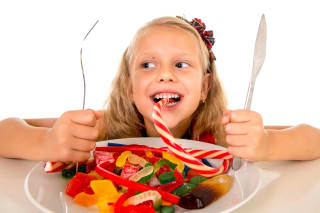
The healthy diet of children presents many parents with a enormous challenge. After all, your little ones already have minds of their own and know exactly what they like and which foods shouldn't end up on their plates. Of course your kids aren't yet able to recognize that they sweet treats may taste delicious, but are not always good for their little bodies.
We give you useful tips on how you can instill healthy eating habits in children that instill healthy eating habits in children, where occasional snacking is allowed but candy consumption doesn't get out of hand.
Children and sweets – our tips for responsible snacking
Prohibiting doesn't help: As with TV or computer use, bans only make sweets more interesting. It's better to firmly integrate treats into everyday life in small amounts and thereby take away their sense of being special.
Clear agreements: Your child can adapt well to agreements and follow them. If they know that they get a small portion of sweets every day after lunch, then the whining for sweet treats in between will probably stop.
Sweet gifts: You probably have a good overview of how many sweets your child receives or eats. But what if the grandparents or \rfriends slip sweets to your child without asking? It's best to talk openly about this with grandma, grandpa, and friends. Suggest to them that they'd rather give your child a book, a toy or simply give a nice outing as a gift and hold back on unnecessary sweets.
Special occasions: At Christmas, Halloween, Easter or for children's birthday agreements regarding sweets are usually obsolete, but that's completely okay. Divide the given sweets together with your child into equally sized portions: this way they can look forward to a chocolate bar or a candy each day, instead of eating everything at once.
Prevent tooth decay: To prevent sugar and bacteria from having any chance to harm your children's teeth, the little sweet-tooths should brush their teeth about an hour after eating sweets. However, keep to this time span so as not to damage tooth enamel – if children brush their teeth too soon after consuming sweets, the acid level in the mouth is still too high and thus counterproductive for dental hygiene.
Serve as dessert: Do not allow your children to have sweets as a snack in between, as a reward, or to comfort them. There is a danger that children begin to associate treats with certain experiences. Under certain circumstances, the feeling may develop that sweets solve all problems, which can lead to so-called emotional eating and overweight.
Don't forget vitamins: Sweets should by no means replace a main meal, but should always only be served in moderation as a tasty extra to a meal. Sweet main dishes like rice pudding or pancakes should not be served too often either.
A designated place: Have your child preferably always eat sweets only at the table while seated and not while playing. This makes the enjoyment more mindful and you can better control how much sweets your child eats.
Plan portions: Depending on the child's age, they can divide up their sweets themselves for about a week. This way they quickly realize: what I eat is gone for good. This increases awareness of the quantities of sweets.
Healthy snacks and homemade sweets as an alternative
The primary problem with sweets, besides the fat and sugar content, is that they are usually absolutely no nutrients contain and are full of additives. Some parents are surprised what is revealed when looking at the ingredient list is hidden in a chocolate bar. But even products, that are advertised as 'sugar-free' are not necessarily less harmful for children, because other sweeteners are used here.
A simple and healthy alternative to mass-produced and highly processed treats: make your sweets and healthy snacks for children yourselves. It's not as difficult and time-consuming as you think and can be made in no time with a few simple ingredients.
There may still be sugar in them, but at least you know, how the treat was made and what is contained in what quantity. Be brave and try your way through the colorful array of possibilities – you might be surprised that a portion of quark with delicious fruit and honey or a few dried fruits will become your child's new favorite food will. Nuts for nibbling are also excellent as a healthy snack in between and provide your offspring with valuable oils and enough energy for hopping and tumbling. While out on outings with your children sliced fruit as well as whole-grain cookies, rice cakes or sesame sticks are particularly suitable.
Discover more articles about everyday family life
Image credits
Toddler with chocolate-smeared mouth © Iri_sha - stock.adobe.com
Grinning girl with cutlery and plate of treats © Wordley Calvo Stock - stock.adobe.com