When is my baby ready for complementary foods?
At around six months, your baby's digestive and immune systems are sufficiently developed to digest solid food. However, this does not mean that every baby will accept their first puree at that age. Some babies are only ready to transition from milk to purees at eight or nine months, others enjoy their first spoonful of puree at four or five months. Just try it out — your baby will clearly signal whether they are ready for complementary foods.
How do I introduce my baby to complementary foods?
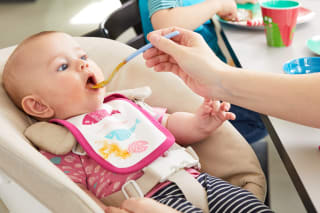
With the first puree, your baby not only learns new tastes: being fed with a spoon, the texture of the puree in the mouth and swallowing are sensory experiences that they first have to process. This often only happens step by step and initially has little to do with getting full. We have gathered a few tips on how getting used to complementary foods can be easier:
Give a spoon to play with: Once your baby can reliably grasp, you can occasionally give them a plastic spoon (under your supervision) to play with. They will handle it and may put it in their mouth. That already takes the first hurdle of feeding.
Together at the table: Let your baby be at the table during meals, even if they are not yet eating independently. Gradually they will develop an interest in the food. When you feed them for the first time, the eating situation will already feel somewhat familiar.
Do not mix foods when getting started: At the beginning, feed only one type of fruit or vegetable puree, and in pure form, without salt, sugar or spices. Many babies cope well with the mild taste of carrot or pear the first time.
Don't start feeding puree when your baby is very hungry: Your baby can best engage with the new experience when they are neither too hungry nor uncomfortably full: give some milk at the usual time and try a spoonful of puree about halfway through.
A few spoonfuls to start with: Hardly any baby eats a full pureed meal right away. Increase the amount of puree gradually depending on how your baby accepts complementary foods.
Something new once a week: You can offer a new food every five to seven days. This makes the transition easier for your baby and helps you identify more quickly if they don't tolerate a food.
Transition without pressure: If your baby rejects the spoon with the puree even after several attempts, then they may simply not be ready yet. Wait a few weeks and try again in a relaxed way.
What does a typical complementary feeding plan for a baby look like?
Breastfeeding/milk feed in the morning: Directly after waking, you should give your baby milk to satisfy their fluid needs and to provide the necessary energy for the day as easily as possible. The morning meal is usually the last one to be replaced by a puree. Often babies are still breastfed or bottle-fed in the morning at 10–12 months.
Midday puree (5.–7. month): It's best to start the first puree around midday. Ideally use a single pure vegetable variety each time, such as carrot, parsnip, potato, fennel, zucchini or pumpkin. At first, the usual milk feed is supplemented with a few spoonfuls of puree, until the puree gradually replaces the milk feed entirely.
Evening puree (6.–8. month): If your baby eats a full puree meal at midday — about two to four weeks after the first complementary food — you can introduce another puree meal in the evening. This should not be made from vegetables, but from milk and cereals, possibly also fruit. Typical examples are rice, millet or oats with milk and some mashed banana or applesauce. Make sure the cereal puree does not contain added sugar.
Fruit puree in the afternoon (7.–9. month): After another month you can introduce the next puree meal in the afternoon. Make sure there are about 3–4 hours between meals and that your baby gets fluids in between in the form of water or unsweetened tea. Typically the afternoon puree consists of cereals and fruit and is prepared without milk.