Flute, guitar or drums?
Which musical instruments are suitable for children?
Recorder:The recorder is considered a beginner instrument, but it can also easily grow with the child. As an instrument for children, it is particularly appealing due to the comparatively low purchase costs and the ease of learning musical notation.
Guitar:Delicate children's hands need to get used to the strings first, so at the beginning it's better to practice shorter and more often. With the first chords, children can already quickly play and sing along to nice songs.
Piano:Piano music impresses above all with its versatility: classical, pop, rock, jazz... There is sheet music for anything the child likes. If you don't want to buy an expensive piano right away, you can also practice on a keyboard at first.
Drums:Ideal for children who enjoy rhythm. Even if many parents might not want to listen to the drumming, children can really let off steam here — and even shy children open up.
String instruments:Violin or cello — string instruments require feeling and patience. Especially at the beginning you rarely hit the right note. But if your child perseveres, beautiful music will soon sound in your home.
Wind instruments:For wind players such as trumpet, saxophone or clarinet, your child must first train the strength of their lips. Once that's there, making music on these instruments is great fun for the little ones.
The most important question: Which instrument does my child like?
Many parents are convinced that their children should play a musical instrument and may also have a very specific idea of which instrument might be right. Whether it's because they once played it themselves, because they love a certain music style and would like to hear it in the house, or because certain instruments are associated with a certain prestige.
However, the rule for every instrument is: your child must like it, otherwise practicing won't be fun and the instrument will quickly end up in the corner. Ask around at the music schools in your area: many offer trial courses for children. Here your child can try out different instruments for about half a year and decide at the end what they enjoy most.
Support your child with any instrument, even if that means you have to listen to drum beats instead of piano notes, or that classical music rings through the house instead of beloved rock. Equally important: if it turns out your child doesn't enjoy playing an instrument, that's okay too. They are just as well placed in a sports club or doing crafts.
Practice, practice, practice — tips for motivation
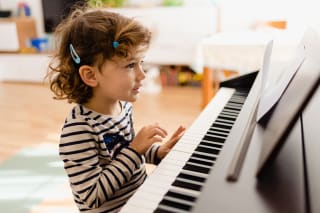
Progress is not only nice for parents; your children will also enjoy their instrument more when they notice they are improving. The saying “practice makes perfect” doesn't come from nowhere. For younger children, 15–30 minutes of daily practice is recommended; teenagers can already manage an hour. Even when practicing is fun — there will always be days when your child doesn't feel like playing. If the lack of motivation persists, it's best to discuss with your child whether it's the instrument and whether a change of hobby might be appropriate. Otherwise our tips for motivation help:
Set times:
Set a time in your child's daily routine when they can practice. This makes the 30–60 minutes part of everyday life and you won't have to argue about when it's time to practice.
Practice together:
Maybe you play the same instrument as your child, in which case it's fun to play or learn together. But if your child wants to practice alone, you should accept that too.
Praise:
Praise usually motivates children. At the end of a nicely played piece or for daily practice you can praise your child. Offering a reward for practicing usually does not have the desired effect, because then your child does not practice for musical progress but for the reward. Practice should be intrinsic, i.e., motivated from within.
A motivating teacher:
Of course the teacher should have a good command of the instrument. Equally important is that they can convey a love of music to your child and build a good relationship with them. A teacher who is too strict or too ambitious will probably produce the opposite of motivation.
News about music & children


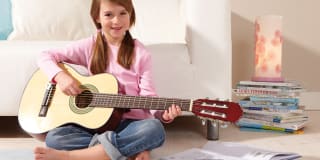








Image credits
little boy with his father in a house, playing drums and guitar © Halfpoint - stock.adobe.com
a little girl sits at the piano and smiles while experimenting with musical notes © Joaquin Corbalan - stock.adobe.com