Tips & Tricks for Using Finger Paints
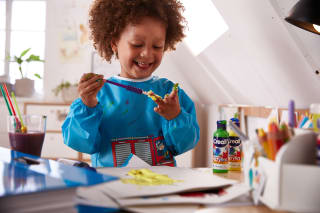
Finger paints are versatile. The great thing: you don't need a pen or brush to create the most beautiful works of art. That's why the paints are especially suitable even for toddlers.
Even though finger paint sets are often recommended only from age three, children as young as one can also merrily paint with them. Of course only under supervision. After all: finger paints are usually made from child-friendly and non-toxic ingredients. That makes their use harmless even for the littlest ones.
Good to know: When buying finger paints, always make sure that the packaging is marked with a CE mark according to DIN EN 71. That's the indication that production complies with European standards and no allergens are present.
Nevertheless, there are a few things to watch out for when finger painting you should.So that you don't have to redecorate your home right after crafting, it's best to prepare . This is especially true for the equipment. Even if you don't need too many materials for painting, old newspaper to protect surfaces as well as old clothes or painting smocks are a must.
Also set a rule that your children only use finger paints in a designated area of the home to craft with finger paints and are not allowed to leave it with colorful fingers in between.
This way you can be sure that other pieces of furniture won't accidentally get speckled with paint. When it comes to starting to paint, you should have the materials and utensils always within reach set up. Because once little fingers are dipped into the colorful finger paints, it's best not to take your eyes off them. Kitchen paper and wet wipes for cleaning should also be nearby so that little painting mishaps can be wiped away immediately.
Basically: Just have fun and dive into the colorful mess. Your children will love it.
These finger paints are suitable for your children's creative ideas
You can find finger paints in tubes, small containers or even as stamp pads to buy. Usually organic dyes and pigments are processed in the paints together with water, binders and other non-toxic fillers, which is why you can give them to children without hesitation. So that your kids don't get the idea of eating the finger paints, various various bittering agents added. That makes the paint smell odd and therefore seem unappetizing. For an introduction to colorful worlds of paint, however, so-called flour paints, which can be easily made yourself with a few ingredients. Also acrylic and water paints are suitable for finger painting.
How do children benefit from painting with finger paints?
Shared painting sessions not only provide lots of fun. Your little hobby artists even learn a whole lot from it. Because painting with finger paints promotes fine motor skills – especially tactile and sensory skills – and creativity. They stimulate the imagination and train the perception of dimensions, proportions and details. Your kids gradually get to know their own abilities better and that contributes significantly to child development. Especially toddlers learn to concentrate, when they experiment with the colorful world of paints. If they've then also painted their first piece of art, the pride is great. Let's see who beams more — you as parents or your kids.
Materials you need for your finger painting ideas
To the most amazing finger painting masterpieces to create, you need, besides lots of joy and fun, of course also the right materials. HABA has put together a list here that you can use as a guide. You may already have most of it at home. That way you can start the colorful messy fun right away.
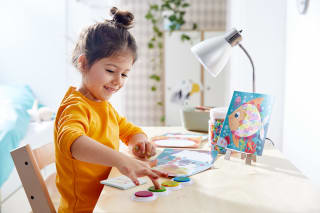
old newspaper
older clothing that can get dirty or
paint smocks & aprons
older or new clothing that you want to decorate with fingerprints
finger paints
pens
brushes for applying designs to the hand
watercolors
construction paper
craft scissors
craft glue & adhesive
masking tape
plain paper in the size of your choice
cardboard, boxes
wood
stones
potatoes
jars
To protect against paint splashes: smocks & aprons for finger painting
Instructions for finger painting with children
Now you probably want to get started right away and create your very own finger painting masterpieces to craft. What are you waiting for? Grab your finger paints and get creative. The following five craft ideas and instructions are suitable for all ages.
Colorful animal motifs with finger paints on construction paper
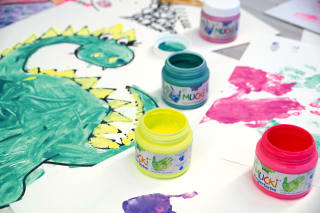
Materials needed:
plain paper in the size of your choice
colored construction paper
watercolor paint in the colors of your choice
pens
finger paints
small bowls for the paint
brushes
craft scissors
craft glue
old newspaper
masking tape
paint smock or old clothes
How to:
First prepare your work surface. Lay down newspaper so that no paint splashes get on the countertop or other surfaces.
Take your plain paper and secure it at the four corners with masking tape on the newspaper. This ensures it doesn't shift while painting.
Next, sketch your desired animal design on the paper with a pencil. If your children are too young for that, it's best if you do this part. Now open the finger paints and apply them to your children's fingers with a brush. Of course, your little artists can also dip their fingers directly into the paint. How you do it is entirely up to you. Feel free to mix the colors as well. That will give your pictures even more dynamism. Tip: Depending on the animal motif, you can skip the sketching and create the animal bodies directly with hand or footprint shapes. To do this, for example, paint the palm in the color of the animal's body and press it onto the paper. Then paint the details with your fingers.
Once your finger paint animal is finished, let it dry well. Later you can add smaller details with pens. However, this is not a must.
Now all you need to do is wash your fingers with lukewarm water and throw the dirty clothes or smocks into the wash.
Potato printing with finger paints

Materials needed:
two medium-sized potatoes
small kitchen knife
paper towels
small cutting board
paper in the color of your choice
finger paints
small bowls for the paint
old newspaper
masking tape
paint smock or old clothes
How to:
First prepare the potatoes for printing. Cut them in half (this part is better done by parents) and then, using the kitchen knife, cut a stamp shape out of the flat side – e.g. the outline of a chick or a rabbit.
Press the cut surfaces of the potato stamps dry on a paper towel.
Lay out old newspaper and attach the paper to which the potato stamps will be pressed at the corners with masking tape so it doesn't slip while painting.
Your little ones can do the next step without your help: let them choose their favorite finger paint and apply it to the stamp.
Press the stamp with paint onto the paper. Repeat the process until you've created a beautiful piece of art.
The prints should then be allowed to dry well. Tip: Potato prints also look very nice on greeting cards.
Painting Easter eggs with finger paint
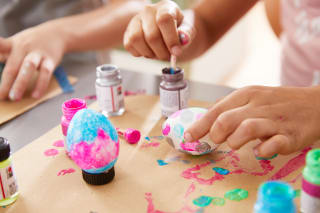
Materials needed:
hard-boiled eggs – as many as you want to decorate
egg carton
finger paints or watercolors
plates
small bowls for the colors
old newspaper
egg decorating device
paint smock or old clothes
How to:
First, boil the eggs for about 7 minutes in hot water. It's easier for children to decorate eggs when they're hard-boiled. They don't break as easily as blown-out eggs.
Then prepare your workspace by laying out old newspaper and placing small plates on it.
Take a hard-boiled egg and get started. Eggs can be wonderfully painted with finger paints. Watercolors even work best. You can really let loose—whether dotted eggs, stripes, or cute animal motifs. Your creativity knows no bounds.
Let your colorful eggs dry undisturbed. To do this, place them in an egg carton.
And your personalized Easter eggs are ready, just waiting to be eaten.
Hand & footprint posters

Materials needed:
plain paper in the size of your choice
finger paints
small bowls for the colors
brushes
old newspaper
masking tape
paint smock or old clothes
How to:
First lay out old newspaper on your work surface. Then secure the paper you want to decorate with handprints with masking tape so it won't slip.
Put the desired colors into slightly larger bowls so your children's hands fit in them well.
Have your children either place their hands into the paint so the palms are fully covered, or apply the paint with a brush.
Next, your kids press their hands onto the paper so that the entire hand is printed.
You can of course do the same with the feet.
While the little ones are happy just to squish paint, the older ones love turning their handprints into funny motifs. Whether animals or original creations, just go wild.
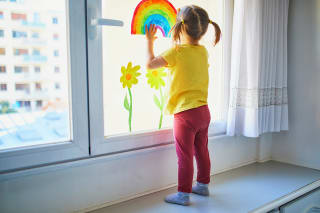
Painting window pictures with finger paints
Materials needed:
finger paints
small bowls for the paint
brushes
optional: stencils
small bowls with lukewarm water
towel
old newspaper
masking tape
How to:
First, lay out old newspaper on the windowsill and secure it there with masking tape. That way you won't have to wipe away as many paint splashes later.
If you've chosen a motif (for example a rainbow), you can get started right away. Tip: If you don't want to paint your motif freehand, simply use window-picture stencils. You only need to attach them to the window and paint over them. After they dry, carefully peel the stencils off the window and your finger paint window picture is ready.
Let your children eagerly dip their little fingers into the finger paint and paint the first arc of the rainbow onto the window. Do this until the rainbow shines in the most diverse colors. Tip:If you go a bit off, the paint—especially when still wet—can be easily removed with a cloth and some lukewarm water.
After that, just wash off the finger paint and remove the masking tape and newspaper from the windowsill. And you've created a beautiful window picture.
DIY: How to make your own finger paints
Anyone can buy finger paint. Making your own finger paints, however, is a wonderful project you can do together with your children. Finger paint, also called flour paint, can be made very easily.
The best part: You know the ingredients and know exactly that they were made in a child-friendly way.

Materials needed:
five tablespoons of flour
100 milliliters of cold water
one tablespoon of salt
empty jars with lids (e.g., an old jam jar)
food coloring or
for the color red: strawberry juice or beetroot juice
for the color blue/purple: blueberry juice
for the color green: cooking water from boiled spinach
for yellow: turmeric
for orange: carrot juice
How to:
First put the flour into a bowl. While stirring with a whisk, add the cold water. Then add the salt. This serves to make the finger paint last longer.
Once you've mixed the ingredients well, whisk the mixture until there are no more lumps of flour.
If the consistency is smooth, add the juice, cooking liquid, or spice—depending on which color you want to make. Tip: Please note that adding juices and cooking liquid will change the consistency of the mixture. Be careful not to add too much, otherwise your finger paint will be too runny. If that does happen, you can balance it out with some flour until you get the right consistency back. If you'd rather use food coloring, the opposite is true: the more food coloring you add, the more intense the color will be.
If you're happy with the result, you can pour the colors into jars and seal them well—or start painting right away!
Colorful children's fashion: ideas for individual patterns with finger paints

From old to new: Whether on old T-shirts, drawstring bags or other textiles – Finger paint is not only impressive on paper. This is how you turn old, boring garments into colorful, individual fashion that you'll wear with pride. Fingerprints are totally on trend. It makes sense to grab your finger paints and come up with your own designs.
For that, you don't need that many materials, similar to the finger-paint artworks on paper. In no time you'll create new unique pieces. That way you can be sure that no one else owns your self-designed textiles.

Alternatives to finger paints: craft ideas for kids
If your children aren't that interested in finger painting, there are numerous other ways to get creative together. For example, the spring crafts are very popular with little craft enthusiasts. Whether decorations, construction projects or simpler crafts – you'll have just as much fun as your budding artists.
Easter crafting is also one of the popular spring activities. It's a great alternative that already lets you really get in the mood for the upcoming Easter celebration. That brings lots of anticipation and at the same time you'll already have ticked off the first items on your prep list.
Frequently asked questions about finger paint ideas for children
How long does finger paint last?
How can finger paints be removed?
Are finger paints toxic for children?
More articles about leisure & creativity


Image credits:
White toddler foot with paint splatters, surrounded by brushes and paint-covered paper © Kristina - stock.adobe.com
Girl paints with finger paints and a potato stamp © Irina Schmidt - stock.adobe.com
Girl paints a rainbow on a window with her fingers © Ekaterina Pokrovsky - stock.adobe.com