Why are friendships important for children?
The connection to peers is fundamentally important for children's development. Unlike interactions with adults, they can meet their friends on equal terms. They share interests, duties and problems and can discuss them. This way your child learns to build social relationships and – as they get older – to maintain them as well. In interactions with other children, your child learns what it is like to respond to the needs of others and to share. Additionally, especially for children it is an important need "to belong", because being part of a group strengthens self-confidence.
No friends: What could be the reason?

The child's will: Not all children want to make friends. For some it is completely enough to meet other children in kindergarten or at school. They then want the afternoon to themselves or for their parents and siblings. As long as your child is happy with the situation, you should not force friendships.
Being different: Children can be mean. Clothing style, a large nose or glasses can sometimes already lead to a child being excluded. Disabilities or developmental disorders can also contribute to your child becomes an outsider.
Behavior: Can your child share and approach others or does it always want to be the center of attention? Often your child's behavior has a big influence on whether other children want to be friends with them.
Role models: Children copy almost everything from their parents. If you yourselves only keep the bare minimum of contacts, you signal to your child that you don't place much value on friendships. This behavior is also transferred to your child.
No friends - What parents can do
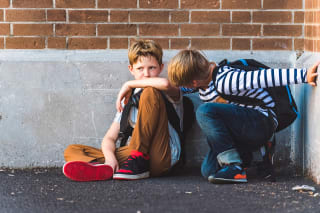
When children long for friends but don't have any, it can be very distressing. The feeling of not belonging and no connection in daycare or at school to be found, makes children believe that something is wrong with them. It is therefore all the more important that parents support their children in this situation and convey the message: "You are great and lovable just the way you are".Loving and encouraging words from mother and father are not only balm for the child's soul. They also help to strengthen the little ones' shaken self-confidence
– an important prerequisite for approaching peers openly.If things initially don't work out with finding friends in daycare or at school, you can look for suitable leisure activities together with your child. Because when children share the same passion, a friendship almost develops by itself. Does your daughter enjoy dancing? Then classes with peers are just the thing. Does your son want to try basketball? Then register him with the local sports club. Through group activities not only barriers to contact are reduced, but also important social skills, such as teamwork, conflict-resolution skills, consideration and a sense of responsibility are learned. If your child's difficulties in dealing with others are due to their rough behavior, group activities can work wonders. Shy children, on the other hand, can in this way strengthen their self-confidence, which slowly brings them out of their shell.
Discover more articles on parenting & psychology











Image credits
Boy sitting alone leaning against a wall © pololia - stock.adobe.com
Mother and child of color sitting on the floor © Yakobchuk Olena - stock.adobe.com
Two boys sitting on the ground leaning against a wall © pololia - stock.adobe.com