Digital media for school and learning
Without digital media, teaching is not possible in times of school closures. But as we now know: experiences with digital learning and teaching methods are limited, practical implementation is not always satisfactory, and our skepticism as parents is sometimes great. What can we learn from this and take with us for the future?
Digital media are a friend, not (only) an enemy
Digital media cannot replace teachers, but they can support them very well. And even in times of contact restrictions they can offer something essential for positive learning experiences: good communication and many new possibilities and impulses for independent learning.
Create activity and balance
Much more valuable than working through as many learning materials as possible is anchoring what has been learned in the long term. For that it is important to let children be active away from the screen. What can your child tell about the last story in the reading app, what picture do they draw on the topic of mammals, or what face do they make when thinking about the new topic of fractions? And most importantly: children need at least as much physical activity as screen time – preferably outdoors.
Less is more
An email here, an app there, something to print out, and then access to a server with additional materials. Too many sources and media exceed our capacity as parents and the students' ability to absorb information. What helps everyone keep an overview are simple processes with few communication channels. That way we can better focus on what matters: learning.
Media consumption in free time
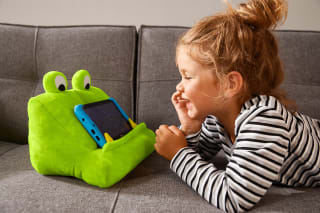
Every new lockdown is equivalent to a state of emergency for families. As a remedy against cabin fever and monotony, sometimes any means seems justified – including extra time in front of the TV, tablet and computer. Added to that are digital home office and homeschooling. What should our children's media consumption look like in the future and how can we as a family find a healthy, responsible approach to digital media in the long term?
Limited screen time
Digital media are part of our reality and an even bigger part of the new everyday life with Corona. Nevertheless, media consumption and screen time are also a strain on our brains and even more so on children's. Clearly defined times for phones, tablets and the like provide structure and ensure that there are also breaks.
Create activity and balance
Even more important than the exact number of minutes children spend with digital media is how they spend the rest of their time. As a balance to phones, video games and TV series, children need tactile experiences, movement and real activity – preferably outdoors.
Children grow through responsibility
Control is good, trust is better – and it ensures that our children learn to take responsibility themselves. By making agreements together with our children, involving them and letting them participate in decisions, we help them develop an early, conscious perspective on the digital world.
The good news is: it's not all that bad. Because as Corona is teaching us right now – we may not (and do not have to) return completely to the familiar normal, but we are shaping a new one. And it holds many valuable opportunities.
Asked Kerstin Boveland

How did you, as a teacher, use digital media for teaching during the school closures?
To stay in contact with our students, we chose a communication medium that offered the most barrier-free communication possible, including via mobile phone. Some students at home did not have a computer available, but all had a mobile phone. This messenger service complied with data protection requirements and offered the possibility to send files in different formats, photos, voice and video recordings. With that we had everything needed for good communication. I assigned tasks to my students both as a class and individually; they sent me screenshots, photos of their notebooks and even voice messages, which was extremely valuable for language lessons. In this way I could very well assess what each individual needed and what progress my students were making. Individual feedback was essential for learning success.
How do you think digital learning can succeed?
For every kind of learning the passive must become active. The brain withers when dullly working through material in front of the screen. It must never be about mere cramming; as teachers we must assign tasks that activate children. They can read, watch or listen to something. But then they must become active and do something with it: draw a picture, retell a story, describe a feeling. Only through linking with real experiences can learning take place. At home it is also important to create balance. Children can have time to play their video game or watch TV. But there must also be times when they move in nature, read a book, draw, craft or play.
What positive aspects can you take from the past months for the future?
We will be able to continue using the newly gained ways of staying in contact in the future. And as a teacher I have learned that we must completely rethink school. Because as has become clear, especially older students were sometimes able to achieve much better results through independent learning. That was surprising and shows: we must loosen up our system and give students more opportunities to learn independently and perhaps even spatially independently in phases. This also leaves more time for those students who need more support.
Kerstin Boveland is a teacher of English and French at a district secondary school in Hamburg. As a specialist in digital learning she develops subject-specific teaching modules for the Hamburg Digital Learning Lab.
Asked Christian Dederer
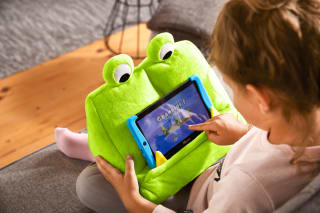
What opportunities do you think the crisis brings for digital education?
What many media educators have been saying for a long time has now become apparent to the entire population: we need appropriate infrastructure, timetables and concepts for digital education for all schools. Digital media are part of our reality. And I think that in the future it will even be a decisive criterion in choosing a school whether a school has a good media-education concept and is prepared for all situations to ensure good education, or not.
How do you achieve a good approach to digital media?
Media education provides clear guidelines here and they continue to apply: limited screen time, control over the content and websites children use, and of course sufficient balance and exercise. Especially in primary school age, children should not have digital work tools available unsupervised in their bedroom – parents should always know what their children are doing online. At the same time it is important to give them responsibility, to enable them to develop a sustainably good way of dealing with digital content.
What do you advise parents about using digital media for homeschooling?
Above all: don't panic! School education is only one part of the competencies children learn, and digital content is only a part of that. As parents we pass on much more to them in everyday life together. My advice regarding digital media is always: don't leave the children alone, accompany them, talk to them. But don't control them at every step so that they can learn to use digital media responsibly on their own. Give children responsibility – not only regarding media consumption, but more generally. Because that is how they grow.
Hans-Christian Dederer is a trained primary school teacher, media education officer and founder of the Association for the Promotion of Pedagogical Media Use (VFpM e.V.).
Discover more articles on parenting & psychology











Image credits
Boy sitting on the floor with phone © Monkey Business - stock.adobe.com