Where does the uncertainty at the pediatrician come from?
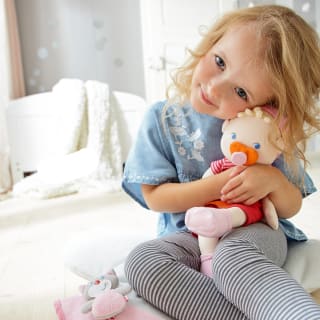
Facing a new situation is an emotional challenge for children. In addition, a sick child is particularly in need of closeness. In this situation it tends to seek protection with people it trusts and naturally reacts more sensitively. The younger the patients, the more unfamiliar the situation and often the greater the hesitation toward the doctor and the respect for the instruments. Also, the prospect of a vaccination or blood draw, even if "only" a "small" prick, does not always make a visit to the pediatrician easy and sometimes also makes the parents nervous.
How can the doctor's visit be a relaxed experience for your child?
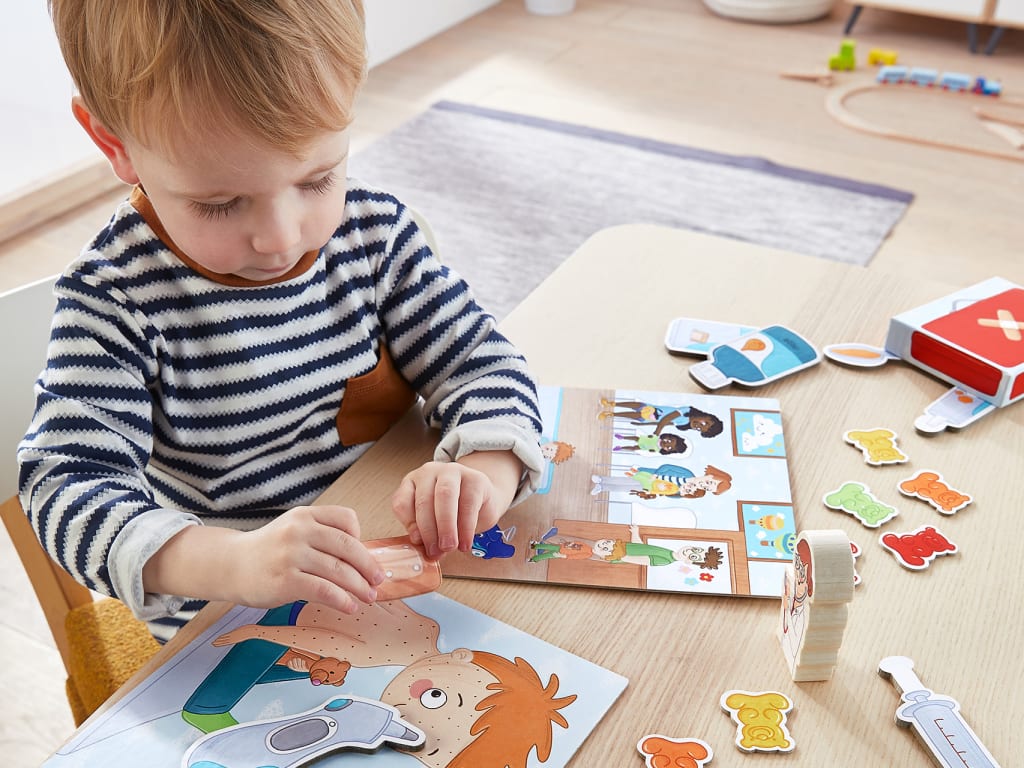
The better children are familiar with a new situation, the less uncertainty arises and the more open they are during treatment. And that works best through play. In different play situations your child can become familiar with what there is to discover in a doctor's office and with which instruments both large and small patients are examined there.
Picture books about the pediatrician already show even the smallest children what happens during an examination and what to expect at their pediatrician's practice. In shared role-playing games you as parents can slip into the role of the doctor and show your child in a familiar setting how simple and perhaps even exciting such an examination can be. A small tissue bandage or a pretty children's plaster on the upper arm as proof of a successful examination makes children proud and gives them confidence for the next doctor's visit. With their own doctor's case, children can also become doctors themselves, get familiar with instruments like a stethoscope and an otoscope, and practice on their stuffed animals, cloth dolls, or Little Friends figures how to listen to the heart, look into the ears, or take a temperature.
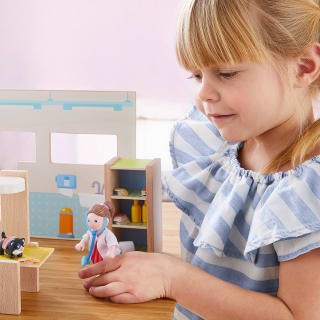
Age-appropriate doctor-play games can also give children an insight into the daily routine of a medical practice and introduce them to instruments and examinations that they will encounter at their next pediatrician visit.
The better children are familiar with a new situation, the less uncertainty there is and the more open they are during treatment. And this works best through play. In a variety of play situations, your child can become familiar with what there is to discover in a doctor's office and with which instruments large and small patients are examined there.
Picture books on the subject of the pediatrician already show even the very youngest what happens during an examination and what to expect at their pediatrician's office. In joint role-plays, you as parents can slip into the role of the doctor and show your child in a familiar environment how simple and perhaps even exciting such an examination can be. A small tissue bandage or a pretty children's adhesive bandage on the upper arm as proof of a successful examination makes the children proud and gives them confidence for the next doctor visit. With their own doctor's kit, children can also become doctors themselves, familiarize themselves with instruments such as the stethoscope and otoscope and practice on their stuffed animals, cloth dolls or Little-Friends figures how to listen to the heart, look into the ears or take a temperature.
Age-appropriate pediatrician games can also give children an insight into the daily life of a pediatrician's office and introduce them to instruments and examinations that they will experience themselves at their next pediatrician visit.
And how can you prepare as parents?
Children behave intuitively. In other words, if you show trust to the doctor they will sense it, and if you go into the situation relaxed it will calm your child. A good preparation also helps you as parents to approach the next pediatric appointment more calmly. Try to put together what you need for the doctor's visit and what provides comfort or distraction in exciting moments, preferably the day before. This gives you inner calm and the reassurance that you have thought of everything.
If the insurance card, examination booklet and vaccination record are stored within easy reach in your bag, it saves time at registration. If your child is bored or restless in the waiting room, their favorite book, a toy or a cuddly toy from home can bring a piece of familiar surroundings and provide comfort. To cover all eventualities during the examination, keep a spare diaper and an easy change of clothes ready, bring your own blanket or cloth nappy to lay down, and, if necessary, keep your child's favorite pacifier within easy reach.
Checklist
For the doctor:
Insurance card
Examination booklet
Vaccination record
For the waiting room:
Favorite book
Favorite toy
Comfort blanket or cuddly toy
For the examination:
Clothing that is easy to put on and take off
Blanket for laying down or keeping warm
Spare diaper
Pacifier for soothing if needed
4 tips for the pediatric visit
Talk about it
The better your child understands what to expect at the pediatrician, the more tangible the upcoming experience becomes and the less uncertainty arises.
Build trust through play
Children process experiences and feelings best through play. They can take on the role of the doctor themselves and practice for the next appointment with fun doctor games in a relaxed environment.
Take your child to doctor's appointments
Your own check-ups at the family doctor or dentist give your child insight into an adult medical practice and show how pleasant and possibly even exciting such an examination can be.
Take good care of yourself
A visit to the pediatrician can also be a challenge for parents. Make the necessary arrangements to enter the appointment as calmly as possible and keep expectations low. Your relaxation will also transfer to your child.