The first little teeth
Early signs: How teeth make themselves known
When babies get their first tooth varies greatly. Some babies are even born with a tooth. In others, the first teeth only appear at <LINK> BABY development month 10 ten months or later the first little teeth. Most babies start teething between the 5th and <LINK> BABY development month 6 6th month of life to teethe. Usually the two lower incisors break through first, followed by the two upper ones.
Foundation for teeth already in the womb: The tooth buds, from which the milk teeth develop, form already during pregnancy in the baby's jaw. After birth the tooth buds continue to grow until they break through the surface of the gums.
Chewing and drooling: In most children teething is first indicated by heavy salivation. They also begin to chew on any available objects – especially their own fingers or toys.
Increased temperature: There is no medically proven connection between teething and fever. Nevertheless, many parents experience that their children have a slight fever when they get teeth. It is possible that the immune system is somewhat weakened in this situation, so febrile infections can take hold more easily. As a rule, 'teething fever' is harmless – as is diarrhea, which is sometimes mentioned as a symptom of teething.
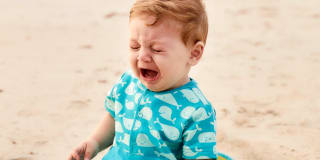
Restlessness and frequent waking: Babies who are teething are often restless and tearful. It may be that your baby now wakes more often at night. This does not always have to be pain – sometimes babies are simply 'annoyed' by the unfamiliar pressure on the gums.
Red, swollen cheeks: Especially with the molars, your baby's face can swell a little. Many children get one-sided red cheeks, as if they had a fever. The sensitive gums also often swell for a short time.
How to relieve teething pain
Give something to chew on – for example, a teething ring filled with liquid that can be cooled in the refrigerator.
Cool foods: For children who are already eating complementary foods, chilled fruit puree or yogurt can relieve pain.
Distraction: Play more, read to and cuddle your baby – with some luck you can distract them from the bothersome teeth.
Comforting: Many babies are very clingy during teething – respond to their need to be cuddled to soothe them through the pain.
Gum massage: Your baby probably has their fingers in their mouth anyway, but if you allow it, you can try gently massaging the gums with your index finger.
Teething gel: relieves pain locally and helps many babies sleep more calmly – but it's not a long-term solution.
Homeopathic remedies, such as Osanit pellets or Escatitone drops may possibly help if your baby has severe pain – in case of doubt ask a midwife or pediatrician.
Paracetamol should only be a last resort and for teething pain is best given only after consultation with the pediatrician.
Violet root: This old home remedy is considered an effective pain reliever and is available in pharmacies. Babies like to chew on the dried root, but should not be left alone with it to avoid pushing it in too far.
Brushing from the first tooth – how to do it
As soon as the first tooth appears, it should be brushed. This is a challenge, because hardly any baby gets excited about brushing teeth. Especially soft children's toothbrushes and a mild toothpaste for children are suitable for the first teeth. If your baby receives fluoride tablets, you should avoid a fluoride-containing toothpaste.
Brush regularly & consistently: Make toothbrushing a fixed ritual from the start, e.g. in the morning after breakfast and in the evening before going to bed. Weaned babies should only drink water before falling asleep and also at night – bottle milk, juices or sweet teas at night harm the baby teeth.
Teaching brushing: Let your child handle the toothbrush themselves, but always thoroughly brush their teeth afterwards. Dentists recommend doing this until primary school age.
Dental care: From about three years old you should take your child to the dentist twice a year. Often children are less reluctant if they have already playfully accompanied their parents to the dentist at one or two years old.