
How can I get my children to stop using swear words?
They sometimes, or even more often, slip out of our mouths: all those 'bad' words that we never want to hear from our children. By the time they start kindergarten it really begins: suddenly our child comes home with all these new expressions - sometimes funny, sometimes hurtful, sometimes embarrassing. And now?
As parents, it's not easy to respond appropriately to children's swear words. Still, we want to counteract them - after all, swear words can be hurtful and inappropriate. Often we let the words provoke us into reactions that ultimately make the situation worse.
Strong emotions need strong words - why do our children use swear words?
Children learn it from us, and we adults know it all too well: when a feeling overwhelms us, one or another inappropriate word slips out almost automatically. But what is behind the use of swear words?
Swear words are powerful:
When we're really angry, we need strong words to express our unpleasant feelings. Swear words are for our children just like for us a vent, to let off steam, and sometimes even to transfer it to others. They primarily serve for relief of tension and not to hurt the other person.
Let's see how Mom reacts:
Children want to test their boundaries and to find out how far they can go. They want to separate themselves from their parents, while at the same time they want to feel that there is a framework in which they are held. For such a test, a provocation with swear words works well, of course.
Swear words get attention:
Sometimes children use swear words just because it's fun, sometimes in great anger and as a provocation, and sometimes because negative attention is better than no attention at all.
Ignoring or intervening – what helps when children use swear words?
Yes, sometimes it's really necessary to set clear boundaries when your children's swearing gets out of hand. And yes, sometimes it can be best to ignore the occasional word. What's better?
Strategy 1: Ignoring
Which swear words are considered particularly bad and when the line is clearly crossed varies from family to family. If your child is only trying out the words and testing your reaction, you can often ignore it or take it with humor. The allure of the forbidden then quickly diminishes.
Strategy 2: Intervening
Where the fun is over for almost all parents: when they themselves are insulted by their child. At the latest then it is important to make your personal boundaries clear to your children
Keep this in mind: Stay calm — that works best. Explain to your child calmly and consistently that they must respect your boundaries and those of other people.
Lead by example — teaching children to stop using swear words starts with us
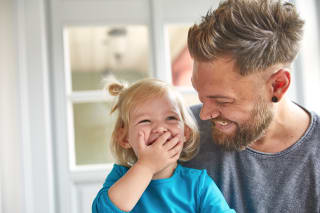
Parents don't always manage without swear words either. Most of the time they slip out spontaneously, and of course they do not go unheard by our children.
Ideally, children always learn from our example.
Look for alternatives:If it's too much for you, look for alternatives together with your child. Instead of 'Arschloch' you could use something milder like 'dummy', instead of 'Scheiße' say 'darn' or simply 'crap'. Or maybe even invent a nonsense word that certainly doesn't bother anyone.
Put feelings into words: Help your child give their anger another verbal expression. If a child can say: 'I'm really angry now!', they may not need so many swear words.
Give feelings a non-verbal outlet: Show your child ways to give emotions an outlet in other ways. Boxing a pillow, for example, can be very helpful to release anger and frustration.
Take the sting out of swear words: with a swear-word contest
Another strategy for dealing with swear words in children is to remove the allure of the forbidden from the words. That works, for example, with a swear-word game.
How it works:
For a set period of time everyone may shout as many swear words as they want. It becomes especially funny with made-up words. Saying fantasy swear words like 'green-striped trunk-bum' or 'donkey-nose' is fun for almost every child. And most of the time children learn best with humor.
Discover more articles on parenting & psychology










Image credits:
Mother and daughter talking on the sofa © DimaBerlin - stock.adobe.com