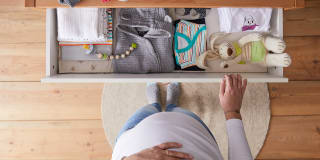
Soon in the nursery: Tips & ideas for the transition to childcare
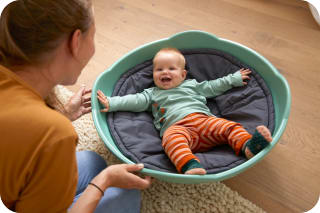
The nursery spot is secured and the settling-in plan is in place. Now it will be exciting for both you parents and your little ones. Unlike with Settling into kindergarten the preparation for starting nursery naturally proceeds somewhat differently for babies and toddlers. In a nursery, children between three months and three years are cared for, most are between eight and 14 months old when settling in. At this age, little ones often develop stranger anxiety and face new environments and people suspicious and even fearful towards them.
So how do you best prepare your little ones for the nursery? The motto here is: practice makes perfect. Let your children already play with other children early on, preferably in a group. Suitable for this are playgroups, baby gymnastics, trips to playgrounds, or of course get-togethers with friends and family. Also a babysitter is a good idea so that your kids don't have to deal with strangers outside the family for the first time at nursery start.
Short-term separations are also a great exercise for you parents. You probably have had little time apart from your children since birth and initially can't imagine placing them in the care of others. It's best to start with small steps and increase slowly, then the pain of separation during nursery settling-in won't be as great.
During initial trial sessions at the facility, you and your children have the opportunity to explore the surroundings and even first contacts to make with other nursery children or parents. There you can ask all your questions and also mention the special needs of your children. Don't miss this opportunity — the sooner your little ones get used to others, the easier the transition will be.
Checklist: the right equipment for the nursery

Daycare centers and nurseries are well equipped with everything your kids need. Nevertheless, each child needs a number of individual items for everyday nursery life that you should acquire. These include clothing, baby food, and in some facilities also diapers, wet wipes, etc.. To make sure you don't forget anything and have everything necessary together at the start of nursery settling-in, it's best to stick to the practical HABA checklist. Even if you don't need everything on the first day of settling in, good preparation takes away the pressure and stress of having to make last-minute purchases.
Basic equipment:
Backpack or bag
Rubber boots
Hat, scarf & gloves
Sun hat & sunscreen
Change of clothes (pants, tops, socks, underwear)
Cloth bag for dirty laundry
Name labels
Slippers (for crawling or walking)
Bedding (optional)
Sleepwear & sleeping bag
Toothbrush & toothpaste (optional)
Diapers, nappy cream & wet wipes (optional)
Baby food (optional)
For comfort:
Sleep aid
Favorite toy
Comfort cushion

Must-haves for the nursery
Colorful name stickers on clothing and accessories are a practical help in everyday nursery life. Goodbye mix-ups!
General procedure for settling into a nursery
Exactly how a nursery settling-in unfolds mainly depends on your facility and your children: every nursery and every child is different. So the settling-in is at least partly dependent on the educational approach of the nursery.
Most follow the very common Berlin model or the Munich settling-in model that builds on it. You'll find out which concept the childcare centre of your choice follows in one of the preliminary meetings. There all details about the settling-in period and care will be explained to you.
The settling-in models are divided into several phases. At the beginning at least one parent is directly involved and spends several hours with the child in the nursery. Then mother or father stay, as part of a first separation, out of sight and hearing range. Until your children have gotten used to the new environment and others, it takes several attempts. Toward the end of the settling-in your brave little ones gradually develop more trust in the caregivers and you as parents can spend more time away from the nursery.
Other facilities approach the settling-in less conceptually and let parents and children decide how long they need for the adjustment. The process is therefore also dependent on how well your kids cope with the new situation. Some children are very curious and outgoing, others more reserved and initially overwhelmed by the group. Sooner or later every child finds their place and gets used to nursery everyday life.
Regardless of your little treasures' personalities, age often also plays a role in the process. For babies between three and six months the nursery settling-in is often surprisingly easy. They do not yet show stranger anxiety and their attachment to the parents is mainly based on basic needs such as feeding. If babies are a few months older, this changes and they begin to become anxious – then it requires a lot of patience and care for the settling-in and ultimately more time in the individual phases.
How long does nursery settling-in take?
The settling-in period at the nursery depends on how quickly your children adapt to the new circumstances. While some babies and toddlers have no difficulty bonding with a new caregiver, others find it harder and need more time.
Depending on the age and developmental stage of your little ones, the facility usually sets a period of two to six weeks in place. It's best to keep this time free and not plan many other activities or changes. This avoids sensory overload for your children and doesn't stress them more than necessary. It is also advisable not to schedule the settling-in period immediately before your return to work. The new situation demands a lot from you, so try to make it as relaxed as possible.
The settling-in is considered successful and complete, once your children accept their caregivers as their (temporary) primary contact persons and have formed a trusting bond with them. For example, they let themselves be comforted, put to sleep, or fed by them.
Problems during settling-in: Tips for dealing with tears
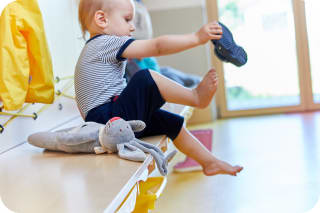
It's perfectly normal for tears to fall now and then during the nursery settling-in. Most children can be easily soothed and distracted.
In the nursery age, this is in most cases the phenomenon of stranger anxiety. Between the fourth and eighth month of life, sometimes later, many children begin to react to unfamiliar people with aversion, fear, and strong mistrust – even if that wasn't typical behavior before. This is because the little ones have progressed in their development to the point where they can visually distinguish familiar people from strangers.
If the nursery start falls within this phase, settling-in becomes a true challenge that demands a lot of patience from parents and children. It can help if the trial sessions are considerably longer than usual and the separations in very small steps are introduced. The good news: children quickly grow out of stranger anxiety and from one week to the next the world already looks much better. If you have the possibility to be a bit more flexible with time, it can be worth taking a break and continuing the settling-in at a later time.
Sometimes the cause of settling-in problems lies elsewhere. Shy children often find it difficult to get used to the many people in their environment and sensory overload leads to bursts of tears and fear. After all, they don't only have their educator as an unfamiliar person nearby, but also other children and sometimes other parents.
High sensitivity can also be a cause of a difficult nursery settling-in. It's best to regularly seek the discussion with the staff at your nursery. The years of experience of the educators help you to better assess the situation. They will tell you what the next steps will be and what you as parents can do to best support your children.
Last but not least: Have confidence in yourselves and your children and give them enough time to process the changes. Pay attention to your personal attitude and mood.
When should a nursery settling-in be discontinued?
This question cannot be answered in general, because it varies from child to child. Often, external circumstances also play a role in addition to the child's behavior. Before you decide not only to pause the settling-in but to stop it completely, it is important to hold detailed consultation with the educators to have. If they agree, perhaps an alternative childcare an option for you. For example, many children who don't feel comfortable in a nursery are much happier being cared for personally by a childminder or an au pair. As parents, you ultimately know what's best for your child – feel free to trust your gut feeling.
Stopping the nursery settling-in does not mean that you can never make use of the offer of a daycare center. In most cases children outgrow their fears and at a later time they can imagine nothing nicer than romping around in a large playgroup with many other children.