Strong bonds – the relationship between siblings
Two of a kind or like cats and dogs – relationships between siblings are complex and vary greatly from family to family. Some siblings are very close and remain closely connected throughout their lives. Others become bitter competitors for their parents' attention, and sometimes the relationship between siblings is characterized mainly by indifference. Psychologists believe that the relationship with siblings shapes a child as strongly as the relationship with the parents. It is also undeniable that it plays a decisive role in a harmonious family life.
Conflicts and jealousy between siblings are relatively normal
Children spend—necessarily—almost as much time with their siblings as with their parents. That shapes and promotes cohesion—but it also carries a lot of potential for conflict. It is typical for sibling relationships that positive and negative feelings are expressed and acted out to roughly the same degree. Jealousy toward the other and physical confrontations are completely normal in kindergarten and primary school age, experts in sibling research confirm. More than that: these conflicts support children in forming their personalities and help them to establish their place within the family.
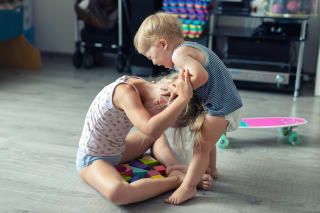
Which factors are crucial for the sibling relationship?
How harmonious the sibling relationship is and how stable it remains beyond childhood depends on many different factors. In addition to parental behavior, the age, age gap and the children's gender also play an important role. Brothers often see themselves as rivals, while the relationship between two sisters is usually the most harmonious. Basically, siblings with a small age difference have a closer bond—but also more frequent conflicts.
Household and children – 'handled with ease'?
Balancing work and family is the big issue of our time—but just managing the household and children can be quite a challenge. In addition to the daily household tasks, children's appointments must be coordinated, rides organized, playdates planned and birthdays prepared. In between, shopping is done, children are comforted and cuddled, and things are tidied up again and again. All these tasks are part of family life, but they require energy and a considerable degree of organizational talent.
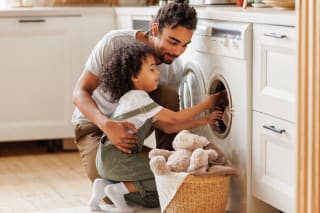
Everyday tips for the household with children
Assign small household chores to your child:
Helping out in the household not only relieves the parents, it also promotes your child's independence and strengthens their self-confidence—after all, they contribute to family life in this way. Small children can, for example, help set the table or unload the dishwasher; older ones take out the trash, vacuum, or collect the family's dirty laundry.
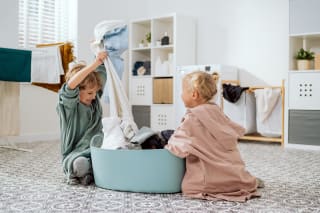
Make a weekly cleaning and tidying list:
Family life consists of a multitude of small chores that are quick to do individually but add up to a lot of time. Create a weekly plan of who is responsible for which tasks: Who feeds the pets? Who sweeps the kitchen? Who sets and clears the table? Parents should also, if possible, take turns with tasks like shopping and cleaning the bathroom.
Use a family calendar:
Hang a family planner in a central spot in the home where each family member can enter their appointments and plans for each day of the week. This makes organization easier and also helps children develop a sense of the days of the week and months.
Put perfectionism aside:
A well-known saying goes: 'Good mothers have dirty floors, streaky windows and happy children.' Things don't always have to look perfect—rather, take some time for each other.
Take a day off:
On at least one afternoon a week there should be no appointments and no household chores. Use this time for joint activities, playing or lazing around—it gives energy for the days ahead.
Potential for conflict
Managing money in the family
Discussions about family finances are, after parenting issues, the second most common source of arguments in the family. This is due not least to the fact that we don't like to talk about money—even between spouses, money apparently is a taboo: unnecessary expenses, perceived stinginess or worries about money are kept quiet until it's too late. Many adults feel it's petty to monitor their spending and address financial matters—yet good household budgeting can contribute a great deal to harmony in the family.
The most common questions about handling money in the family
Money disputes can be much more easily avoided when the financial principles and responsibilities in the family are clearly defined. At the latest with the first child and possible financial losses due to parental leave, families should deal with the following questions:
Do we have a joint account, separate accounts, or a joint account plus individual accounts?
Do the partners have access to the income as needed, or is a fixed amount available each month as 'household money'?
Is there a household budget? If so, who is responsible for it?
Who signs contracts and takes care of the bills?
Problems or dissatisfaction with the financial situation should be addressed as directly as possible and, if necessary, an alternative sought so that disputes do not arise in the first place.

I like that – decor tips and children's fashion
When children begin to perceive themselves as independent personalities, the desire grows to distinguish themselves from their environment and to express their own personality. Not infrequently this first shows up in endless discussions about clothing choices: some children want to wear their favorite sweater every day, others only wear a certain color.
Many children now also have very specific ideas about their own room. But how can you reconcile parents' ideas of functionality and style with the child's preferences?
Designing the children's room – best done together
Over the course of childhood the child's room will be redesigned several times—from the baby and toddler room with soft colors and sweet motifs to a typical children's room with a cozy corner, toy shelf and child's desk, which is eventually replaced by the almost adult teen room. Here are a few tips on how to design the child's room together.
Let them have a say
Your child should feel comfortable in their room—even if you prefer something else. Let your child express their wishes and consider together how to implement them sensibly.
Offer alternatives
Your child wants pink-painted walls at all costs, but you prefer more subdued colors? Look at color palettes at the hardware store: maybe you'll find another color you both like—or agree that only one wall will be painted pink.
Individual details
Lovingly chosen accessories give the child's room personality—these can be beautiful photos or pictures, colorful cushions, a hammock or a wall decal—whatever suits your child best.
What should I wear? Fashion for children
Almost every family knows the discussions about dressing. Is it too cold for the short skirt or too warm for the rubber boots, may they wear the same pants three days in a row—and what do I say when my child has fallen in love with the bright red sweater made of 100% polyester?
Our sense of fashion is strongly shaped by our environment—and so it is with children. While cartoon characters may still be the must-have in kindergarten, suddenly certain brands are required at school. We have gathered a lot of information about children's fashion and provide tips on how to help your child develop a healthy awareness of clothing and fashion.
Celebrate together
Christmas and other holidays with children
Atmospheric:
Of all childhood memories, the festive days may be among the most beautiful: when candles burn in the dark, when songs are sung and gifts opened—in short, when the whole family is together to celebrate and enjoy themselves.
Christmas through children's eyes:
Family celebrations like Christmas or Easter only become truly beautiful with children, because children experience and absorb the atmosphere of such a celebration much more intensely: crafting together during Advent, festive songs and poems, the joy over the Advent calendar, and finally Christmas Eve, when perhaps the first handmade gifts are proudly presented.
Time for Christmas spirit:
For parents, the pre-Christmas season often means even more stress than usual. They have to decorate and buy gifts, bake and craft for Christmas parties and bazaars, and so on. Nevertheless: take time now and then to enjoy the pre-Christmas season together with your child. At tea time on the Advent Sundays, reading aloud by candlelight, or visiting the Christmas market.
Read more articles on this topic









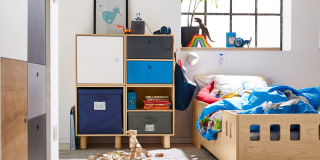

Image credits
Children playing with father on the floor © Halfpoint - stock.adobe.com
Quarreling siblings © Kirill Gorlov - stock.adobe.com
Children pulling clothes out of a laundry basket © ABCreative - stock.adobe.com
Son and father at the washing machine © JenkoAtaman - stock.adobe.com
Father with two sons hanging a picture © Seventyfour - stock.adobe.com