
It itches and burns – what to do about diaper dermatitis and sore skin?
Your baby’s delicate skin can become irritated quickly: often it’s enough that mom ate something spicy or the diaper couldn’t be changed right away. Almost all little children who wear diapers have a few small pimples and skin irritations on their bottoms, but sometimes diaper dermatitis can develop from this. With a little care and simple tips, however, you can protect your child’s sensitive skin and prevent the unpleasant rash. We explain how diaper dermatitis develops and give tried-and-tested tips so your baby can soon feel comfortable again without burning and itching.
How does diaper dermatitis occur?
The rash known as diaper dermatitis can have different causes. Since baby skin is particularly sensitive, it should generally always be well treated and cared for. Most causes of sore skin can be identified quickly, so you can easily prevent diaper dermatitis.
Moisture: Even the best diaper cannot absorb all of the moisture from your baby's pee and poop. The moist environment in the diaper softens the skin around the bottom and makes it more permeable to the acids in urine and stool, which can lead to a rash. In addition, it is usually warm in the diaper, which promotes the growth of germs.
Acidic & spicy foods: Through breast milk your baby always eats a little with you. Thus the mother's diet changes the taste and contents of the breast milk. Some babies react with skin irritation and diaper dermatitis when the mother has eaten particularly acidic or spicy foods.
Irritations: A diaper that is too small pinches and does not allow enough air to the delicate skin. This can cause unpleasantly irritated areas. Soap or creams and powders with unnecessary additives can also irritate your baby's skin and make it more prone to rashes.
Teething: When the first teeth break through, some children tend to get rashes and become sore.
Diarrhea: Basically, stool contains substances that attack and irritate the skin if not properly removed. With diarrhea, the stool is even more aggressive and often leads to unpleasant rashes and itchy irritations.
What helps with diaper dermatitis?
New diapers: Besonders am Anfang haben frisch gebackene Eltern das Gefühl der Tag besteht nur aus Windeln wechseln. Hier gilt: Lieber einmal zu viel als zu wenig. Legt eurem Kind deshalb etwa alle drei bis vier Stunden und direkt wenn sie voll ist eine neue Windel an.
Gentle cleaning: Beim Windeln wechseln solltet ihr immer darauf achten, Urin und Stuhl vollständig zu entfernen. Damit die Haut nicht noch mehr gereizt wird, am besten mit einem weichen Lappen und warmem Wasser vorsichtig den Genitalbereich und Po abwischen. Zur Pflege könnt ihr auch etwas Öl mit ins Wasser oder auf den Lappen geben. Danach mit einem trockenen und weichen Tuch vorsichtig und gründlich trocken tupfen, aber nicht reiben.
Dab with breast milk: Muttermilch ist ein wahres Wunderwerk, denn in ihr sind wichtige Antikörper und wertvolle Nährstoffe für die gereizte Haut enthalten. Jedoch solltet ihr darauf achten, keine zu sauren oder scharfe Nahrung zu euch zu nehmen, bevor ihr den Ausschlag mit ihr betupft.
Air well: Gebt eurem Baby regelmäßig "diaper-free". Ihr könnt zum Beispiel nach der Reinigung einige Zeit warten, bis ihr eine neue Windel anzieht. An der Luft heilen die gereizten Stellen viel schneller. Im Sommer könnt ihr euer Baby auch ab und zu unten ohne auf eine Decke mit extra Pipi-Schutz legen, die ihr schnell austauschen könnt, wenn mal was daneben geht. Im Winter hat es euer Baby unter einer Wärmeflasche auch ohne Windel angenehm warm.
Care: Wundsalbe oder pflegende Öle eignen sich am besten zum Abheilen. Auch Zinksalbe fördert die Wundheilung. Zinkhaltige Salbe sollte allerdings nur kurzzeitig angewendet werden, damit euer Baby nicht übermäßig mit Zink in Kontakt kommt.
Diaper dermatitis & diaper thrush: Better see a doctor

Diaper dermatitis is unpleasant for your baby but usually harmless and heals again quickly after a few days with appropriate care. However, if the rash recurs regularly or small pustules form that ooze or begin to form pus, you should go to the pediatrician. In this case, a fungal infection, also called diaper thrush, may have developed in the irritated areas. The doctor will then prescribe healing ointments for your child and can also, if necessary, examine with a swab why the rash keeps coming back despite precautions.
Preventing diaper dermatitis – with simple tips
Change the diaper regularly: So this prevents moisture from developing that attacks your baby's skin.
Check diaper size: Besonders am Anfang wachsen die Kleinen schnell aus einer Windelgröße heraus. Damit nichts reizen kann, lieber öfter überprüfen, ob die Windel noch locker genug sitzt.
Cleaning and drying: Der Po und der Bereich der Genitalien sollten immer ordentlich mit lauwarmem Wasser gereinigt werden. Danach gut trocknen und etwas Luft an den kleinen Po lassen bevor die neue Windel angezogen wird.
Discover more articles about everyday family life



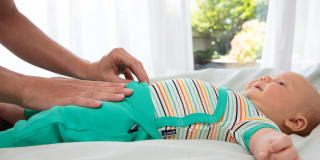






Image credits
Baby getting a diaper change © hansenn - stock.adobe.com