Practical dressing tips: What you should consider when dressing your babies in winter

When the first colder days of the year arrive, it's clear: winter is coming. So that you can continue to stick to your walks and at home relax and enjoy your bonding time can, it's advisable to already stock up early on winter clothing. The only question is what exactly belongs.
Basically, it can be said that the right clothing is crucial for all seasons, especially for winter. Because your newborns cannot regulate their body temperature independently yet and thus they lose a lot of body heat in the cold. In the worst case, hypothermia or even frostbite can occur. To prevent this, a good mix of different clothing layers is important. Because even with clothing that is too warm, your baby can get a cold from sweating.
Similar to other seasons, the magic word in winter is also "layered look". You should resist the first impulse to wrap the child as warmly as possible. With the layering principle you have the option to react to different environments and put an extra layer on your baby or take one off.
When it comes to gathering a basic stock of garments, the following applies in winter: bodysuits are particularly important to protect the back and kidneys of your baby. In combination with long-sleeve shirts, sweaters, shirts or warmer cardigans they are particularly effective in keeping your baby comfortable. Short-sleeve shirts are also allowed, especially when you put on an extra layer of clothing.
Rompers, (wrap) bodysuits or cardigans should always be equipped with snap fasteners, Velcro or zippers as they prove to be particularly practical. Especially for babies who find undressing and dressing unpleasant, this is a relief because it goes faster thanks to the fasteners. However, make sure that the metal parts of, for example, zippers do not have direct contact with the baby's skin have. This can lead to local frostbite.
To keep your baby's legs warm, tights under the baby pants are suitable. The double thermal protection is especially helpful when it's snowing outside. Of course, a winter jacket must not be missing when out and about. A snowsuit can certainly be purchased, because with it you save extra protection for the baby's feet. Besides little socks you then don't need to plan shoes or an extra footmuff. Also, hats, gloves, scarves or neckerchiefs are absolute must-haves. Hats are even the most important accessory, because babies lose most of their body heat through their heads.
So that you can comfortably change and dress your babies, heat lamps are a good option for keeping your children warm. Winter babies also find baths pleasant. In doing so, pay attention to a bath temperature of 36 to 37 degrees. Choose the temperature a little cooler rather than too hot so your babies feel comfortable.
Dressed too cold or too warm – how can I check that?
To determine whether the clothing and layers you've chosen are right for the respective day and the associated temperatures, there are a few tricks that you can easily use at any time:
Neck check: Feel with your fingers at the back of your baby's neck, whether it is sweaty, cool or dry. If that spot is warm and dry, your child is dressed appropriately. If the spot is sweaty, you should take a layer of clothing off your baby.
If the neck is too cool is, this is often a sign that you need another additional layer of clothing is needed to warm your winter babies again.
Hands & feet: Children lose body heat first through toes and fingers. If the little hands or feet feel icy, you should dress your children warmer
Tummy: The tummy also gives you information about whether your baby is doing well. If it feels too warm or too cold, you should adjust the clothing accordingly.
Heat rash: If your children are seriously too hot and sweat excessively, the skin on the face often reacts with small heat rashes, not only in summer. Do not undress your children completely, but only open the jacket or ventilate the blanket so that the body cools down gently.
Newborn essentials: What to dress winter babies in
Buying the very first clothes for winter babies is very exciting for expectant parents. Many start picking up the first garments while still pregnant. However, most parents ask themselves the question, how many of each baby clothing item they actually need. In winter in particular there are additional details to consider. Because, unlike the Starter kit for spring, summer or autumn, in winter certain warming methods (heat lamps, warm baths, etc.) are also helpful to ensure your baby's well-being.
Basically: Less is more! Thus you don't need huge amounts of baby clothes and certainly not winter clothing. Young children simply grow too quickly to have a huge stock of clothes in the closet.
Make sure you have a few pieces of everything. This only serves to ensure that you can fall back on spare clothes. For the first months of life it's therefore perfectly sufficient if you buy, for example, eight bodysuits with and without sleeves in different sizes (usually sizes 52, 56 and 62).
Also, one to two cotton hats are recommended. Tights/socks and rompers are other important garments for winter. What else you should consider in the baby starter kit in terms of furniture, care and toys, HABA has compiled for you on the relevant topic page.
This material matters – heat-retaining baby clothing for winter
The material plays an essential role when choosing winter clothing for babies. Because baby clothes should always temperature-regulating properties exhibit and especially in winter keep comfortably warm. Cotton and fleece are particularly suitable here. An even better option is a cotton blend or a combination of wool and silk, as these materials are very gentle on delicate baby skin. Also Merino wool proves to be very effective for the chilly winter days. The material is characterized above all by the fact that it reliably transports moisture away from the body. That way your baby does not feel wet and the body temperature can be well maintained.
Layering in winter – checklist for the individual layers. In–out, warm–cold: In winter we often switch between outdoors and indoors. From the apartment to the car or train, then to shopping or to an appointment, and afterwards back home. Several thin, breathable layers worn on top of each other are best in winter, because this way you can easily ensure that your baby neither gets cold nor overheats. Also, small air pockets form between the individual garments, which provide additional insulation.
As rule of thumb applies to layering: Always put one more layer on your child than on yourself. This way you can put on or take off an additional layer for your winter baby depending on the situation and comfort. Several thinner layers are always better than a few thick ones, which can make the baby sweat.
You can put together your clothing layers as follows:
For underneath: A romper or bodysuit. Lycra or silk are best suited, as they, unlike cotton, do not retain moisture.
Second layer: A sweater made of wool or fleece and trousers or tights with wool socks.
For on top: A weatherproof, water-repellent jacket and winter trousers, a snowsuit or a footmuff that still allows your baby to move sufficiently. Additionally, lined baby shoes and a hat are recommended. If the hat covers the ears and the nape of the neck, that is sufficient. For the hands, choose mittens instead of gloves so the little fingers don't get cold.
Sweet winter dreams: dressing babies correctly at night
To calmly process the day's experiences, clothing is also crucial for baby sleep. At around 16 to 20 degrees Celsius your baby should feel comfortable, so you don't need very thick layers of clothing. Long-sleeve shirts or a warmer sleep suit is completely sufficient.
Before going to bed you can warm the baby bed with a hot water bottle or a cherry pit pillow. However, take it out again for sleeping. To keep your baby warm enough all night, baby sleeping bags are particularly popular. Because unlike a wool blanket, with a cozy sleep sack there is no risk of suffocation.
The right winter clothing for everyday life at home
During the day for playing it's perfectly fine if normal room temperatures prevail in your apartment or in the rooms of your house (living rooms usually 20 degrees Celsius and in bedrooms between 16 and 20 degrees Celsius). Then your child should in a bodysuit or be warm enough in a long-sleeved sweater. Children love to move, so you should not dress them in overly thick clothing indoors. A sweater, slightly warmer trousers and a pair of little socks and, if necessary, comfortable gloves will warm the small hands and feet. To make play times warm experiences, a (play) blanket or a padded play mat.
Stroller, baby wrap or in the car: How to dress your babies for winter on the go

How you dress your winter baby for outings and walks depends on how you prefer to transport it. Whether in the stroller, in the baby carrier, in the baby wrap or in the infant car seat – for each transport option there are various measures to protect your baby from the cold breeze. What matters? HABA has compiled for you here the essential tips compiled:
Making the stroller winter-ready: If you want to use the stroller, it's perfectly sufficient to dress your baby in a thick winter jacket as well as pants and tights put on. Padded footmuffs are a great addition to keep the delicate baby feet sufficiently warm. If your baby lies in the stroller, a snowsuit is enough, with which you can do without a footmuff. In addition, the snowsuit keeps very warm and with additional covers in the stroller your child won't get cold so quickly. To be able to go out in wind and weather, a weather cover for the stroller is an absolute must-have.
Our tip: If the stroller cannot be stored in the apartment for space reasons but only finds room in the cool hallway, you can easily pre-warm it. To do so, place a hot water bottle or a cherry pit pillow in the stroller before heading out for a walk. A sheepskin or lambskin or a cut-to-size camping mat helps with insulation underneath.
How to dress yourself and your winter baby for the baby carrier or wrap
The baby carrier is probably the warmest transport method for babies. The baby is kept warm by your body heat, which also has a calming effect . Whether you carry your child on your chest or on your back, it receives significantly more warmth than in the stroller.
To keep the snuggly warm temperature, there are special jackets that are particularly suitable for a baby carrier. So mainly so-called carrier jackets and jacket extensions for your winter coat are an option. Alternatively, you can also use a carry cover both under and over the jacket.
It's best to dress your baby in a wool or fleece overall . Thick socks and a little hat are essential.
How to dress baby properly for the car:
For safety reasons you should avoid winter jackets and snowsuits in the infant car seat. Because during car journeys every additional piece of clothing can be dangerous. After getting in take this layer of clothing off. This way you can buckle your baby in better and then cover them with a cozy blanket or jacket. This keeps the harness closer to the body and ensures safety for the car ride.
Under the top layer of clothing it's enough if your baby wears a thick top, long cloth pants (possibly with tights underneath) and thick socks . To protect the neck and the little head, you can also use a scarf and a hat.
Frequently asked questions about dressing your baby in winter
How can I protect my baby's skin in winter?
Do babies also need protection from UV radiation in winter?
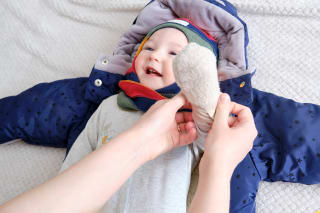
Should I put gloves or mittens on my baby in winter?
Discover more articles about everyday family life






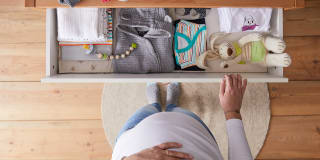




Image credits
laughing child lying in the snow © Westend61 - stock.adobe.com
Mother holds baby up in the air © Olha Tsiplyar - stock.adobe.com
Gloves being put on baby © Андрей Журавлев - stock.adobe.com