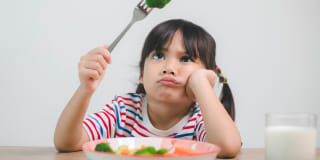
Basic rules for children's nutrition
Like all aspects of raising children, nutrition is an individual decision shaped strongly by personal experience and by engaging with the topic. A few basic rules should, however, be included in every nutrition concept:
Plenty of fluids: Children should also drink regularly between meals. Preferably water, teas, or well-diluted fruit spritzers.
Plenty of fresh foods: Fresh, cooked, pureed or juiced - fruit and vegetables don't have to be served at every meal, but they should at least be on the menu every day.
Sufficient fiber: Fiber-rich foods such as potatoes, cereal products, nuts, fruit and vegetables are filling and promote digestion.
Salt and sugar in moderation: Very salty or sweet foods should be the exception - not least because other foods suddenly taste "bland" in comparison to chips, chocolate bars and strongly seasoned convenience products.
Be a role model: Children learn from their parents' behavior - if you set a good example at mealtimes, it will shape your child's eating habits in the long run.
But perhaps the most important rule of children's nutrition has nothing to do with nutrient content or satiety: food should be fun. Take time for shared meals and remain open to new ideas and experiences.
The right nutrition at every age:

Infancy up to two years
From about six months, children need additional energy and nutrients alongside breast milk to develop healthily. Once your child has gotten used to the first puree, you should gradually offer more and more new foods – this allows the digestive system to develop and the child to get to know the variety of food. Patience is often required in the first year: some children have difficulty with the change in diet. Take your time and, if necessary, try again after a few days. Sooner or later your child will learn to appreciate the new tastes and textures.
Caution: Hard foods like apples and carrots in pieces should be avoided in toddlerhood, as children can choke on them.
Watch out: Many allergies first appear in toddlerhood. Observe possible reactions, especially with new foods.
Preschool age
With preschool comes the influence not only of family eating habits but also of the daycare menu and friends' eating habits. Most children already have clear likes and dislikes for certain foods by the age of three. These habits often change over time – so don't put too much pressure on them and instead offer as many healthy alternatives as possible. How much does my child need? How many calories a child needs depends on its size, growth and how active it is. As a rule: children take what they need – sometimes more, sometimes less. As long as your child is not constantly pale or tired, you shouldn't worry too much about the amount of food.
Drink enough: Preschool children often forget to drink because everything else seems more exciting. Make sure your child drinks water regularly – if necessary you can introduce fixed "drinking breaks" or encourage your child to drink with straws or a colorful drinking bottle.
Basics: The right 'context' should go hand in hand with eating habits: handwashing, setting the table, using a knife and fork, table manners and, of course, regular toothbrushing.
Schoolchildren
Increasing independence makes many things easier but also leads to discussions at the table. Try to introduce your child early to the basics of a balanced diet: already at seven or eight years old children can take responsibility for daily shopping and cooking. This way they learn how to handle food and can at the same time implement their own food wishes. Such a foundation helps you view typical preferences for sweet drinks, chips or chocolate bars a bit more relaxed.
Unbalanced diet? Deficiencies are very rare in an industrialized country like Germany, even in children who reject vegetables, fruit, dairy products or meat. Look for alternatives together and avoid too much salty and sweet food.
Does a vegetarian diet harm development? Children do not necessarily need meat if they otherwise eat a balanced diet. Vegan diets are more difficult – here parents need to be very well informed so that their child receives all the nutrients it needs.
Relaxed meals – how to avoid stress at mealtimes
Eating together: Children learn from their parents – also at meals. Eating together they not only learn how to use a knife and fork and table manners, but also how to tell stories and listen.
Stay calm: Especially with toddlers, meals are rarely relaxed. Try to turn a blind eye for the moment – eating together and enjoying the meal is sometimes more important than cleanliness at the table. Calmness also helps with older children who don't like a particular food or with children who fidget while eating.
Bring color to meals: Variety at meals is not only nutritionally advantageous: colorful vegetables like bell peppers, carrots, corn and broccoli please the eye and make children curious, as do crunchy nuts or homemade croutons with which you can vary soups, salads and casseroles.
Don't force them to finish their plate: Respect your child's natural feeling of fullness. Being forced to eat more than they like may create negative associations with food or lead to overeating as an adult.
Food allergies – what do I need to consider in children's nutrition?
Of all allergic diseases, food allergies and intolerances are the most common. To this day it is not exactly understood why people react hypersensitively to certain foods. Allergic reactions often occur for the first time at two or three years of age, and not infrequently the symptoms disappear after a few years. In principle, however, babies can also be affected, and allergies can still develop in adulthood. It is important to recognize this early and – ideally with medical support – to adjust the diet accordingly.
The most common allergens in children include:
Nuts, especially peanuts and hazelnuts
Wheat
Milk or milk sugar (lactose)
Soy
Fish
Egg white
Less common: Stone fruits, celery and berries
Many parents are uncertain, especially when switching from milk to puree, about what foods to give their child to keep the allergy risk as low as possible. Avoiding certain foods such as cow's milk, nuts or wheat from the start is counterproductive in children without a strong allergy risk: the child's body then has no chance to get used to these foods. It makes more sense to try out different food groups gradually and keep an eye on any reactions.
Possible symptoms of an allergic reaction may include:
Red spots, itching and swelling of the skin, atopic dermatitis
Stomach pain, bloating, diarrhea or vomiting
Asthma or shortness of breath, scratchy throat
If you suspect an allergy, you should have an allergy test performed by a doctor to be sure and to identify possible cross-reactions. In everyday family life a food allergy does not have to mean restriction: if you cook yourself, you have the best control over the ingredients and can replace allergenic foods with alternatives if necessary.
Child nutrition is up to the parents:
Don't be put off
What children eat depends not only on the parents' dietary concept. Cultural background also plays a decisive role. While German parents swear by carrots or parsnips for the first puree, in southern Europe people often start with pureed fruit, in other countries grains such as corn porridge or rice porridge are the first foods on the menu, sometimes beans, fish or meat. And while we are cautious with salt, sugar and spices for toddlers, in many other cultures – also in Europe – children eat the same strongly seasoned food as the adults from the start. None of these different diets is inherently right or wrong – what we eat is also a question of our culture and personal attitude. All parents are familiar with surprise and well-meaning advice up to horrified shaking of the head when it comes to questions of child nutrition. Don't be put off! As long as your child
gets the nutrients and the energy it needs for its development and
eats with appetite and enjoyment, you can relax. Teach your child the variety that our food has to offer – that way you yourselves also remain open to new impressions and pleasures.