What are the benefits of homemade baby food?
Conviction: If you prepare your child's food yourself, you know exactly what it contains and how it was made. This consideration is decisive for most parents. However, even with organic vegetables and organic meat that you have bought and prepared yourself, the cultivation and processing methods and supply routes cannot be traced one hundred percent.
Variety: With the almost endless range of baby food on supermarket shelves, no one really has to complain about a lack of choice. Still, cooking yourself can expand the variety of tastes, e.g. if you mix parsley, a little butter or occasionally a new fruit or vegetable into the puree.
Allergies and aversions:
It is very rare for children to develop a food allergy already in infancy. If a baby cannot tolerate certain foods such as wheat, nuts, celery or shelled fruits, many parents prefer to cook themselves to reduce the risk of an allergic reaction. And: some babies simply don't like jarred baby food.
How can I make baby food myself?
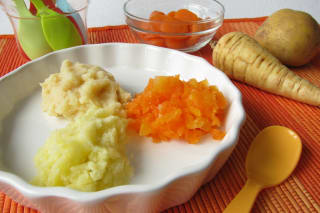
Steam instead of boiling: Most vitamins and nutrients are preserved when steaming. Therefore, various steaming inserts that fit your pot sizes are ideal.
High-quality fat is essential: Babies and toddlers receive a relatively large amount of essential fat from breast milk. Therefore, baby food should always contain some fat. For a start, a warm-pressed (refined) rapeseed or germ oil is best. Cold-pressed oils should only be used after the first year of life; otherwise your baby's kidneys can be strained!
Avoid salt and sugar: At first you should prepare vegetables, fruit and other foods as much as possible without sugar, salt and spices. Since most babies like things sweet, you can safely combine carrot with a bit of apple or parsnip and pear.
Pay attention to variety: As a basic rule for switching to purees: once a week you should introduce a new flavor. This can be a type of vegetable or fruit, some fish, herbs or even a bit of butter instead of oil. Above all, you can keep recombining the home-cooked vegetables to vary the taste.
Use organic vegetables and organic meat: Organic products are not necessarily richer in nutrients, but their pollutant load is generally lower, so your baby's sensitive metabolism is spared.
Cook in bulk: Cook and puree a larger amount of vegetables once a week, if necessary also grains, potatoes and meat. This way you can combine ingredients into different "menus" or freeze portions of the puree and thaw them as needed.
Use portion containers: For freezing, small plastic storage containers (suitable for the freezer) or simply ice cube trays are suitable. This way you can select portions even more flexibly.
The most important questions about homemade baby food
Is cooking not much more time-consuming than jarred food? If you consistently cook for your baby yourself, it is hardly any effort: many parents cook about once a week a few kinds of vegetables, grains and fish or meat and freeze the pureed baby food in portions. This takes a total of half an hour to an hour and therefore not much longer than a trip to the supermarket.
Is cooking yourself cheaper than baby food from jars? Those who regularly prepare larger quantities may save some money. However, most parents cook more out of conviction than for financial reasons. In addition, as your baby grows, you will need to buy more and more different types of fruit and vegetables as well as meat and fish.
How can I ensure that my baby gets all the vitamins and nutrients? The preparation method that preserves nutrients best is steaming with a steaming insert. There are also special steamers for baby food in which you can cook and puree the food at the same time. Whether this investment is worthwhile is something parents have to decide for themselves.
Do I need special cooking equipment to cook for my baby? Basically you only need at least one steaming insert and a good immersion blender or mixer. Ideally this should be a model with continuously variable settings that also reliably and evenly purees smaller quantities. Storage containers are indispensable.
Is it ok to thaw homemade baby food in the microwave? For the nutrient content and the radiation exposure of the food, thawing or warming baby food in the microwave is harmless. However, the microwave heats food unevenly, so some spots can become very hot and others still relatively cold. Therefore you should always stir food heated in the microwave well before feeding and taste it.
Discover more articles about babies & toddlers





Image credits:
Baby menu with potatoes, carrots and parsnips © Heike Rau - stock.adobe.com