The history of wish lists: Where does the tradition of Christmas wish lists come from?
Wish lists as you know them today were not always associated with the same purpose. Around the year 1800, children did not have a wish list with gift requests, but a Christmas letter written. At that time they addressed it to their parents, godparents or other family members – so not to Santa Claus or the Christ Child.
In the letters, the children thanked their parents and relatives for their upbringing and well-being. Around 1850 the Christmas letters were then assigned a different meaning. Driven by the toy industry and its marketing purposes, from then on it was possible to place Christmas motifs on the notes placed and ticked.
In 1950, the history of the letter changed once again. Because at Karstadt, wish-list forms were developed, which could be addressed directly to the Christ Child or Santa Claus. Since then, parents have been regarded as the helping elves of the two, as they pass on the Christmas wishes and make sure that these are heard and fulfilled.
Why are wish lists so important to children?
Children associate wish lists with lots of anticipation for Christmas. For them it feels somewhat magical when they give expression to their wishes and trust in the magic of Santa Claus and the Christ Child they can. In addition, it means a great deal to them to spend, together with you as parents, cozy family time to spend. Young children in particular are happy when you show interest in their inner world and let them have free rein when creating the wish list.
It is creativity and flourishing imagination that make children's eyes wider and their hearts beat faster. Whether self-drawn or written wish lists – in any case it is a a yearly recurring ritual during the pre-Christmas season, which you can enjoy to the fullest. Not least through this you actively strengthen your family togetherness.
Writing wish lists – this is how the anticipation for Christmas grows
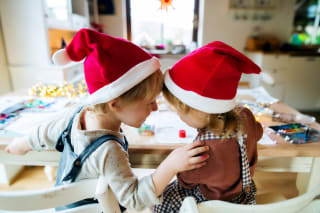
Most toddlers and also older kids are excited when it's finally time and they are allowed to write their wish lists. This marks the beginning for them of the most exciting time of the year. Ideally, arrange your afternoon for writing the wish lists to be as relaxed as possible.
Make yourselves a little cozy by providing plenty of Christmas pastries, turning on fairy lights and candles, and, if necessary, playing your favorite Christmas music!
Writing the wish lists should be somewhat like Christmas crafts: It's not a must, but if you do, you should do it together and in a nice, festive mood. Basically you have several ideas and options to get really creative and to give expression to your Christmas wishes. On the one hand you can design the sheets entirely yourselves and, alternatively, print a template and fill it with content.
Whether as Christmas mail, a poster to hang up, or as a letter that you hide well at home so that only the Christ Child and Santa Claus can see it – in any case it's worth recording your own gift wishes. After all, who knows how many wishes will actually come true.
Create wish lists yourself
If your children like to paint, they can decorate it to their heart's content with Christmas motifs or with pictures of their Christmas wishes. Set out your art and craft supplies ready so your children can be creative. If your kids want, you draw a few lines on the wish list to note the wishes on, or your little ones write and draw freehand – whatever they like.
Print out wish lists
A blank or colorful wish list to print out is quickly ready and offers children a great incentive to write down their wishes themselves. While the still colorless template is just waiting to be decorated in Christmas colors and offers more than enough space for plenty of creativity, with a colorful template the space is already predetermined by the Christmas motifs: This way children learn to write down only what they really wish for, instead of compiling a giant wish collection.
Tips for the wish list
Have children write the wish list themselves:
Unlike toddlers, elementary school children generally like to write their wish list themselves.
Let your children write down their wishes independently and in peace and quiet, even if spelling is still a problem. And have them read all the wishes to you at the end. That way you make sure you can decipher all the creatively written terms.
Best not to interfere:
Your children want a pony, a rocket and a computer? Of course not all Christmas wishes can be realized, but your kids should still be allowed to write them down, without you interfering.
Tell them calmly that Santa Claus or the Christ Child will probably not bring a pony if it doesn't have a stable to live in. Or that rockets are very big and Santa will probably not be able to transport them in his sleigh. Wishes should still be allowed, especially at Christmas.
Duplicate wish lists:
If your children want to send their wish lists to Santa Claus, you should note the wish list at a suitable moment or photograph it, before you send the Christmas mail together.
This way you make sure nothing is forgotten on the gift table. Alternatively, your children can make a second wish list to hang up at home, on which they can also note wishes that may be added later, for example. After all, Santa sees everything anyway, including the wish list that hangs at home.
Cut out and stick wishes on:
Kindergarten children usually cannot write their Christmas wishes themselves yet and also cannot properly read written words. If your children still want to design their wish lists all by themselves, let them simply draw or stick their wishes on: In toy catalogs and magazines you will find lots of colorful pictures that you can use for decoration. This is especially practical if your children wish for a very specific toy.
Dealing with overly specific wishes:
If your children express Christmas wishes that are of particularly great emotional value, it is possible that you cannot fully do justice to them. All the more important is the handling of these special wish expressions.
If, for example, the most fervent wish of your kids is that Mom and Dad reconcile and come back together, or that a major family quarrel is put aside, it takes a lot of calm and empathy, to explain to your little ones that Santa Claus or the Christ Child can hardly be expected to fulfill that. Such concerns require a lot of time and cannot be resolved by Christmas.
Hang up Christmas wish lists or send them to Santa Claus/the Christ Child?
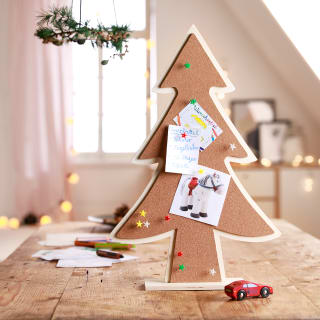
Whether the wish list is hung up visibly at home or sent by post to Santa Claus varies from family to family.
A wish list that stays at home has the advantage that parents and relatives always have the wishes in view and can plan their Christmas shopping accordingly. If you have even made the sheet in duplicate, a second version can be picked up overnight as a letter personally by Santa Claus or the Christ Child.
Place the Christmas mail only in a spot where they can find it and where the magic can take its course. On the other hand, it is all the more exciting to send a nicely designed letter with the wish list to Santa Claus personally and perhaps even receive a reply.
In addition, your little ones thus learn which different letter elements the Christmas mail consists of and which steps should take place before the important contents arrive in an envelope at the Christmas post office.
Addresses of Santa Claus:
Anyone who wants to send their wish list to Santa Claus can do so by regular mail: Every year the postal service sets up several Christmas post offices that accept wish lists and letters to Santa Claus and even answer them.
The address field on the envelope should read:
To Santa Claus Christmas Post Office 16798 Himmelpfort
OR
Himmelsthür 31137 Hildesheim
Addresses of the Christ Child:
The Christ Child also has its own Christmas post offices. The address line should read:
To the Christ Child 51777 Engelskirchen
OR
21709 Himmelspforten
OR
97267 Himmelstadt