How to bring musical variety into your child's life
Music is the most universal language in the world. Long before speech and language comprehension develop, children understand communication through music. Researchers have long known this connection: melodies, rhythm, and sounds are already perceived in the womb and we react to them with feelings of happiness. At first it's the mother's steady heartbeat, and a little later babies hear their parents singing, the gentle melodies of music boxes, or simply music that is played nearby.
This positive connection to music shapes the newborn child throughout later life. From the very beginning, lullabies have a particularly soothing effect on babies. Singing and making music are also central elements in the further development of infants and toddlers. It is even scientifically proven that children who grow up with music learn to walk earlier and begin speaking sooner. Especially in toddlerhood, music makes an important contribution to expanding vocabulary. Whether sung and rhymed fingerplays or children's songs with movement sequences: music in any form stimulates the brain, which is why children who make music can remember many new words more easily. Singing together particularly promotes vocabulary expansion.
Natural curiosity about music
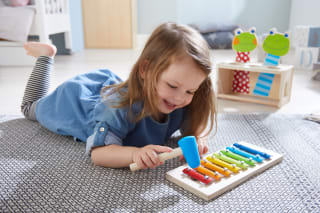
Children have a natural curiosity for sounds and noises. Music boxes and rattles fascinate your child just as much as music from the radio or songs you sing to them. But toddlers particularly enjoy making music themselves. Most often they start early to produce sounds with their own voice and begin making music by hitting toys, pots and spoons or other objects together. "First instruments are a lovely way to introduce children to the world of music," says Dietlind Löbker, a music educator and the author of the instructions for the HABA music games.
Musical instruments for babies and toddlers promote their development
Interaction with music promotes the networking of neural structures in the brain. "The right and left hemispheres of the brain are engaged at the same time. Therefore, children who make music learn to speak better and can remember what they've learned more quickly and for longer," says Dietlind Löbker. The music educator emphasizes that during singing and making music several things are processed in the brain at once: On the one hand, children pay attention to rhythm, tones and notes. In addition, they must listen attentively and coordinate their movements when playing an instrument. "The earlier children come into contact with music, the better the connections in the brain. They can also deal better with their emotions and are more emotionally balanced," summarizes Dietlind Löbker the positive effects of music on early childhood development.
First instruments make it easier to start making music
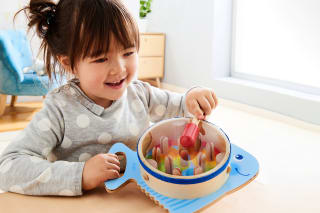
The HABA musical instruments support your child in musical development, strengthen the sense of rhythm and train language skills. For all children from 2 years there is an instrument: drums, various rattles, glockenspiels or an assortment of different instruments in a sound building kit.\r\n\r\nBy trying things out, children learn how noises and tones are produced. Because all parts of the instruments are firmly connected, there are no small parts that could be swallowed and the instruments can easily be carried from one room to another without, for example, little bells or metallophone plates falling off.
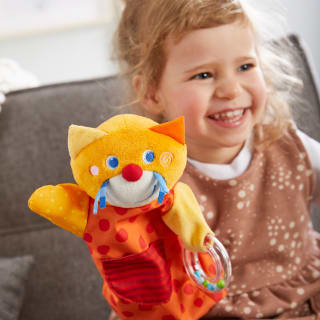
Babies and toddlers find the HABA sound hand puppets especially fun. You as parents can bring the puppet to life and musically underscore exciting stories. Sewn-in rattles or squeakers produce amusing sounds. Of course, the children can also make the cuddly hand puppets come alive themselves! Bright colors, different materials and the cheerful sound effects playfully stimulate all of the little ones' senses.
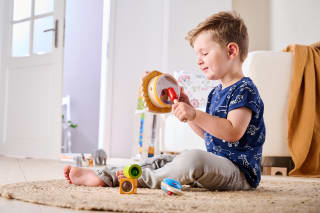
Music educator Dietlind Löbker also contributed to the development of the play ideas here: "Children show particular joy when they can make music themselves. HABA's music games target this specifically and inspire children about the world of music, sounds and tones: In age-appropriate activities they can experiment with sounds, tones, rhythms and movements and thus playfully acquire important key competencies."