The most common sleep problems in toddlers: difficulty falling asleep and staying asleep

Genuine, lasting Only a few children have sleep disorders. However, problems with falling asleep or staying asleep are relatively common. The causes for this can be quite different: The children are still too restless in the evening to fall asleep
The children are not yet tired and therefore have trouble falling asleep
The impressions of the day linger in the little ones' brains and cause restlessness
The children have not yet developed a strategy to fall back asleep at night without help
The children's sleep rhythm is simply still developing
How much sleep does my child need?

There are no fixed sleep standards, because children's need for sleep is as individual as their appetite or desire to move.
As a rule of thumb, children in the first three years of life about 12 hours of sleep are needed daily. Babies sleep even up to 14 hours daily. Up to primary school age, children still sleep about 11 hours. Only at 10-12 years does the need for sleep begin to decrease significantly or bedtimes begin to shift later. Factors that affect individual sleep needs:
Season: in summer, children often sleep slightly less than in winter
Afternoon nap: children who nap two hours at midday need correspondingly less sleep at night
Activity: after strenuous days, children often need a bit more sleep
What helps with sleep problems in children? – Tips for parents
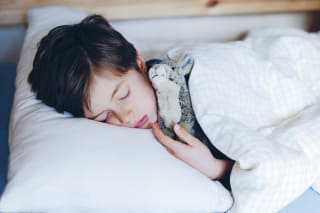
Whether ordinary sleep problems, as are normal in toddlers, or genuine sleep disorders that some children develop – the following tips help with falling asleep and staying asleep.
Closeness: Respond when your child wakes up at night and go to them when they call – this gives them security and helps them fall asleep again quickly.
Orientation: A night light or a half-open door to the hallway helps your child find their way at night – this makes them more likely to fall asleep again on their own.
Bedtime rituals: Reading aloud, a lullaby to sing or simply cuddle together – anything familiar that conveys closeness helps your child relax and fall asleep.
Cuddling: Physical contact helps with falling asleep and also quickly calms your child, for example if they were woken by a nightmare.
Listening: Fear of the dark, of monsters under the bed or of being alone should not be dismissed or laughed at – instead try to find ways together to cope with the fears.
Calm evening: Roughhousing, computer games or watching TV in the early evening are okay, but should not become a bedtime ritual.
Bedtime talk: Many children find it helpful to talk in bed in the evening with Mom and Dad about the day's events to process what they experienced.
Suitable sleep environment: Children love stuffed animals, colorful posters and night lights – but too much can disturb sleep. Fewer sensory stimuli in the child's bedroom help them to wind down in the evening.
Physical activity: Playing outdoors and a balanced diet promote healthy sleep.
Discover more articles on parenting & psychology









Image credits
Woman lies in bed with a girl and soothes her © Photographee.eu - stock.adobe.com
Baby stands in the crib © Halfpoint - stock.adobe.com
Mother and child cuddle in bed © Trendsetter Images - stock.adobe.com
Boy sleeps with a cuddly toy in bed © photophonie - stock.adobe.com