Different but equal: The motives of Intercultural Pedagogy
Overarching approach: Intercultural pedagogy includes all concepts that prepare children with or without a migration background for life in a heterogeneous society. This can take place in an interculturally oriented kindergarten or school, but intercultural pedagogy can also be implemented in other childcare facilities, sports clubs, or playgroups. Intercultural pedagogy is based on two central principles.
Recognition of equality: All people are regarded as of equal worth and treated without prejudice with the same respect, regardless of their skin color, origin, language, religion, age, and other characteristics.
Recognition of difference: Alongside the understanding of the equality of all people comes the awareness that different societies have individual cultural forms of expression and ways of life that are not a 'deviation' from the norm, but each a distinct way of life among many.
Appreciation as a core competence: The aim of Intercultural Pedagogy is to convey respect for the otherness and equal worth of different cultures. Whoever learns from an early age to value differences without classifying them as 'normal' and 'deviant'—that is the idea—has the appropriate tools for the challenges and opportunities of a multicultural social reality.
Focus areas of Intercultural Pedagogy
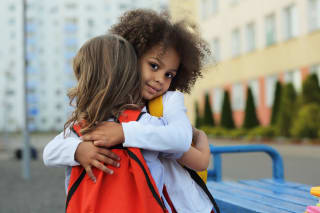
Many different institutions consciously or unconsciously implement the individual aspects of Intercultural Pedagogy in everyday life – this almost happens by itself, e.g., when children and caregivers from different cultures come together. But there are also day-care centers and schools that specifically work according to the concept of Intercultural Pedagogy. The focus is on the one hand on social development and on the cultural-pedagogical education of children.
Multilingualism – part of everyday life
Multilingualism is an important aspect of Intercultural Pedagogy. It promotes not only openness to other cultures but also language comprehension and cognitive abilities. In international kindergartens and schools, for example, bilingualism or multilingualism is specifically promoted. At the same time, care is taken that children who speak other languages learn the respective national language.
Ignorance as a prerequisite for cultural openness
The ability to accept one's own lack of knowledge is an important foundation of the intercultural approach. Those who do not know everything and do not understand everything remain curious about other cultural worlds and particularities. Therefore, Intercultural Pedagogy seeks from the outset to shape an open, informal way of dealing with strangeness.
Intercultural Pedagogy in practice

In the early childhood care institutions that work with the concept of Intercultural Pedagogy, the life-world of the children and their families is at the center. The children's cultural background is actively included in the educational offerings and in the design of the premises. Different cultures in everyday life: The goal of intercultural work is not to put a particular culture at the center and, for example, treat it in a themed day. On the contrary: the different cultures are of course integrated into the normal educational everyday life - into the morning circle, into conversations and games, when singing, crafting, and so on. The year is also celebrated interculturally with its various festivals. Educators with an intercultural background: Often educators with a migration background work in the institutions. In some institutions there is also an exchange of educators. There are sponsorships with daycare centers in other countries for this purpose. Within this framework, educators come to visit for a few weeks or vice versa. This provides new impetus for pedagogical work and intercultural learning is modeled for the children.
Strengthening intercultural competencies in the family home
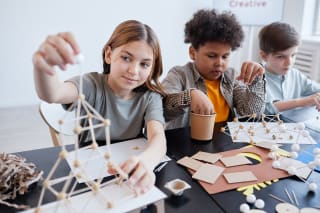
Many children today have to learn to move between different 'worlds' – for example through switching between the parental homes of separated parents or due to differing values in families of origin and educational institutions. Intercultural differences are not always a matter of nationality – and thus the question of intercultural competencies is not limited to care institutions and educators. Parents can also convey curiosity, openness and impartiality toward all that is unknown to their children in everyday family life by setting a good example. This also means a healthy measure of self-reflection: How do I deal with things or situations that deviate from the 'normal'? Which situations unsettle me? Parents can also foster curiosity about the world and other cultures with appropriate toys, for example with a children's globe or a colorful world map, books, costumes, or dolls with different skin colors.
Discover more articles on parenting & psychology








Image credits
Girl of color hugs friend © ShunTerra - stock.adobe.com
Children raise their hands in class © insta_photos - stock.adobe.com